
Project overview
The UK's population is ageing, and this presents a major problem for government since older people are the major users of health and social care services. As well as increasing the demand for care, population ageing is affecting the supply of care professionals, as the health workforce itself ages. However, ageing is only one factor in a complex set of issues influencing both the supply of and demand for health and social care. These include changes in the profile of disability and disease, the development of new technologies, and changes in levels of income and wealth. The workforce is influenced by many demographic, political and economic factors. The challenges in forecasting the future health workforce have been frequently highlighted, but no research to date has dealt comprehensively with both the demand and supply side of health and social care. To achieve this will require more than simply adding together models of the different sub-systems - what is important is the way that these sub-systems interact and feedback on each other. In order to make progress on understanding the whole system, a complexity science approach must be taken. Complexity science is an emerging discipline that attempts to model, understand and manage systems that combine scale and connectivity of the kind exhibited by the UK's health and social care systems. It has very broad application to biological, environmental, and physical systems, but here we are interested in applying it within a social science domain that poses unique challenges.In this research programme, we shall bring together teams of researchers from both social science and complexity science in order to work side by side to develop models of the socio-economic processes and organisations implicated in the UK's health care and social care systems. This research addresses the key challenges of developing effective novel modelling tools and techniques, and encouraging more sophisticated ways of carrying this science forward to inform policy on this vital real-world problem. In general then, the pay-off for complexity science offered by this research is to be found partly in the new tools and methodological advances that will be generated in the course of building, analysing and understanding the proposed models, and the pay-off for social science is to be found partly in the new understanding of health and social care that the models generate. But there will also be significant pay-off for both fields in the discoveries made at the interface between modellers and policy makers. In particular, there is a real opportunity to make progress on how complexity scientists can direct, present, and describe their work to maximum effect, something that the field has not always been able to do.Our ambitious programme of work aims to meet the research challenges described above, integrating rigorous empirical studies, sophisticated modelling and reflective engagement with relevant policy makers and planners, under a single framework informed both by modern complexity science and a long-standing track record in the social sciences. We will deliver a step change in the degree to which our understanding of the health care cycle can inform policy change in the form of models, papers, datasets, theory, public engagement and knowledge exchange, PhD and post-doctoral training, conferences and workshops. Simultaneously, we will make progress in developing the fundamental tools, concepts and methodologies of complexity science, particularly in the context of policy making for real-world multi-scale social systems.
Staff
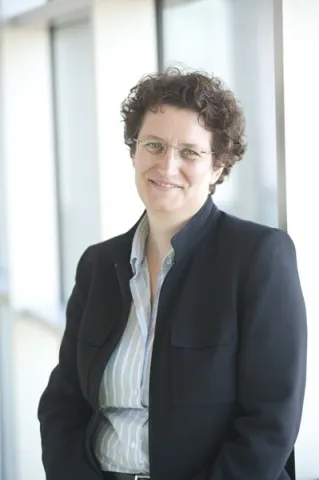
Lead researchers
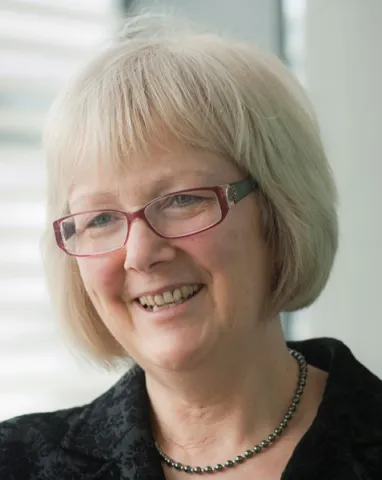
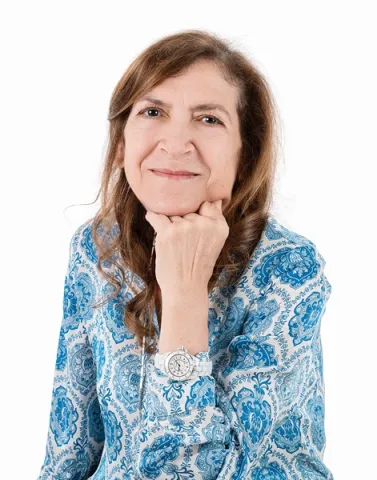
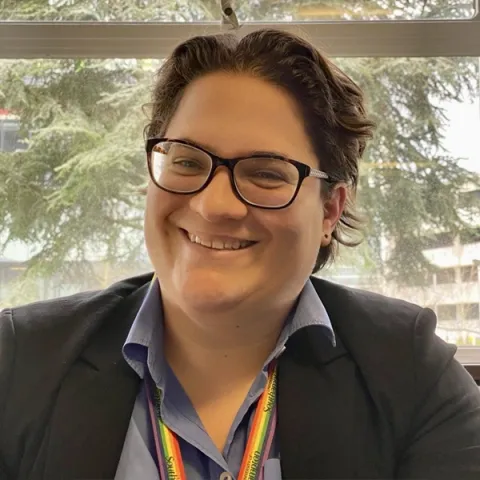
Other researchers
Research outputs
Athina Vlachantoni, Olga Maslovskaya, Maria Evandrou & Jane Falkingham,
2016, Journal of Epidemiology and Community Health, 70, 771-777
Type: article
Maria Evandrou, Jane Falkingham, Zhixin Feng & Athina Vlachantoni,
2016, Journal of Epidemiology & Community Health, 70(7), 653-662
Type: article
Jakub Bijak, Isabel Alberts, Juha Alho, John Bryant, Thomas Buettner, Jane C. Falkingham, Jonathan J. Forster, Patrick Gerland, Nico Keilman, Thomas King, Anthony O'Hagan, Luca Onorante, Darragh Owens, Adrian E. Raftery, Hana Ševčíková & Peter W.F. Smith,
2015, Journal of Official Statistics, 31(4), 537-544
Type: article
James Robards, Athina Vlachantoni, Maria Evandrou & Jane Falkingham,
2015, Advances in Life Course Research, 24, 21-33
Type: article
Athina Vlachantoni, Richard Shaw, Maria Evandrou & Jane Falkingham,
2015, Ageing & Society, 35, 321-345
Type: article
2014, Revue Quetelet/Quetelet Journal, 2(2), 31-59
Type: article