
About
A brief description of who you are and what you do.
This section will only display on your public profile if you’ve added content.
You can update this in Pure (opens in a new tab). Select ‘Edit profile’. Under the heading and then ‘Curriculum and research description’, select ‘Add profile information’. In the dropdown menu, select - ‘About’.
Write about yourself in the third person. Aim for 100 to 150 words covering the main points about who you are and what you currently do. Clear, simple language is best. You can include specialist or technical terms.
You’ll be able to add details about your research, publications, career and academic history to other sections of your staff profile.
Research
Research interests
- Public policy
- Public opinion
- Polling
- Trust
- Voting behaviour
Current research
I am currently engaged in a number of on-going research projects and collaborations. Building on the ESRC-funded ‘TrustGov’ project – I continue to work with Gerry Stoker (Southampton) on questions of political trust and also on place-based politics. In a longstanding collaboration with Christopher Wlezien (University of Texas at Austin), I have been exploring how voters' preferences evolve over the election cycle in different electoral systems and under different political contexts. Lately we have collaborated with Stuart Perrett (UCL), Jonathan Mellon, and Chris Prosser (Royal Holloway) in a study on how polling errors vary across left- and right-wing parties. As part of the 'POLPOP' project led by Stefaan Walgrave (Antwerp) I have been working with Chris Butler and Phil Cowley surveying and interviewing legislators in the UK about aspects of political representation (including trust). Lately I have been collaborating with Gunnar Thesen, Viktor Valgardsson and Daniel Devine on an experimental study of the 'costs of governing'. Other recent projects have investigated urban-rural divides in trust (with Lawrence McKay), how trust, mistrust and distrust shape conspiracy beliefs (with John Kenny and Gerry Stoker), generational differences in political trust (with Maria Grasso, Viktor Valgardsson and Daniel Devine), and the role of generations and life events in political attitudes more generally (with Elizabeth Simon and Laura Serra). Lastly, I continue to work on the Nuffield Election series of books with Robert Ford (Manchester), Tim Bale (QMUL) and Paula Surridge (Bristol).
You can update the information for this section in Pure (opens in a new tab).
Research groups
Any research groups you belong to will automatically appear on your profile. Speak to your line manager if these are incorrect. Please do not raise a ticket in Ask HR.
Research interests
Add up to 5 research interests. The first 3 will appear in your staff profile next to your name. The full list will appear on your research page. Keep these brief and focus on the keywords people may use when searching for your work. Use a different line for each one.
In Pure (opens in a new tab), select ‘Edit profile’. Under the heading 'Curriculum and research description', select 'Add profile information'. In the dropdown menu, select 'Research interests: use separate lines'.
Current research
Update this in Pure (opens in a new tab). Select ‘Edit profile’ and then ‘Curriculum and research description - Current research’.
Describe your current research in 100 to 200 words. Write in the third person. Include broad key terms to help people discover your work, for example, “sustainability” or “fashion textiles”.
Research projects
Research Council funded projects will automatically appear here. The active project name is taken from the finance system.
Publications
Public outputs that list you as an author will appear here, once they’re validated by the ePrints Team. If you’re missing any outputs that you’ve added to Pure, they may be waiting for validation.
Supervision
Current PhD Students
Contact your Faculty Operating Service team to update PhD students you supervise and any you’ve previously supervised. Making this information available will help potential PhD applicants to find you.
Teaching
A short description of your teaching interests and responsibilities.
This section will only display on your public profile if you’ve added content.
You can update your teaching description in Pure (opens in a new tab). Select ‘Edit profile’. Under the heading and then ‘Curriculum and research description’ , select ‘Add profile information’. In the dropdown menu, select – ‘Teaching Interests’. Describe your teaching interests and your current responsibilities. Aim for 200 words maximum.
Courses and modules
Contact the Curriculum and Quality Assurance (CQA) team for your faculty to update this section.
External roles and responsibilities
You can update your external roles and responsibilities in Pure (opens in a new tab). Select ‘+ Add content’ and then ‘Activity’, your ‘Personal’ tab and then ‘Activities’. Choose which activities you want to show on your public profile.
You can hide activities from your public profile. Set the visibility as 'Backend' to only show this information within Pure, or 'Confidential' to make it visible only to you.
Biography
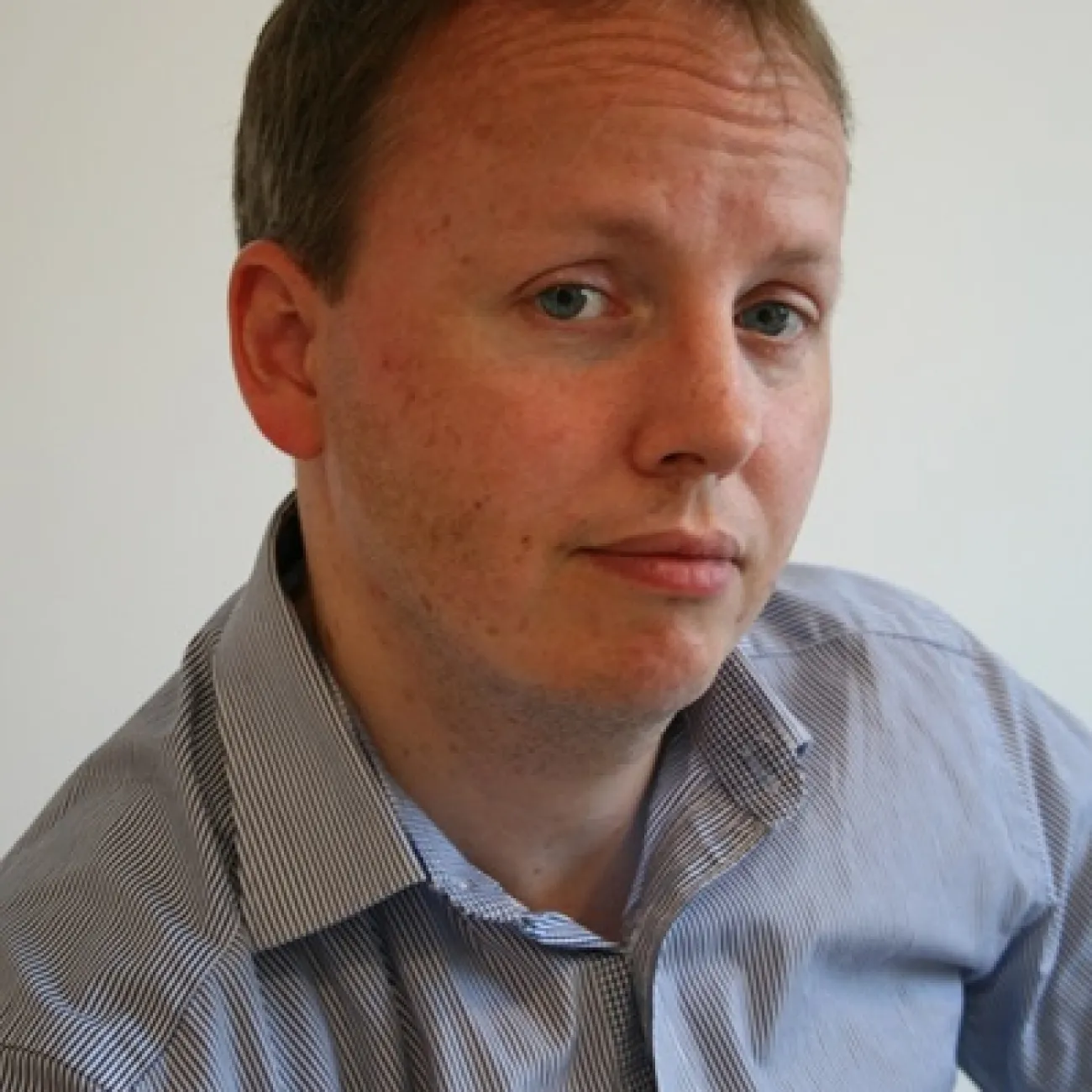
Will Jennings is Professor of Political Science and Public Policy and Associate Dean (Research) in the Faculty of Social Sciences at the University of Southampton. His research explores questions relating to public policy and political behaviour, specifically in relation to public opinion, polling, political trust, elections, electoral geography, agenda-setting, place-based politics, and public administration.
He studied Philosophy, Politics and Economic at the University of York (1996-1999) and received his DPhil from the University of Oxford (2004). He has held positions at the London School of Economics and Political Science (2004-2008), the University of Manchester (2008-2012) and the University of Southampton (2012-present), including a British Academy Postdoctoral Fellowship (2005-2008). He has been Elections Analyst for Sky News since 2017. He was a member of the independent inquiry instigated by the British Polling Council and Market Research Society to investigate the performance of the pre-election polls at the 2015 general election. He has served as a Trustee of the UK Political Studies Association (2014-2019) and co-directed the Centre for Towns think tank with Lisa Nandy MP and Ian Warren (2017-2022). He is a Fellow of the British Academy and a Fellow of the Academy of Social Sciences.
He has authored numerous books relating to political behaviour, including 'Policy Agendas in British Politics' (with Peter John, Anthony Bertelli and Shaun Bevan, 2013), 'The Politics of Competence' (with Jane Green, Cambridge University Press 2017), 'The Good Politician' (with Nick Clarke, Jonathan Moss and Gerry Stoker, Cambridge University Press 2018), and 'The Changing Electoral Map of England and Wales' (with Jamie Furlong, Oxford University Press 2024), as well as the two latest Nuffield Election books, 'The British General Election of 2019 and The British General Election of 2024' (with Rob Ford, Tim Bale and Paula Surridge, Palgrave 2021 and 2025). His latest book, 'Trust in Crisis? How Trust, Mistrust and Distrust Shape Democratic Governance' (with Daniel Devine, Viktor Valgarðsson, Jennifer Gaskell and Gerry Stoker) is due to be published by Cambridge University Press in early 2027.
Prizes
- Harrison Prize for the best article published in Political Studies in 2021. (2022)
- Lijphart/Przeworski/Verba Dataset award (2019)
- APSA Public Policy Section's Best Paper in Comparative Policy Award (2011)
- Bernard Crick Prize for Best Article 2021 in The Political Quarterly (2022)
You can update your biography section in Pure (opens in a new tab). Select your ‘Personal’ tab then ‘Edit profile’. Under the heading, and ‘Curriculum and research description’, select ‘Add profile information’. In the dropdown menu, select - ‘Biography’. Aim for no more than 400 words.
This section will only appear if you enter the information into Pure (opens in a new tab).
Prizes
You can update this section in Pure (opens in a new tab). Select ‘+Add content’ and then ‘Prize’. using the ‘Prizes’ section.
You can choose to hide prizes from your public profile. Set the visibility as ‘Backend’ to only show this information within Pure, or ‘Confidential’ to make it visible only to you.