Key facts
-
Continuous discovery of the effects of pollution on human health
-
Mechanistic targeting of human psychiatric and neurological conditions
-
Leading research in treatments for allergic and infectious diseases
Overview
About Clinical and Experimental Sciences at Southampton
Clinical and Experimental Sciences is part of the Faculty of Medicine. Through research and education, we are improving health outcomes for people worldwide.
We cover a wide range of clinically relevant research areas including:
Academic psychiatry
We bring together clinical and non-clinical researchers to explore mental health problems. We conduct impactful work on research, education, policy and practice. We look to:
- enhance understanding of causes of mental health conditions
- increase their recognition
- evaluate potential treatments
- promote better evidence-based treatments and care pathways
Our research areas include:
- the mechanisms that cause anxiety disorders
- improving overall clinical outcomes in mood and anxiety disorders
- impulsive, compulsive, and behaviourally addictive disorders
- developing the evidence base for specialist management of patients with alcohol dependence
We investigate the role of neurobiological and psychological factors in causing and maintaining illness. We aim to improve trial design by assessing the effectiveness and acceptability of treatment interventions in wider clinical practice. We also work to identify more accurately patient groups at particular risk of poor outcomes.
Allergy, immunity and respiratory
Our research interest across the section include:
- airways and lung diseases such as asthma (paediatric and adult)
- COPD
- alveolar health including the development of lung fibrosis
- primary ciliary dyskinesia
- infectious diseases such as influenza, rhinovirus, and respiratory syncytial virus
- toxicology of air pollutants, and their role in respiratory disease
Our research into allergy centres on allergies affecting the skin and airways, particularly:
- atopic dermatitis
- allergic rhinitis
- allergic asthma
Our dermatology research includes:
- skin cancer
- inflammatory skin diseases
- the effects of ultraviolet light on the skin
We are also interested in oxidative stress and redox balance, particularly in relation to perioperative and critical care.
Our staff collaborate with and have leadership roles in cross-University multidisciplinary institutes, including:
- Institute for Medical Innovation
- Institute for Life Sciences
- Sustainability and Resilience Institute
- Southampton Marine and Maritime Institute
In terms of education:
• we develop and deliver the MSc Allergy course, one of the most prominent education offerings in the Faculty and a world-renowned opportunity for senior clinicians and other health professionals to develop expertise in allergy
• we are a key component of the MRC iPhD Doctoral Training Programme
• our staff deliver major components of pharmacology teaching on our BM courses
Child health
Our research spans across the life-course. We have a community of nationally and internationally leading researchers in each section who conduct research into child health.
We work in close collaboration with clinical researchers at Southampton Children’s Hospital, colleagues in other Schools in the Faculty and across the University. This collaboration allows us to address important research questions in a comprehensive and interdisciplinary way and ensures translation into clinical practice.
Clinical neurosciences
We investigate areas such as:
- the role of inflammation in neurological diseases
- medulloblastoma
- psychoneuroimmunology and neuropsychopharmacology
- hearing loss
- relationships between brain development and long-term neurodevelopmental function in different groups of children born "at-risk"
- influence of external factors including maternal diet on brain development and function
We develop and validate clinical and research tools. We want to increase understanding of disease pathways and vulnerability. We aim to improve existing clinical management and develop new treatments.
Infectious diseases
Our aims focus on:
- infection
- immunology
- inflammation
We want to understand how pathogens causes infectious diseases and use this information to design new vaccines, new antimicrobials and diagnostic assays. A particular strength is our global outreach, with many researchers sharing extensive international collaborations.
Innate immunity
Our expertise includes:
- multiomics
- advanced cell culture models
- in vivo models
- translational studies
We investigate immune processes including infection and inflammation, alongside wound healing, cancer, metabolic and lung disease.
Being diverse and inclusive is key
We bring together clinical, academic, post-doctoral, technical, administrative, and student stakeholder groups working to address key priorities in Equality, Diversity and Inclusion (EDI).
Making greener choices
We have quickly made huge strides towards more sustainable practices. Members have shown real spirit getting behind the Laboratory Efficiency Assessment Framework (LEAF) and contributing to the working group.
Our EDI key priorities
- race, religious and gender equality
- LGBT+ inclusion
- disability support
- tackling harassment, bullying and victimisation
- supporting promotions and career development across all workstreams
We have actively celebrated various religious festivals and marked significant awareness weeks and months, including:
- Hanukkah
- Ramadan (with an Iftar meal)
- Easter and Passover
- Black History Month
- Transgender Awareness Week
- UK Disability History Month
As part of Neurodiversity Celebration week, we organised a talk on neurodiversity by Dr Carlos Hoyas. We celebrated International Language Day and hosted the first CES language workshop. This workshop, covering French, German, Spanish, and Russian, was highly appreciated by participants.
Laboratory Efficiency Assessment Framework (LEAF)
Our LEAF working group was established in early 2023. There are 3 levels of LEAF accreditation (bronze, silver, and gold), each with a more detailed assessment criteria. Our induction and leaver checklists both now encompass most of the guidance requirements, including:
- lab signage
- new robust waste route
- standard operating procedures
- servicing schedules
Our silver-accredited units are:
- Histochemistry Research Unit
- Biomedical Imaging Unit
- Primary Ciliary Dyskinesia Research Labs
Our bronze-accredited units are:
- Molecular Microbiology and Infection
- Innate Immunity
We continue to adopt further sustainable practices across CES to become more environmentally responsible.
Meet our leadership team.


-
Colette O'Neill
Deputy Divisional Head - Infection
-

Arjuna Ratnayaka
Divisional Head - Clinical Neurosciences
-
David Baldwin
Divisional Head - Clinical Neurosciences
-

Sylvia Pender
Divisional Head - Innate Immunity
-

Michaela Reichmann
Divisional Head - Innate Immunity
-

Mark Jones
Divisional Head - Allergy, Immunity and Respiratory
-

Matt Loxham
Divisional Head - Allergy, Immunity and Respiratory


-

David Poore
CES Accountant
-

Hans Michael Haitchi
EDI Committee Representative
-

Marilyn D'costa
Operations Manager
-
Adrian Wilkins
Infrastructure Manager
-
Kerry Spiers-Fitzgerald
Technical Lead


Our research community
Our research groups bring together specialists to share knowledge and solve problems.
-
Brain Archive Information Network UK
-
Clinical Neurosciences
-
Dementia
-
Infectious Diseases
-
Innate Immunity
-
Institute for Life Sciences
-
MINDS-IC
-
National Biofilms Innovation Centre
-
NIHR Southampton Biomedical Research Centre
-
NIHR Southampton Clinical Research Facility
-
Paediatrics and Child Health
-
Psychiatry
-
Vision Science
Our research facilities
We host a range of state-of-the-art facilities that support and enable research.
Our people

Our innovative translational research across the lifespan - driven by a diverse community and strong partnerships with the NHS - creates societal and economic benefits, and impacts lives globally

CES is an outward looking school, with many of its members having strong national and international collaborations in research, teaching and in exchanging knowledge and enterprise activities. We foster a culture of outreach that contributes to enhancing scientific research and innovation globally.
Our commitment to teaching and training across UG and PG courses, aligned with our research activities, produces high quality students well positioned for careers in medicine and medical research.
Research and Enterprise
-
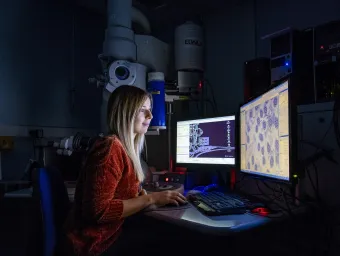
Research
Discover the full range of medical research taking place at the University of Southampton. Read impact stories, explore research groups, and make contact with experts.
-
Enterprise
Learn about how we harness the wealth of knowledge available to us, and maximise its use for the benefit of all, achieving a positive global impact.


Our courses
We also run the following courses with international partner institutions:
Bachelor of Medicine International Transfer
We are part of OnCampus, with students joining the BM5 programme on passing the OnCampus programme.
We have a long tradition in welcoming national and international students to do their PhDs and DMs with us.