
About
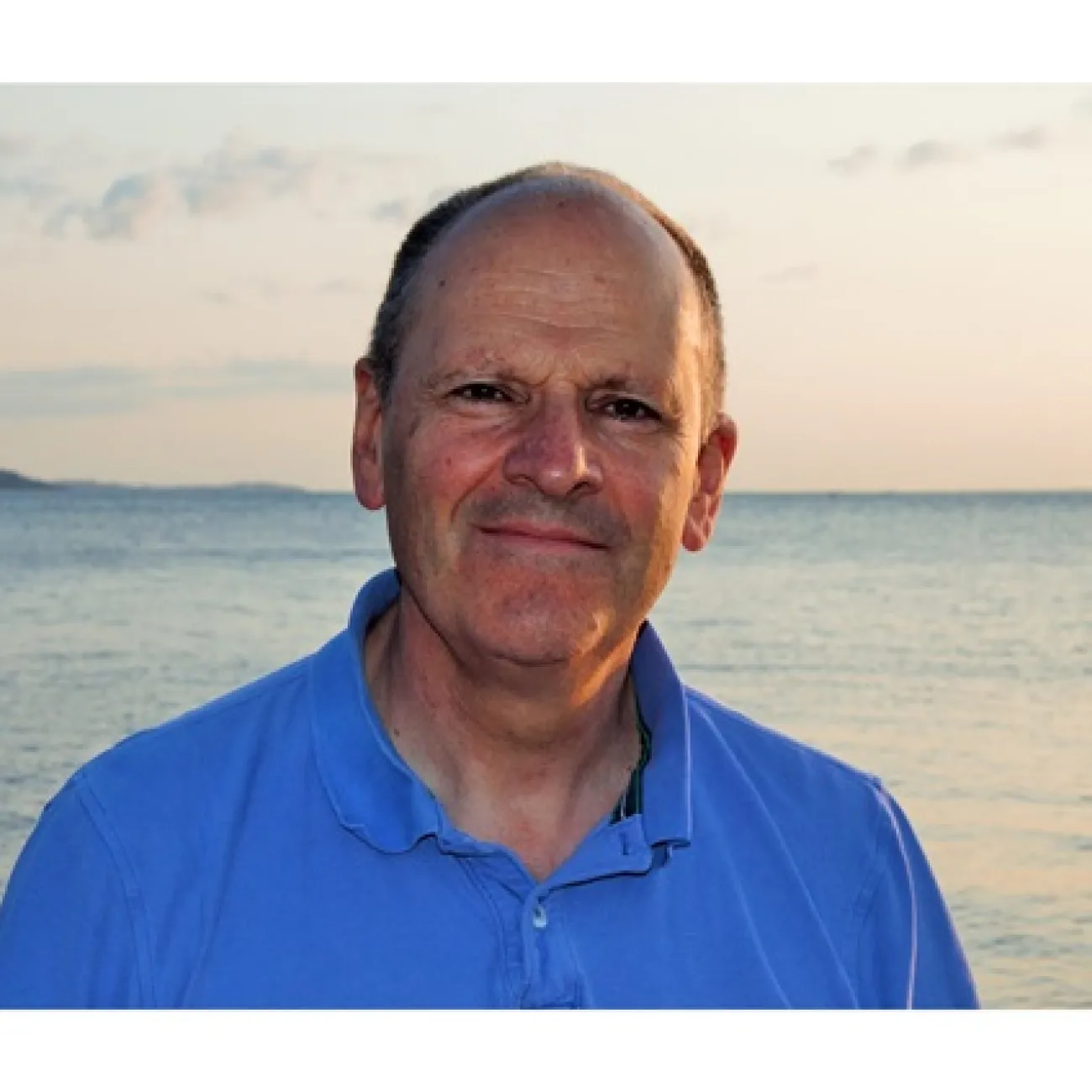
Robert is Professor of Coastal Engineering within the Faculty of Engineering and Physical Sciences at the University of Southampton.
He is a former Director of the Tyndall Centre for Climate Change Research (2019 to 2024) when he was based at the University of East Anglia.
Robert assesses environmental and climatic risks and adaptation responses in coastal areas, with a strong focus on sea-level rise and climate change. Over his career he has made a series of fundamental scientific advances in this regard. These can be summarized into three main contributions which have established the linkages between coastal climate change and sea-level rise and coastal engineering and management:
- Bridging between the science of coastal risks and adaptation on the one hand and coastal policy and practise on the other hand, transferring state-of-the-art science to application;
- Developing a systemic understanding of coastal risks and solutions in the face of sea-level rise and other climate and non-climate induced coastal pressures by integrating across a wide range of disciplines;
- Pioneering global scale research on coastal impacts and adaptation by cross-fertilization between the global, regional and local scale understanding of risks and solutions.
Collectively, this has made a major contribution to understanding and responding to sea-level rise in a real-world context.
Research
Research groups
Research interests
- long-term coastal engineering and management
- the issues of coastal impacts and adaptation to climate change, with an emphasis on sea-level rise
- the assessment of the future of deltaic areas, which are the most threatened coastal setting in the coming century
Current research
Robert Nicholls assesses environmental and climatic risks and adaptation responses in coastal areas, with a strong focus on sea-level rise and climate change. As a result, his research crosses scales from local (e.g., coastal settlements) to global assessments, including consideration of high-risk settings – small islands, deltas and coastal cities.
A distinctive dimension of his work has been the systemic analysis of the coastal zone which facilitates practical insight and understanding of complex issues like the effects of sea-level rise in relation to other drivers and problems in a real-world context.
He is a leader of global assessments of these issues including developing the global Dynamic Interactive Vulnerability Assessment (DIVA) model of sea-level rise risks and adaptation and the associated datasets. These models have been widely applied, such as estimating global costs of coastal protection in response to sea-level rise (as part of the World Bank funded ‘Beyond the Gap’ 2019 study of infrastructure investment costs for climate change). They have also been applied within the European Union Horizon 2020 Programme (including the PROTECT, CoCliCo and REST-COAST Horizon2020 Projects) with a global cost-benefit assessment of coastal restoration in progress.
He also led large projects on coastal assessment linked to erosion and flooding and the future of deltas. He has advised national governments and intergovernmental organisations on climate change and coastal issues.
He is a consistent contributor to the Intergovernmental Panel for Climate Change (IPCC) making an important link from coastal engineering and coastal science to the climate change issue. He was an author of three IPCC assessments from AR2 (1996) to AR4 (2007), including being convening lead author of AR4, a review editor in AR5 (2014), and an author of two IPCC special reports and a contributing author to the Special Report on Oceans and Cryosphere (2019).
He contributed to numerous other reviews and assessments such as the Royal Society’s Resilience to Extreme Weather (2014).
He co-led the World Climate Research Programme (WCRP) Grand Challenge on Regional Sea-Level Rise and Coastal Impacts from 2014 to 2022 co-organising Sea Level 2017 (in New York) and Sea Level 2022 (in Singapore) and was a member of the ASCE/COPRI Coastal Engineering Research Council who organise the International Conference on Coastal Engineering (ICCE) from 2018 to 2026.
Research projects
Completed projects
Publications
Teaching
Robert's teaching involves postgraduate contributions to the Civil Engineering Programmes mostly focussed around Student Dissertations in MSc Energy and Sustainability and MSc Sustainable Energy Technologies.
External roles and responsibilities
Biography
Robert Nicholls is Professor of Coastal Engineering within the School of Engineering at the University of Southampton.
Robert engages in research on coastal/climate issues at the University of Southampton, including collaborations across the University, such as with Oceanography and Geography. His main research focus is long-term coastal issues, especially the issues of coastal impacts and adaptation to climate change, with an emphasis on sea-level rise. This research engages at all scales from local (e.g., the Solent), up to global-scale assessments. A major theme of his research has been. He has led a number of international assessments on coastal cities and small islands, with densely populated deltaic areas being a particular focus.
Robert has published more than 300 peer-reviewed papers, is the co-editor of seven books, and many articles and book chapters. This includes authorship of five assessment reports of the Intergovernmental Panel on Climate Change (IPCC) and other roles from 1992 to 2019. In particular, he led the coastal chapter in the IPCC Fourth Assessment Report when the IPCC were awarded the Nobel Peace Prize (2007).
Subsequently, Robert was awarded the Roger Revelle Medal by the Intergovernmental Oceanographic Commission in 2008. This recognises "outstanding contributions to the ocean sciences by inspired researchers who communicate their knowledge and global vision of the challenges facing our Planet in order to shape a better future for humankind.
He co-led the World Climate Research Programme Grand Challenge on 'Regional sea-level change and coastal impacts' from 2014 to 2022 to deliver sea-level science to support better coastal risk and adaptation assessment in practise. The Grand Challenge organised two major international conferences: 'Sea Level 2017' at Columbia University in July 2017 and 'Sea Level 2022' held in Singapore in July 2022 and continues to contribute to WCRP research efforts in this area.
He was a member of the COPRI Coastal Engineering Research Council from 2018 to 2026 who organize the bi-annual International Conference on Coastal Engineering (ICCE) with the most recent conference being held in Galveston, Texas in 2026. The next ICCE conference in Osaka, Japan in 2028.
He was considered a highly cited scholar by the Web of Science in 2019, 2020, 2021, 2022 and 2025. In Carbon Brief’s ranking of the most highly cited scientists on climate published in 2026 he was ranked 147th globally and 4th in terms of literature cited by the IPCC.
Prizes
- Awarded the Roger Revelle Medal by the Intergovernmental Oceanographic Commission of UNESCO (2008)
- Lloyd’s Science of Risk Prize Climate Change (2012)