
About
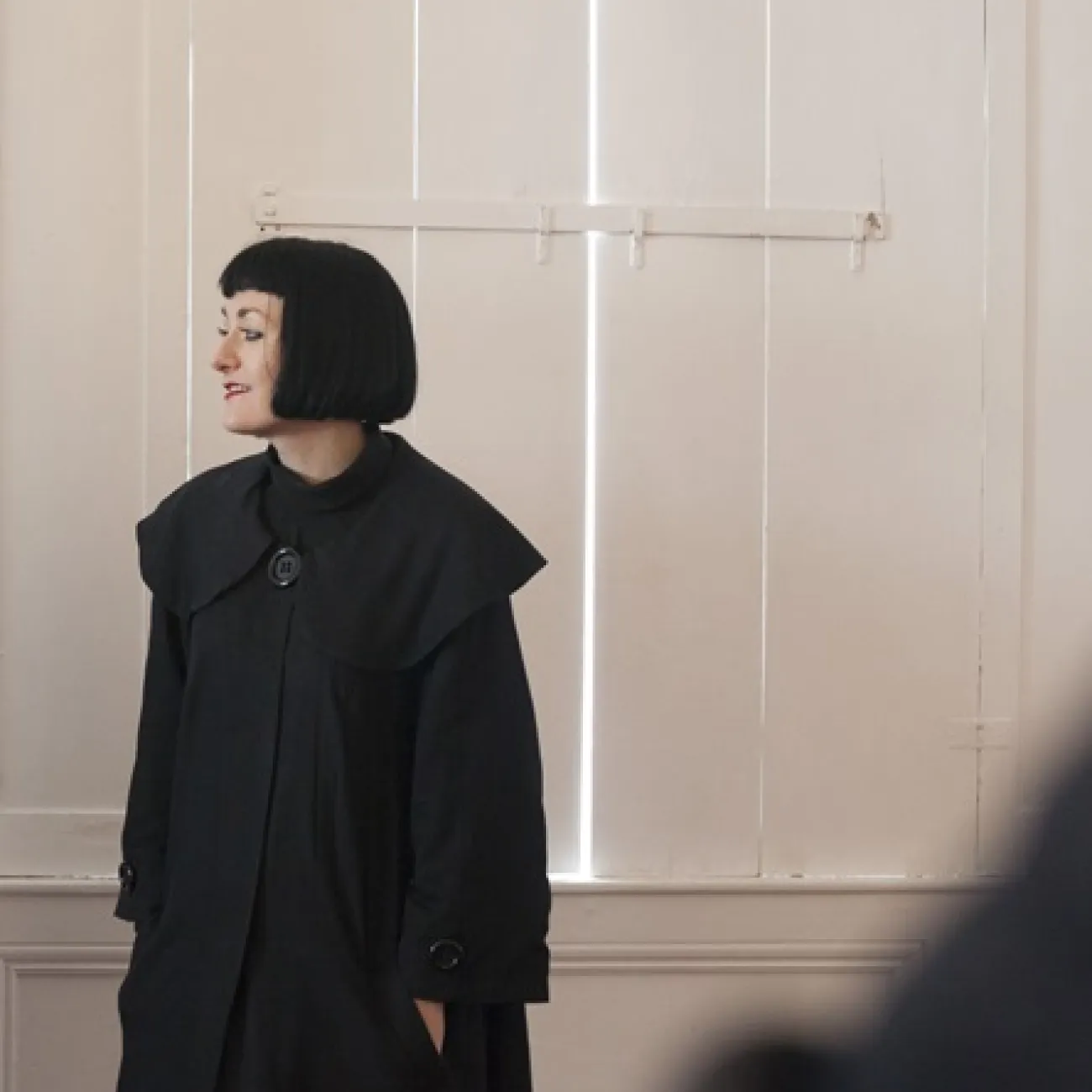
Sarah Hayden is Professor of Experimental Writing and Art. Of late, her work has been concerned with intersections of voice, text, access and art.
Sarah's new book, Voiceworks, will be published by University of Minnesota Press in 2026. This monograph proposes ways of understanding artworks that are voice-led: artworks lent motive force by human voices. Its argument is that voiceworks do not simply use voice. Instead, voiceworks intervene politically and purposefully in the world, through how they handle voice and voicing. Examining works from eighteen established and emerging artists including Tony Cokes, Hito Steyerl, John Akomfrah, Alban Muja, Carla Adra, Irena Haiduk, Emma Wolukau-Wanambwa, and Cally Spooner, Voiceworks attends to the sensuous potentiality of voiced language in composition and physical space. In Voiceworks, Sarah elucidates how these works operate relationally, conscripting embodied involvement in the service of collective critical and resistant aims.
From 2019-2023, Sarah Hayden led an AHRC Innovation Fellowship project on intersections of voice, text, access and art called “Voices in the Gallery.” As part of this project, she curated the exhibitions Many voices, all of them loved (2020) and Liza Sylvestre | asweetsea (2022) as well as various public programs (The Art of Captioning, Caption-Conscious Ecology, A Language of Holes--all in collaboration with Hannah Wallis), study sessions, workshops, screenings and other events at Nottingham Contemporary, Wysing Arts Centre, John Hansard Gallery and elsewhere. In 2022, she collaborated with LUX and Elaine Lillian Joseph on slow emergency siren, ongoing: Accessing Handsworth Songs: a project to make Black Audio Film Collective’s Handsworth Songs newly and differently accessible. Sarah edited the book (large print and online) by that name. In 2024, she collaborated with Liza Sylvestre and Christopher Robert Jones on the Blue Description Project, which toured to venues including Whitney Museum of American Art, BFI London, MCA San Diego, IFI Dublin and MIT List Arts Center Boston.
Sarah’s research and teaching is interdisciplinary; she often collaborates with artists and art institutions and her work is creative and curatorial as well as critical.
You can update this in Pure (opens in a new tab). Select ‘Edit profile’. Under the heading and then ‘Curriculum and research description’, select ‘Add profile information’. In the dropdown menu, select - ‘About’.
Write about yourself in the third person. Aim for 100 to 150 words covering the main points about who you are and what you currently do. Clear, simple language is best. You can include specialist or technical terms.
You’ll be able to add details about your research, publications, career and academic history to other sections of your staff profile.