
About
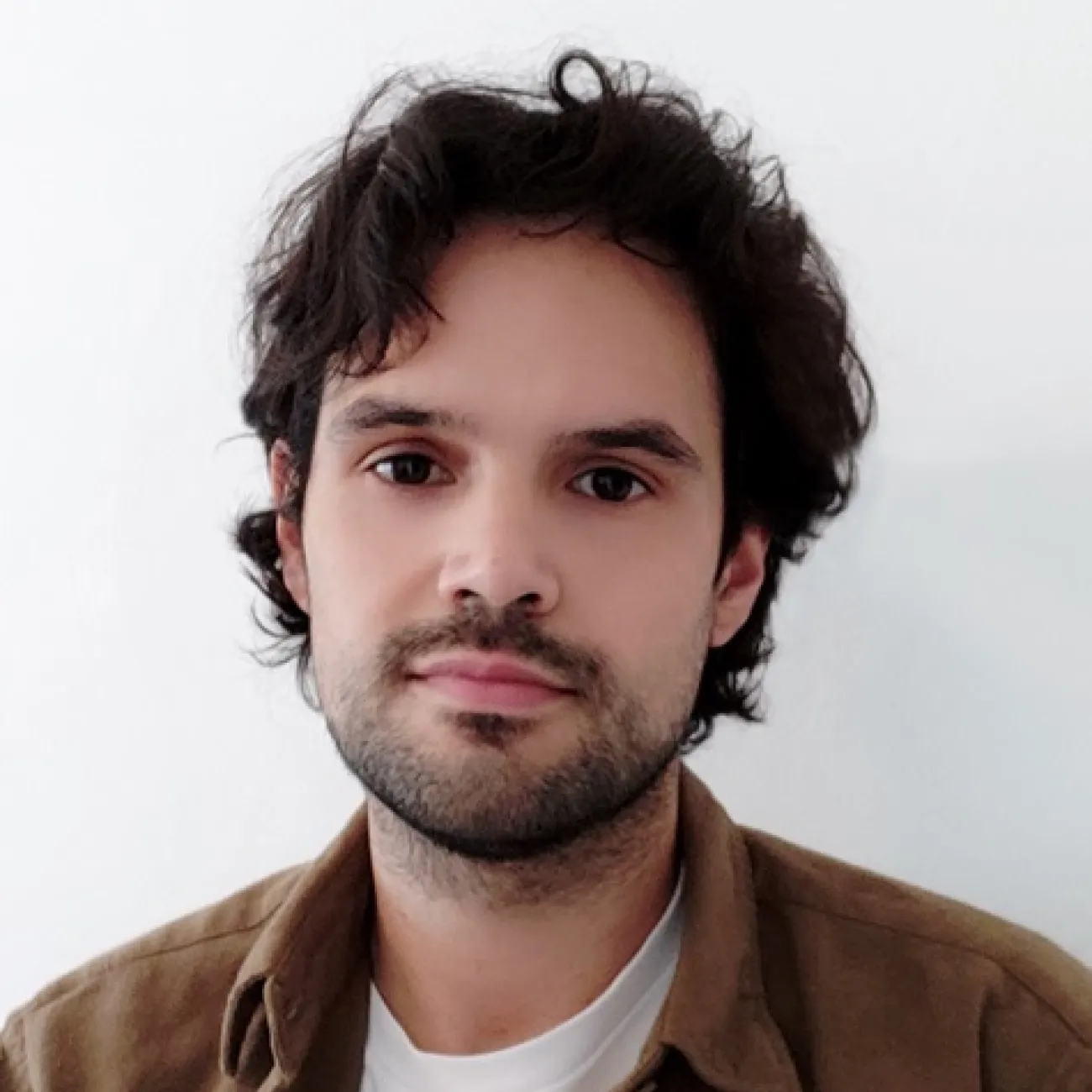
Dr Mestre joined the University of Southampton in 2021 and is currently a Lecturer at the School of Electronics and Computer Science of the University of Southampton. His research examines how emerging technologies can be developed and governed responsibly, combining technical research with social science, ethics, public participation and policy.
A distinctive feature of his work is its focus on technologies while their purposes, applications and governance arrangements are still taking shape. He leads interdisciplinary and participatory research that brings together researchers from computer science, engineering, the physical sciences, social sciences, arts and humanities, alongside citizens, policymakers, civil society and industry. His work spans emerging sensing technologies, biohybrid robotics, responsible AI and digital technologies for democratic participation.
He is currently PI of SOUNDSCALE project, a £1.2 million UKRI Cross-Research Council project investigating the responsible development of distributed fibre-optic sensing in urban and coastal environments. The project adopts a citizen-led approach in which public priorities inform the direction of interdisciplinary technical and social research from the outset. It brings together computer science, engineering, environmental research, public health, social science, geography, arts, humanities and policy. He also led the ESRC New Investigator award "Biohybrid Futures: A framework for research governance and application of bio-hybrid robotics", which examined the ethical, social and policy implications of biohybrid robotics using mixed research methods, and RAI UK International Partnership grant "RAI4MH: Exploring Fairness and Bias of Multimodal Natural Language Processing for Mental Health" in collaboration with the Institute for Experiential AI @ Northeastern University (US). Across these projects, his research has addressed anticipatory governance, responsible innovation, public engagement, interdisciplinary collaboration and the relationship between technical design and societal values.
He began his academic career developing biohybrid robotic systems and nanorobotics at the Institute for Bioengineering of Catalonia, where he worked across tissue engineering, 3D bioprinting, robotics and computer vision. He subsequently moved into interdisciplinary research connecting technical innovation with its wider social and political contexts. Before taking up his current position, he was a New Frontiers Fellow in Machine Learning and a Research Fellow on the Rebooting Democracy project. He was a Turing Fellow at The Alan Turing Institute (2024-2026 cohort).
He is Co-Director of the Centre for Democratic Futures and Ethics and Governance Lead at Southampton’s Centre for Robotics. He is also associated with the University’s Digital Humanities initiative and Institute for Life Sciences.
You can read more about his research in the Research section.
You can update this in Pure (opens in a new tab). Select ‘Edit profile’. Under the heading and then ‘Curriculum and research description’, select ‘Add profile information’. In the dropdown menu, select - ‘About’.
Write about yourself in the third person. Aim for 100 to 150 words covering the main points about who you are and what you currently do. Clear, simple language is best. You can include specialist or technical terms.
You’ll be able to add details about your research, publications, career and academic history to other sections of your staff profile.