
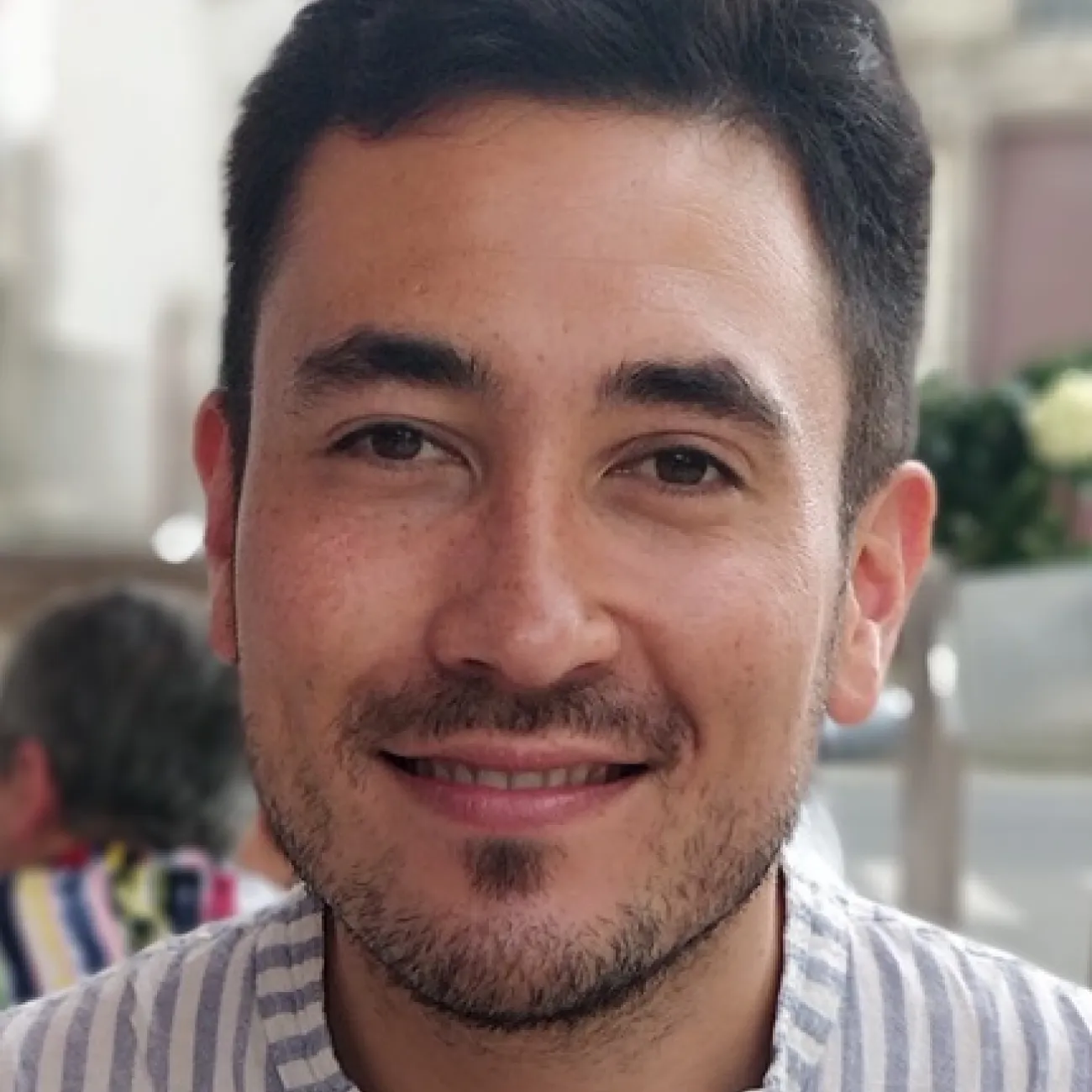
About
Ken joined the University of Southampton as a Lecturer and Ernest Rutherford Fellow in 2023. He is interested in all aspects of collider phenomenology of physics beyond the standard model, particularly effective field theories, extended scalar sectors and axion-like particles. His research aims to connect collider phenomenology with solutions to key puzzles of the standard model, such as the electroweak hierarchy problem, the matter-antimatter asymmetry of the universe, the observed dark matter abundance, and fundamental theoretical constraints from the study of analyticity proerties of scattering amplitudes. He is an expert in the effective field theory approach to new physics searches at colliders, and has worked on large-scale global statistical analysis of high energy physics data and developed several codes for generating precision predictions at collider experiments.
You can update this in Pure (opens in a new tab). Select ‘Edit profile’. Under the heading and then ‘Curriculum and research description’, select ‘Add profile information’. In the dropdown menu, select - ‘About’.
Write about yourself in the third person. Aim for 100 to 150 words covering the main points about who you are and what you currently do. Clear, simple language is best. You can include specialist or technical terms.
You’ll be able to add details about your research, publications, career and academic history to other sections of your staff profile.
Research
Research interests
- Collider phenomenology of physics beyond the standard model
- Effective field theories
- Extended scalar sectors
- Electroweak phase transition
Current research
I am interested in all aspects of collider phenomenology of physics beyond the standard model.
In particular, I have spent the last years focusing on the standard model effective field theory (SMEFT) approach to searching for new physics indirectly via new interactions among standrad model particles. I have worked on global statistical analyses of large high energy physics datasets to measure the parameters of the SMEFT, developed tools for precision predictions for collider processes in the SMEFT framework and produced a series of phenomenological studies aimed at maximising the sensitivity of colliders to indirect new physics effects.
I am also interested in exploring the connection between the space of effective theories and scattering amplitudes, exploiting the analytic properties of the latter to derive ab-initio theoretical constraints on the allowed parameter space, known as positivity bounds, that emerge from assuming a valid quantum field theoretic underliying model for new physics. I am keen to explore the phenomenological consequences of these bounds, in particular how we can use these to improve our sensitivity to effective interactions and test the validity of these assumptions at colliders.
I have also worked exensively on theories involving extended scalar sectors, such as axion-like particles and theoreis with additional Higgs fields in the context of generating the matter anti-matter asymmetry of the universe though a strongly first-order electroweak phase transition and explaining the observed abundance of dark matter.
You can update the information for this section in Pure (opens in a new tab).
Research groups
Any research groups you belong to will automatically appear on your profile. Speak to your line manager if these are incorrect. Please do not raise a ticket in Ask HR.
Research interests
Add up to 5 research interests. The first 3 will appear in your staff profile next to your name. The full list will appear on your research page. Keep these brief and focus on the keywords people may use when searching for your work. Use a different line for each one.
In Pure (opens in a new tab), select ‘Edit profile’. Under the heading 'Curriculum and research description', select 'Add profile information'. In the dropdown menu, select 'Research interests: use separate lines'.
Current research
Update this in Pure (opens in a new tab). Select ‘Edit profile’ and then ‘Curriculum and research description - Current research’.
Describe your current research in 100 to 200 words. Write in the third person. Include broad key terms to help people discover your work, for example, “sustainability” or “fashion textiles”.
Research projects
Research Council funded projects will automatically appear here. The active project name is taken from the finance system.
Publications
Public outputs that list you as an author will appear here, once they’re validated by the ePrints Team. If you’re missing any outputs that you’ve added to Pure, they may be waiting for validation.
Supervision
Current PhD Students
Contact your Faculty Operating Service team to update PhD students you supervise and any you’ve previously supervised. Making this information available will help potential PhD applicants to find you.
Teaching
A short description of your teaching interests and responsibilities.
This section will only display on your public profile if you’ve added content.
You can update your teaching description in Pure (opens in a new tab). Select ‘Edit profile’. Under the heading and then ‘Curriculum and research description’ , select ‘Add profile information’. In the dropdown menu, select – ‘Teaching Interests’. Describe your teaching interests and your current responsibilities. Aim for 200 words maximum.
Courses and modules
Contact the Curriculum and Quality Assurance (CQA) team for your faculty to update this section.
External roles and responsibilities
These are the public-facing activities you’d like people to know about.
This section will only display on your public profile if you’ve added content.
You can update your external roles and responsibilities in Pure (opens in a new tab). Select ‘+ Add content’ and then ‘Activity’, your ‘Personal’ tab and then ‘Activities’. Choose which activities you want to show on your public profile.
You can hide activities from your public profile. Set the visibility as 'Backend' to only show this information within Pure, or 'Confidential' to make it visible only to you.
Biography
I am an Ernest Rutherford Fellow and Lecturer in the Southampton High Energy Physics group. I obtained my PhD in 2013 from the University of Southampton and went on to hold a postdoctoral position at the University of Sussex, UK, a Marie Sklodowska Curie Individual Fellowship hosted at UCLouvain, Belgium, and another postdoctoral position at King's College London. I was awarded an Ernest Rutherford Fellowship in 2023 to pursue my research project entitled "Maximising the new physics reach of the LHC through effective field theories", hosted by the University of Southampton.
You can update your biography section in Pure (opens in a new tab). Select your ‘Personal’ tab then ‘Edit profile’. Under the heading, and ‘Curriculum and research description’, select ‘Add profile information’. In the dropdown menu, select - ‘Biography’. Aim for no more than 400 words.
This section will only appear if you enter the information into Pure (opens in a new tab).
Prizes
You can update this section in Pure (opens in a new tab). Select ‘+Add content’ and then ‘Prize’. using the ‘Prizes’ section.
You can choose to hide prizes from your public profile. Set the visibility as ‘Backend’ to only show this information within Pure, or ‘Confidential’ to make it visible only to you.