
About
A brief description of who you are and what you do.
This section will only display on your public profile if you’ve added content.
You can update this in Pure (opens in a new tab). Select ‘Edit profile’. Under the heading and then ‘Curriculum and research description’, select ‘Add profile information’. In the dropdown menu, select - ‘About’.
Write about yourself in the third person. Aim for 100 to 150 words covering the main points about who you are and what you currently do. Clear, simple language is best. You can include specialist or technical terms.
You’ll be able to add details about your research, publications, career and academic history to other sections of your staff profile.
Research
Your current research, published research topics, projects and groups.
This section will only display on your public profile if you’ve added content.
You can update the information for this section in Pure (opens in a new tab).
Research groups
Any research groups you belong to will automatically appear on your profile. Speak to your line manager if these are incorrect. Please do not raise a ticket in Ask HR.
Research interests
Add up to 5 research interests. The first 3 will appear in your staff profile next to your name. The full list will appear on your research page. Keep these brief and focus on the keywords people may use when searching for your work. Use a different line for each one.
In Pure (opens in a new tab), select ‘Edit profile’. Under the heading 'Curriculum and research description', select 'Add profile information'. In the dropdown menu, select 'Research interests: use separate lines'.
Current research
Update this in Pure (opens in a new tab). Select ‘Edit profile’ and then ‘Curriculum and research description - Current research’.
Describe your current research in 100 to 200 words. Write in the third person. Include broad key terms to help people discover your work, for example, “sustainability” or “fashion textiles”.
Research projects
Research Council funded projects will automatically appear here. The active project name is taken from the finance system.
Publications
Public outputs that list you as an author will appear here, once they’re validated by the ePrints Team. If you’re missing any outputs that you’ve added to Pure, they may be waiting for validation.
Supervision
Current PhD Students
Contact your Faculty Operating Service team to update PhD students you supervise and any you’ve previously supervised. Making this information available will help potential PhD applicants to find you.
Teaching
A short description of your teaching interests and responsibilities.
This section will only display on your public profile if you’ve added content.
You can update your teaching description in Pure (opens in a new tab). Select ‘Edit profile’. Under the heading and then ‘Curriculum and research description’ , select ‘Add profile information’. In the dropdown menu, select – ‘Teaching Interests’. Describe your teaching interests and your current responsibilities. Aim for 200 words maximum.
Courses and modules
Contact the Curriculum and Quality Assurance (CQA) team for your faculty to update this section.
External roles and responsibilities
These are the public-facing activities you’d like people to know about.
This section will only display on your public profile if you’ve added content.
You can update your external roles and responsibilities in Pure (opens in a new tab). Select ‘+ Add content’ and then ‘Activity’, your ‘Personal’ tab and then ‘Activities’. Choose which activities you want to show on your public profile.
You can hide activities from your public profile. Set the visibility as 'Backend' to only show this information within Pure, or 'Confidential' to make it visible only to you.
Biography
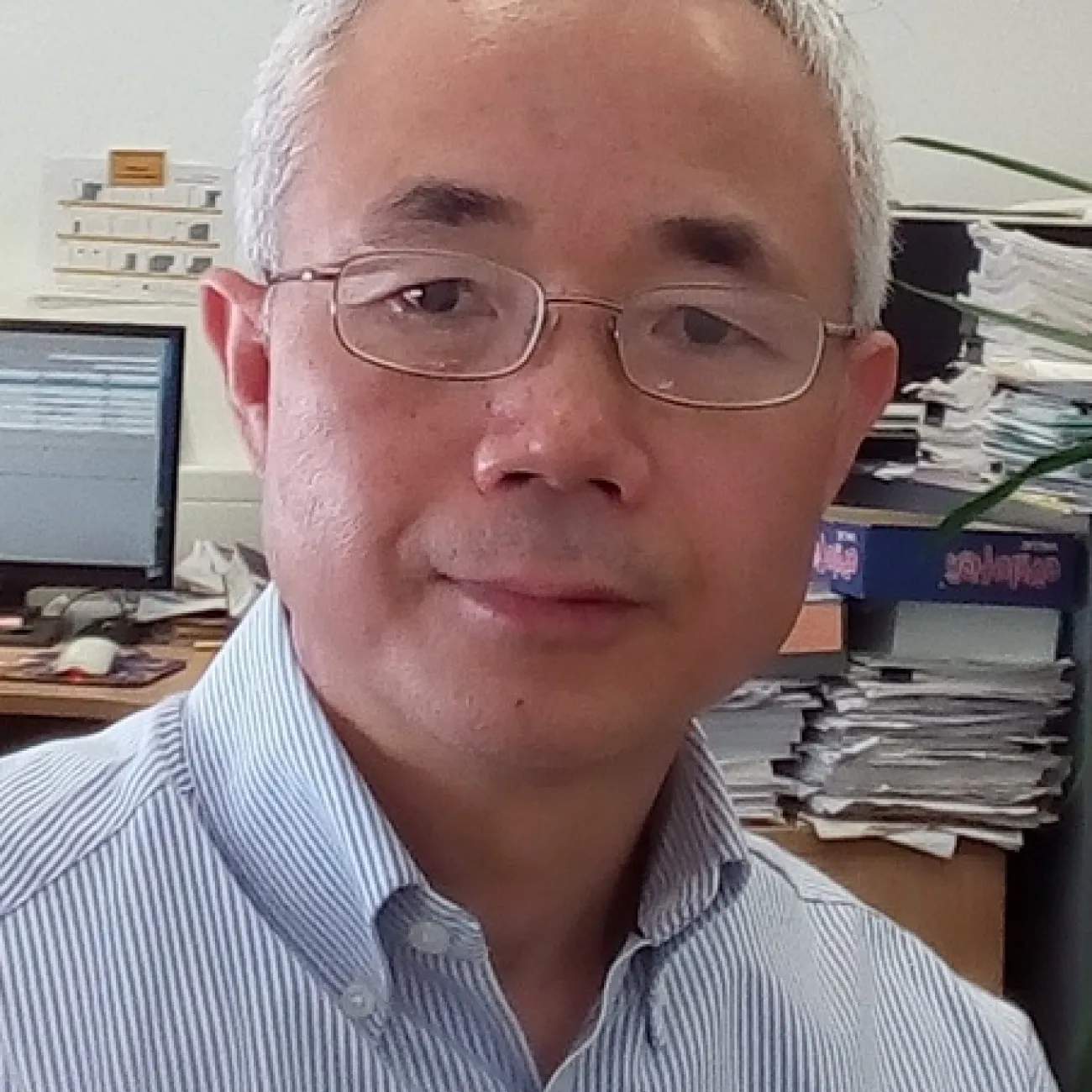
Lie-Liang Yang is the professor of wireless communications in the School of Electronics and Computer Science at the University of Southampton. He received his M.Eng and Ph.D degrees in communications and electronics from Northern (Beijing) Jiaotong University, Beijing, China in 1991 and 1997, respectively, and his B.Eng degree in communications engineering from Shanghai Tiedao University, Shanghai, China in 1988. Additionally, he received a Postgraduate Certificate in Education from University of Southampton, Southampton, UK in 2005.
From June 1997 to December 1997, he was a visiting scientist to the Institute of Radio Engineering and Electronics, Academy of Sciences of the Czech Republic. Since December 1997, he has been with the School of Electronics and Computer Science, University of Southampton, UK, where he was first a Postdoctoral Research Fellow (Dec. 1997 - Aug. 2002), then a Lecturer (Sept. 2002 - Feb. 2006), then a Reader (Mar. 2006 - June 2010) and has been the Professor of Wireless Communications since June 2010.
He has research interest in a range of areas in wireless communications, wireless networks, signal processing for wireless communications, molecular and nano communications, and now also quantum communications. In these areas, he published 500+ research papers, which include 300+ journal papers and 200+ conference papers. He authored/co-authored four research monographs: A) Multicarrier Communications (2009), published by John Wiley & Sons. This book was also translated into Chinese and published by the Publishing House of Electronic Industry of China. B) Single- and Multi-Carrier DS-CDMA - Multiuser Detection, Space-Time Spreading, Synchronization and Standards (2003) and C) Near-Capacity Variable-Length Coding (2010), both jointly published by John Wiley & Sons and IEEE Press. D) Resource Optimization in Wireless Communications: Fundamentals, Algorithms, and Applications (2025), published by Academic Press. He also published 10+ book chapters. For the details of his publications, please visit https://www.ecs.soton.ac.uk/people/llyang#publications. Furthermore, he wrote a document providing a comprehensive analysis of the Doppler effect in various application scenarios in wireless communications and wireless sensing, which can be downloded at: https://arxiv.org/abs/2602.09955.
He is a Fellow of the IEEE in the USA (2016), a Fellow of the IET (previously IEE) in the UK (2011), a Fellow of Asia-Pacific Artificial Intelligence Association (AAIA), Hong Kong (2023), and a Fellow of International Artificial Intelligence Industry Alliance (AIIA), Hong Kong (2024). He became a Chartered Engineer (CEng) in 2025. He received the 2025 IEEE ComSoc Radio Communications Committee (RCC) Technical Recognition Award in recognition of his contributions to multicarrier communications and CDMA. He was a Distinguished Lecturer of the IEEE Vehicular Technology Society (2018-2019). He received the Vice-Chancellor Teaching Award of the University of Southampton in 2006. He received the Sino-British Post-doctoral Fellowship by the British Royal Society in 1997.
He acted as general/honorary/TPC/symposium/awards/area/track/workshop chairs for various conferences and was involved in the teams of Technical Programme Committees (TPC) of many conferences. He delivered numerous tutorial lectures at conferences and universities worldwide. He served as a member of IEEE VTS Fellow Evaluation Committee (2022-23). He has been a senior editor to the IEEE Journal of Selected Topics in Signal Processing (J-STSP) since 2026, a subject editor to the IET Electronics Letters since 2022, served as an associate editor to the IEEE Transactions on Vehicular Technology, Journal of Communications and Networks (JCN), Security and Communication Networks (SCN) Journal, IEEE Access, etc. He acted as a Senior Editor to the IEEE Access (2022-24). He was one of the guest editors for the special issues in: IEEE Journal on Selected Areas in Communications (2013), IEEE Wireless Communication Magazine (2013), IEEE Communication Magazine (2014), IEEE Systems Journal (2015), EURASIP Journal on Wireless Communications and Networking (2011), China Communications.
You can update your biography section in Pure (opens in a new tab). Select your ‘Personal’ tab then ‘Edit profile’. Under the heading, and ‘Curriculum and research description’, select ‘Add profile information’. In the dropdown menu, select - ‘Biography’. Aim for no more than 400 words.
This section will only appear if you enter the information into Pure (opens in a new tab).
Prizes
You can update this section in Pure (opens in a new tab). Select ‘+Add content’ and then ‘Prize’. using the ‘Prizes’ section.
You can choose to hide prizes from your public profile. Set the visibility as ‘Backend’ to only show this information within Pure, or ‘Confidential’ to make it visible only to you.