
About
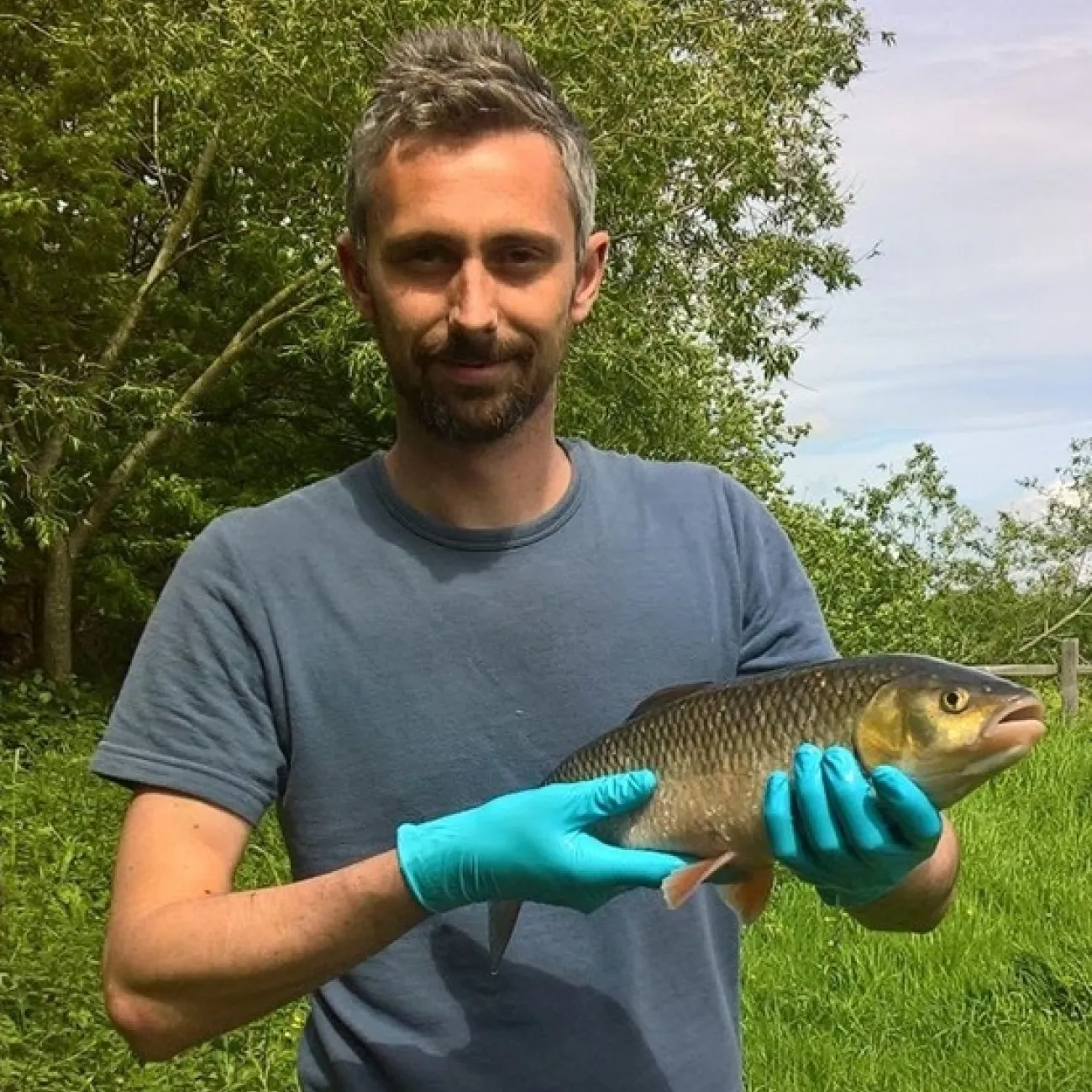
Dr Andrew Vowles is a Lecturer within the Faculty of Engineering and Physical Sciences at the University of Southampton.
His research interests broadly relate to mitigating anthropogenic impacts on freshwater environments. Initially this was achieved while working for a river restoration consultancy and, more recently in academia. Andrew’s research is truly interdisciplinary, linking biology and ecology with principles of hydraulic engineering with the aim of advancing river management. Andrew mainly works with fish and adopts a range of techniques, from lab-based studies that allow the fine-scale behaviour of fish to be quantified to field-based research on fish habitat use and community composition.
Andrew teaches on topics such as freshwater ecosystems, river restoration and environmental impact and mitigation of engineered infrastructure.
Research
Research interests
- Ecological engineering
- Freshwater ecology
- Ecohydraulics
- Animal behaviour
- Fish passage
Current research
Andrew’s research interests currently centre around four key areas: 1) understanding how environmental stimuli influences fish behaviour, 2) methods and approaches of facilitating fish passage at river infrastructure, 3) monitoring river restoration, and 4) fish welfare.
Fish response to environmental stimuli
Understanding how environmental stimuli influence the behaviour of fish can play an important role in their conservation. It can underpin how we manipulate or manage the environment to reduce negative anthropogenic impacts. For example, an understanding of how fish respond to light may help influence light management strategies in urban areas, reducing impacts of light pollution on freshwater fish. Or, knowing the threshold level of water acceleration that triggers fish avoidance can help in the design of downstream fish passage facilities. These aim to provide a safe alternative route past hazardous river infrastructure (such as turbine intakes), but abrupt accelerations of flow are commonly encountered at their entrance. Many fish avoid these areas leading to delayed migration and increased predation risk.
Facilitating fish passage at river infrastructure
Effective fish passage and screening strategies are essential for developing environmentally sustainable energy (e.g. hydropower) and mitigating the negative impacts of river infrastructure (dams, weirs, culverts) on fish movements and migration. Utilising large open-channel flumes in the Faculty of Engineering and Physical Sciences, this research quantifies fish passage efficiency at experimental weirs when unmodified and modified with various fish pass designs. The experimental approach adopted allows the hydrodynamic environment to be quantified and the fine-scale behaviour of fish to be observed during passage, something much more difficult to achieve in the field, but which can greatly aid design optimisation.
River restoration
Andrew is involved in various field-based research projects which can be broadly categorised as ‘river restoration’. An increasing number of rivers are undergoing physical habitat restoration in an effort to mitigate the negative impacts of river channel modification and changes in land-use. Monitoring ecological change following river restoration is of key importance in addressing some fundamental questions relating to which techniques work, where and over what time scales. Other field-based research has enhanced our understanding of brown trout habitat use relative to physical characteristics in groundwater-fed chalk streams and monitored fish community composition at sites where the Eurasian beaver has been reintroduced in the UK (e.g. as part of the River Otter Beaver Trial).
Fish welfare
Andrew is increasingly interested in the welfare of fish used in behavioural studies. He has successfully obtained funding to investigate the interplay between environmental enrichment, welfare and fish behaviour during applied experimental studies. This research will provide evidence to help improve fish welfare and the reliability of data intended to address applied problems.