Project overview
This project works with young asylum seekers aged 25 and under and uses a Person-Based Approach (PBA). This means we listen carefully to young people’s voices and work together to design support around what matters most to them.
Aim
To work together with young asylum seekers to develop support that improves emotional well-being and mental health.
What we want to achieve
- Create a safe, inclusive space where young people feel comfortable sharing ideas and experiences.
- Work with young asylum seekers to plan support that meets their emotional well-being and mental health needs.
- Improve understanding of mental health in ways that feel relevant and culturally appropriate.
- Help young people develop useful life skills, such as communication.
- Share learning with organisations that support young asylum seekers, including local councils, foster carers, and charities.
Planned activities
The project builds on strong relationships developed over the past year through regular sessions with young asylum seekers in Southampton and Portsmouth. Over six months, we will run eight two-hour sessions across the two council areas. The project has two main stages.
Stage 1: Understanding emotional well-being needs and planning support 3 of 10 April 2026
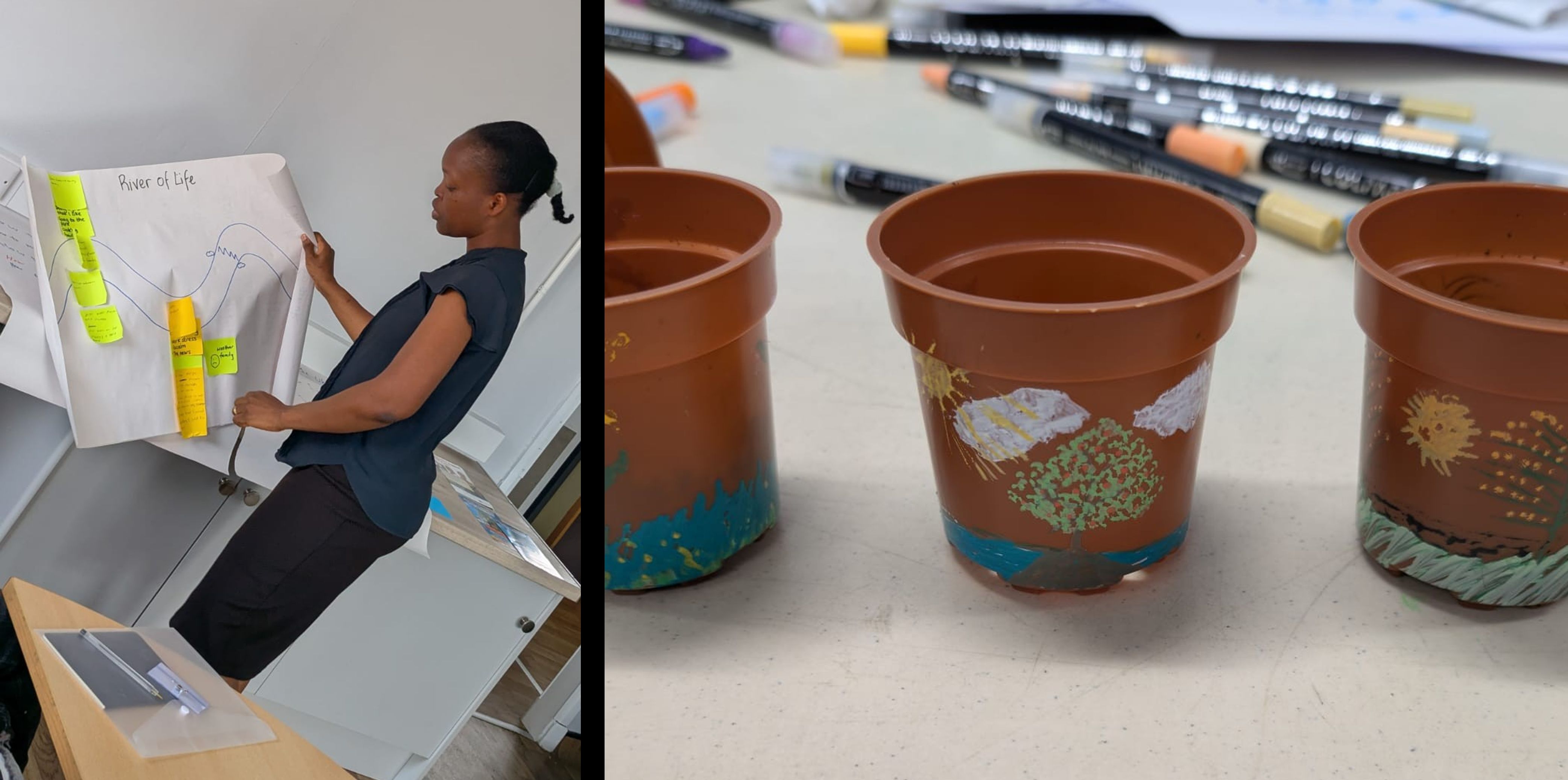
We will hold interactive workshops where young asylum seekers help make sense of findings from earlier interviews. Some participants may be new. Together, we will look at emotional well-being needs and what support is missing.
May–June 2026 We will deliver creative workshops in both council areas. Young people will work with the project team to design an early version of an emotional well-being support package. The focus will be on making it engaging, culturally appropriate, and easy to use.
Early findings show that settling into life in the UK strongly affects emotional well-being. This includes learning English, understanding education and career options, and building confidence in everyday situations such as speaking to professionals or meeting new people.
Example quote: “Football and learning his English, especially when you go out alone in public and want to meet somebody, like in … , that makes me happy.” (interpreted for YP12)
Stage 2: Testing and improving the support July–August 2026
We will test the support with young asylum seekers. For example, a career talk will be delivered by a lived experience mentor. Participants will share whether the language is clear, the session feels relevant, and the information is useful. We will use this feedback to improve the support.
Sharing and learning together September 2026
Young people will help plan how to share findings with key organisations. This may include creating youth-friendly materials and choosing effective ways to reach different audiences. We will also evaluate the project together, reflecting on what worked well and what could be improved.
Facilitators: Lead applicant (researcher of African origin with 20 years’ experience working with young people), lived experience mentors/public contributors, and student partners.
Ethical considerations: We have obtained permission to do this project from the Faculty of Medicine, University of Southampton ethics committee: ERGO99701
Safeguarding concerns and counselling needs will be referred to the appropriate teams.
Collaborations
This project is in collaboration with Southampton City Council, The United Voice of African Association, Portsmouth City Council and Solent Mind.
This project is funded by NIHR School for Primary Care - project 815 PPIE Enablement Award.
Aim
To work together with young asylum seekers to develop support that improves emotional well-being and mental health.
What we want to achieve
- Create a safe, inclusive space where young people feel comfortable sharing ideas and experiences.
- Work with young asylum seekers to plan support that meets their emotional well-being and mental health needs.
- Improve understanding of mental health in ways that feel relevant and culturally appropriate.
- Help young people develop useful life skills, such as communication.
- Share learning with organisations that support young asylum seekers, including local councils, foster carers, and charities.
Planned activities
The project builds on strong relationships developed over the past year through regular sessions with young asylum seekers in Southampton and Portsmouth. Over six months, we will run eight two-hour sessions across the two council areas. The project has two main stages.
Stage 1: Understanding emotional well-being needs and planning support 3 of 10 April 2026
We will hold interactive workshops where young asylum seekers help make sense of findings from earlier interviews. Some participants may be new. Together, we will look at emotional well-being needs and what support is missing.
May–June 2026 We will deliver creative workshops in both council areas. Young people will work with the project team to design an early version of an emotional well-being support package. The focus will be on making it engaging, culturally appropriate, and easy to use.
Early findings show that settling into life in the UK strongly affects emotional well-being. This includes learning English, understanding education and career options, and building confidence in everyday situations such as speaking to professionals or meeting new people.
Example quote: “Football and learning his English, especially when you go out alone in public and want to meet somebody, like in … , that makes me happy.” (interpreted for YP12)
Stage 2: Testing and improving the support July–August 2026
We will test the support with young asylum seekers. For example, a career talk will be delivered by a lived experience mentor. Participants will share whether the language is clear, the session feels relevant, and the information is useful. We will use this feedback to improve the support.
Sharing and learning together September 2026
Young people will help plan how to share findings with key organisations. This may include creating youth-friendly materials and choosing effective ways to reach different audiences. We will also evaluate the project together, reflecting on what worked well and what could be improved.
Facilitators: Lead applicant (researcher of African origin with 20 years’ experience working with young people), lived experience mentors/public contributors, and student partners.
Ethical considerations: We have obtained permission to do this project from the Faculty of Medicine, University of Southampton ethics committee: ERGO99701
Safeguarding concerns and counselling needs will be referred to the appropriate teams.
Collaborations
This project is in collaboration with Southampton City Council, The United Voice of African Association, Portsmouth City Council and Solent Mind.
This project is funded by NIHR School for Primary Care - project 815 PPIE Enablement Award.