

The University of Southampton is committed to providing a world-class education and research environment. We also play a vital role in our region’s economy, supporting thousands of jobs and opportunities across Southampton and beyond.
As Southampton’s second-largest employer, we are proud to have around 6,500 staff. Most are based at our Highfield Campus, but beyond the campus, our spinouts, supply chains, and partnerships sustain thousands more jobs across the region. Much of our estate was shaped in the 1960s under the Basil Spence masterplan. But with fresh investment, we have the opportunity to reimagine it for the future. We're creating a more sustainable campus that advances our environmental goals while deepening our role at the heart of the community.
This estates strategy sets out an ambitious programme of short and long-term developments. These will strengthen our buildings and transport infrastructure, create modern facilities that improve teaching and research, support a vibrant, thriving campus community and help us achieve our environmental commitments.
This investment will ensure we remain resilient, sustainable and equipped to deliver life-changing experiences for generations of students.
The Estates Masterplan has been assembled to give a strategic focus on 5 key goals:
- Deliver University strategy to meet our growth ambitions.
- Provide the spaces needed for a world-class education, driven student experience.
- Make a positive contribution to our neighbourhood, the mental wellbeing of our people and visitors and to biodiversity with an inclusive environment.
- Invest University resources wisely to help us make the best use of existing spaces, make our current buildings work harder through optimisation, and where necessary retrofitting.
- Create long-term resilience and address backlog maintenance on our estate by upgrading critical infrastructure to to support growth.
Featured developments
-
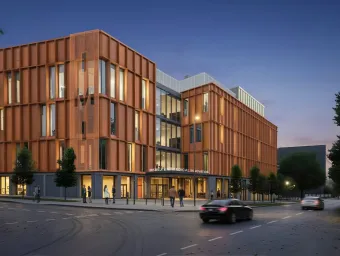
The Institute for Medical Innovation (IMI)
The Institute for Medical Innovation (IMI) is a once-in-a-generation chance aims to bring people together using the right technologies, to find the answers for the most serious health challenges.
-
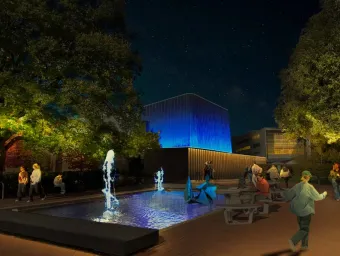
Public Realm improvements
Public Realm improvements aims to make the University more welcoming, accessible and connected.
-
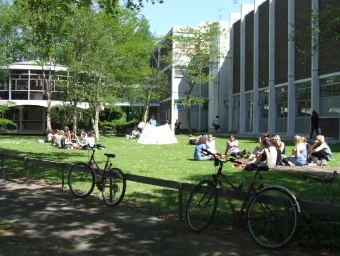
Winchester School of Art Development Plan
We're developing our WSA estate to deliver a three-campus, two-city approach, creating compelling learning and teaching spaces fit for the future delivery of our courses; scaled to meet our long-term growth ambitions.
-
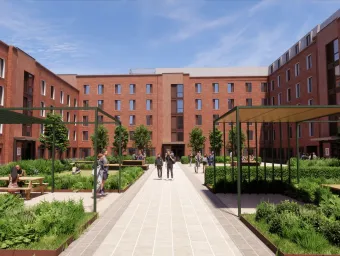
Wessex Lane halls development project
Read more about our accommodation building project for Wessex Lane
-

Clinical Skills Hub
Mirroring the real world, the Clinical Skills Hub will provide space for the medicine and health subjects for clinical training for tomorrow's aspiring doctors, nurses, podiatrist's, physio and occupational therapists.
-
Combined STEM building
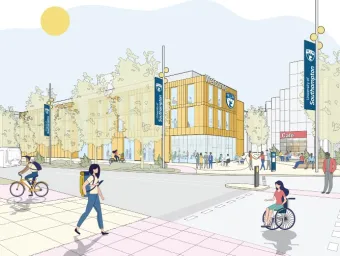
Bringing together wet labs, dry labs and computational spaces, the new STEM building will enhance student experience, enable new teaching models, and strengthen cross-faculty collaboration. A landmark for interdisciplinary learning.
-
Turner Sims
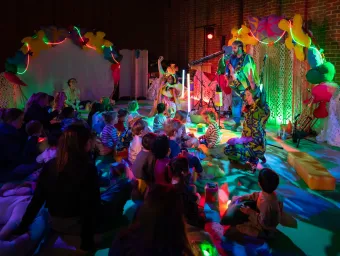
Creating a more accessible, inclusive and sustainable music venue for audiences, artists, students, staff and community partners.
-

Nuffield Theatre redevelopment
Renewing the Nuffield Theatre making it a more flexible space for teaching, events and cultural activity.


Between 2025 and 2028 we'll upgrade our power infrastructure to support our heat decarbonisation and water efficiency goals. We'll also create more flexible, accessible and welcoming spaces for learning, research and collaboration and create new green spaces to increase biodiversity on campus.
These initial projects will underpin developments for the next 10 years and include:
- developing a new home for our award winning primary care research with the faculty of medicine - The North East Quadrant building
- reviewing the green paces across our campus, improving access and increasing biodiversity
- building a new shared STEM building to bring teaching across science, technology, engineering and maths together
- creating a new outreach and academic hub for biosciences with the Precision Biosciences innovation Hub
- providing a new Clinical Skills building for medicine and health sciences clinical training
- transforming the old Granby Grove Villas site into a new kitchen garden space
- refurbishing several buildings across campus, including the Physics building
- assessing transport and parking needs to support staff and visitors to our art and sports venues
- exploring the possibility of a UK first laboratory space on Boldrewood campus