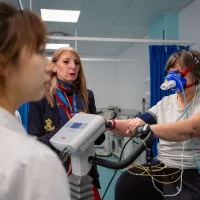
The Medical Technology, Innovation and Design Master‘s is a one-year course for people who want to improve the future of healthcare.
It brings together students from medicine, engineering, computer science, product design, the life sciences, business and other fields to solve real clinical problems and create practical solutions.
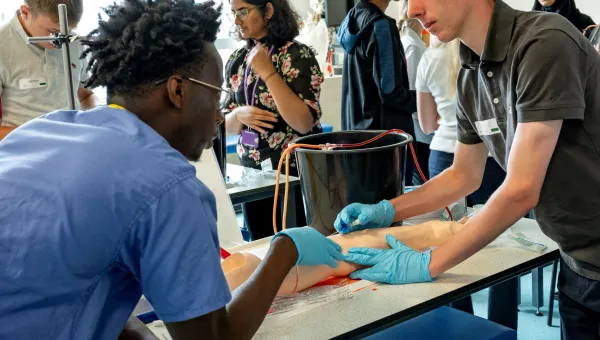
In the first phase, you will shadow frontline services within the UK health system and spend a further month in a hospital outside of the UK that operates under a different healthcare model.
This provides first-hand insight into how clinicians and patients navigate different structures, resources, and challenges across health systems.
The costs of both placements are included in your course fees.
In the second phase, you will return to Southampton to work in a small multidisciplinary team. You'll develop a prototype medical device or digital health tool to address a need you have identified.
You will take your ideas from initial concept to functional prototype. You will own the intellectual property you generate.
In the final phase, you’ll create an impact plan that aligns with your goals. This includes testing and optimisation, regulatory considerations, and business models or charity pathways.
The advanced skills in collaborative problem solving you’ll develop are essential for healthcare innovation but rarely taught on postgraduate courses. When you graduate, we will support your next steps through our healthcare, charity, business and investor partnerships.
Learn from world-leading innovators
Throughout the Medical Technology, Innovation and Design course you’ll be mentored by leading experts across the spectrum of medical technology and healthcare innovation. This includes specialists in:
AI in healthcare
wearable and implantable devices
sensory prosthetics
upper and lower limb prosthetics
biomedical energy harvesting
software and electronics engineering
product design and evaluation
health service leadership
medical device regulation, intellectual property and patents
health entrepreneurship and investment
marketing and communication strategy
You’ll also work directly with industry partners, start-ups, charities and investors who have brought major medical technologies to market.
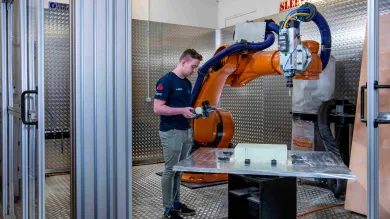
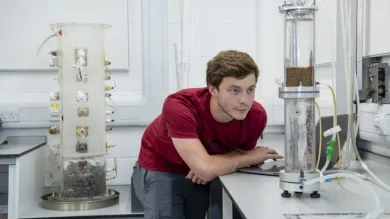
You’ll use our dedicated design suite, with advanced 3D printing and electronics prototyping facilities, supported by technical experts. You’ll also have access to facilities across the University. These include Iridis, one of the world’s top 500 supercomputers, the Faculty of Medicine’s wet lab facilities, and biomedical imaging facilities at the Institute for Life Sciences.
You’ll also benefit from our close partnership with the Biomedical Engineering MSc and have access to training and expertise across the wider university. This includes our world-leading research centres in smart materials, nutrition and metabolism, big data in health, dementia, cancer and immunology.
This Medical Technology, Innovation and Design course is highly collaborative and practical. It will challenge you and give you the skills and confidence to make a meaningful impact in healthcare, whether you want to work as an innovator, clinician, engineer, entrepreneur or future industry leader.
We regularly review our courses to ensure and improve quality. This course may be revised as a result of this. Any revision will be balanced against the requirement that the student should receive the educational service expected. Find out why, when, and how we might make changes.
Our courses are regulated in England by the Office for Students (OfS).
Course lead
The lead for this course is Susan Patrick. Susan is a Principal Enterprise Fellow and Deputy Head of School (KEE) at the School of Healthcare Enterprise and Innovation. She leads enterprise initiatives, partnerships, and innovation focused programmes that connect academia with healthcare and industry. Her background includes senior roles within academia and a strong track record in educational leadership and knowledge exchange.
If you have any questions about this course, email us on MTID@soton.ac.uk and one of our team will be happy to assist you.
Explore the MSc in Medical Technology, Innovation and Design
Identify clinical needs through placements in health services, develop new healthcare technologies in dedicated facilities, and learn how to take your ideas to market with support from experienced innovators.
This qualification is awarded by the University of Southampton.
Entry requirements
To apply for this master's in Medical Technology, Innovation and Design, you’ll need a 2:1 degree in a relevant subject, such as:
Engineering
Industrial design
Medicine, clinical practice or Allied Health Professionals (AHP)
Computer science
Biological or human sciences
Healthcare, global health, or social sciences
Business, innovation or entrepreneurship
We would also welcome applications from individuals from other academic backgrounds who are enthusiastic about the potential of Medical Technology to transform global healthcare. If you would like to discuss this with our programme team, please email MTID@soton.ac.uk.
The programme is also available as an intercalated degree for undergraduate medical students who have completed at least 3 years of their programme.
English language requirements
If English is not your first language, you must show that you can use English to the level we require. Visit our English language pages to find out which qualifications we accept and how you can meet our requirements.
If you are taking the International English Language Testing System (IELTS), you must get at least the following scores:
IELTS score requirements
overall score
6.5
reading
6.5
writing
6.5
speaking
6.5
listening
6.5
If you do not meet the English language requirements through a test or qualification, you may be able to meet them by completing one of our pre-sessional English programmes before you start your course.
Recognition of professional experience
If you don't have the exact entry requirements, but you have significant work experience in this sector we’ll assess your relevant professional experience, your subject knowledge and your aptitude for learning.
Your application will be considered on individual merit and you may be asked to attend an interview.
Got a question?
Please contact us if you're not sure you have the right experience or qualifications to get onto this course.
The Medical Technology, Innovation and Design degree centres on 2 interdisciplinary projects that run simultaneously through the year, allowing you to apply your learning directly.
UK healthcare project: Focuses on challenges within the UK healthcare system.
Global health project: Addresses healthcare needs in low or middle-income countries (LMIC), where resources and contexts can differ significantly.
Both projects are conducted in small teams of 4 or 5 students and unfold across three distinct phases.
Phase 1 (October to February): Gain hands-on experience through immersive clinical placements in the UK and LMIC settings. During these placements, you will collaborate with healthcare teams to identify specific clinical problems.
Phase 2 (February to May): Narrow your focus to the most viable problem from each context. Begin conceptualising innovative, realistic, and sustainable solutions.
Phase 3 (May to September): Develop your chosen solutions into prototypes or design plans, accompanied by a comprehensive commercialisation strategy.
Alongside these projects, you will take part in 6 course modules providing you with the academic knowledge to succeed in your projects. You will also have the opportunity to complete 2 courses in Lean processes and methodology, receiving formal qualifications upon completion.
The course is structured to combine academic learning with practical application, ensuring you develop a deep understanding of healthcare systems and the challenges they face.
The modules outlined provide examples of what you can expect to learn on this degree course based on recent academic teaching. As a research-led University, we undertake a continuous review of our course to ensure quality enhancement and to manage our resources. The precise modules available to you in future years may vary depending on staff availability and research interests, new topics of study, timetabling and student demand. Find out why, when and how we might make changes.
Your learning will combine scheduled contact hours, independent study, and project work. Each module will require between 300 and 900 hours of study, depending on the number of credits the module is worth. Contact hours vary by module, and detailed information is available on the course webpages.
Beyond timetabled lectures, seminars, and practical sessions, you’ll engage in independent study. This includes reading journal articles and books, conducting research, working on group or individual projects, and preparing assignments or presentations. These activities are designed to deepen your understanding and enhance your skills.
The course is delivered by a team of experienced academics and industry professionals whose expertise aligns closely with your module content. You may also be taught by postgraduate researchers with specialist knowledge, contributing to seminars, practical classes, and project supervision under the guidance of module leaders.
Assessment
The course offers both formative and summative assessments to support your learning and measure your progress.
Formative assessments are developmental tasks, such as practice assignments or presentations, designed to provide feedback and help you prepare for formal assessments. They do not contribute to your final grade but are a key part of your learning process.
Summative assessments count towards your final module marks and may include written exams, essays, reports, portfolios, presentations, or projects. Some modules also include interim assessments throughout the term. Detailed assessment methods for each module can be found on the course webpages.
Academic Support
You will be supported by academic staff and expert mentors from clinical and business fields throughout the course.
We will allocate a personal academic tutor to you once you arrive at the University. This is normally a member of academic staff in your own or a related subject area.
Your personal academic tutor will offer one-to-one support and advice throughout your time at Southampton. They will also support you in your studies or with other issues you may have.
Careers and employability
Employability skills
This degree will allow you to develop and evidence subject-specific and targeted employability skills. This includes the required skill set for a range of future careers, further study, or starting your own business.
The skills you can expect to focus on and gain from this course include:
Research
Critical thinking
Commercial awareness
Self-management
Confidence
Communication
Teamwork
Creativity
Networking
Adaptability
Problem solving
Resilience
The employability and enterprise skills you'll gain from this course are reflected in the Southampton skills model. When you join us you'll be able to use our skills model to track, plan, and benefit your career development and progress.
Choosing to do work experience is a great way to enhance your employability, build valuable networks, and evidence your potential. Learn about the different work and industry experience options at Southampton.
We are a top 20 UK university for employability (QS Graduate Employability Rankings 2022). Our Careers, Employability and Student Enterprise team will support you. This support includes:
work experience schemes
CV and interview skills and workshops
networking events
careers fairs attended by top employers
a wealth of volunteering opportunities
study abroad and summer school opportunities
We have a vibrant entrepreneurship culture and our dedicated start-up supporter, Futureworlds, is open to every student.
Your career ideas and graduate job opportunities may change while you're at university. So it is important to take time to regularly reflect on your goals, speak to people in industry and seek advice and up-to-date information from Careers, Employability and Student Enterprise professionals at the University.
Your tuition fee covers the full cost of tuition and any exams. The fee you pay will remain the same each year from when you start studying this course. This includes if you suspend and return.
The course fees also include costs associated with attending your international placement, a 1-year UniLink bus pass to support attending your UK placement and a project budget for each team.
Accommodation and living costs, such as travel and food, are not included in your tuition fees. There may also be extra costs for retake and professional exams.
If you’re a graduate of the University of Southampton, you could be eligible for a 10% discount on your postgraduate tuition fees.
Dean of Faculty of Medicine Global Talent Award
Up to 5 scholarships of £10,000 are available to students starting an eligible 1-year, on-campus postgraduate taught programme in the Faculty of Medicine.
The deadline to apply for this course is Wednesday 1 September 2027, midday UK time.
We advise applying early as applications may close before the expected deadline if places are filled.
International students
The deadline to apply for this course is Wednesday 18 August 2027, midday UK time.
We advise applying early as applications may close before the expected deadline if places are filled.
Application assessment fee
There is no application assessment fee for postgraduate courses starting in 2027.
Supporting information
We are looking for candidates who are highly self-motivated, passionate about developing medical technology and able to communicate ideas effectively to others.
In addition to your on-line application, you'll need to submit a personal statement along with 2 academic references.
Please include the required paperwork showing your first degree and your IELTS English language test score (if you are a non-native English speaker) with your application. Without these, your application may be delayed.
Personal statement
In your personal statement, you'll need to include information about:
how your background equips you to undertake the course
why you want to study a postgraduate qualification in this course
how you intend to use your qualification
We'll use your personal statement to assess what skill set you can bring to the course and a potential future career in medical technology.
What happens after you apply
You'll be able to track your application through our online Applicant Record System. We aim to send you a decision 6 weeks after you have submitted your application.
If we offer you a place, you will need to accept the offer within 30 working days. If you do not meet this deadline, we will offer your place to another applicant.
Unfortunately, due to number of applications we receive, we may not be able to give you specific feedback on your application if you are unsuccessful.
Medical Technology, Innovation and Design (MSc) is a course in the
Medicine
and Biomedical engineering
subject areas.
Here are some other courses within
these subject areas: