
About
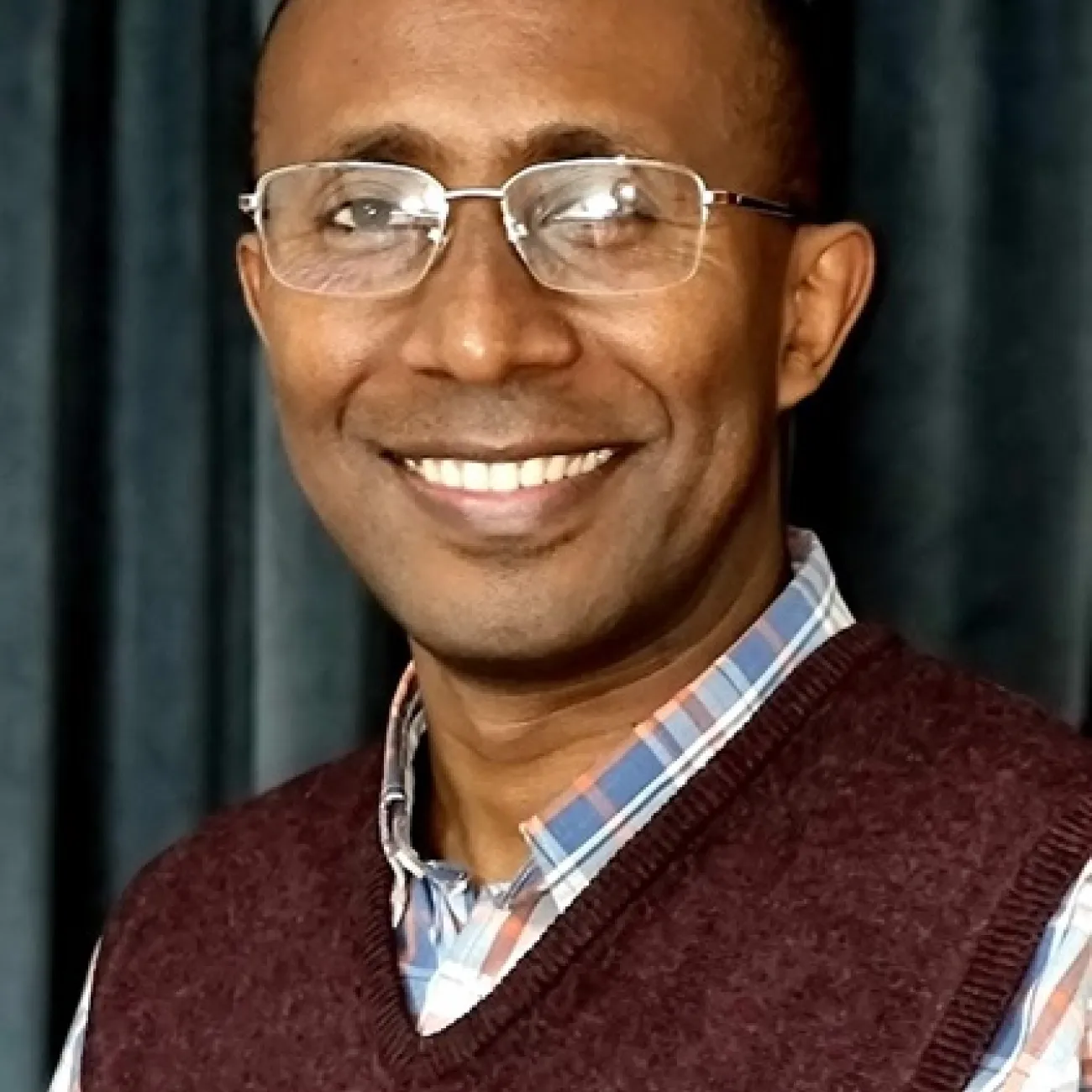
Dr Liku Bekele Tezera is a Senior Research Fellow and Anniversary Fellow within the Faculty of Medicine at the University of Southampton.
You can update this in Pure (opens in a new tab). Select ‘Edit profile’. Under the heading and then ‘Curriculum and research description’, select ‘Add profile information’. In the dropdown menu, select - ‘About’.
Write about yourself in the third person. Aim for 100 to 150 words covering the main points about who you are and what you currently do. Clear, simple language is best. You can include specialist or technical terms.
You’ll be able to add details about your research, publications, career and academic history to other sections of your staff profile.
Research
Research interests
- Physiologically relevant in vitro models for chronic bacterial infections that capture host mechanics and microenvironments.TB granuloma mechanobiology.Mechanotransduction pathways, including YAP/TAZ, SRF/MRTF, integrins and TRP channels.Host-directed therapy screening across defined stiffness states.Validating 3D models against patient samples to reduce animal use
Current research
|
Liku’s research interest is the development of a physiologically relevant in vitro environment model that mimics the in vivo environment in chronic bacterial infections, including the mechanical pressure experienced by the host and the bacteria. As a model, he has worked on granuloma formation in Tuberculosis (TB), which is recognised as evidence of established infection. Development of a 3D-model system for M.tuberculosis (Mtb) is critical in the TB field as research relies heavily on animal models, which do not entirely reflect the pathology that occurs in human TB. One of the central models he is working on utilises cellular bioelectrospray technology to encapsulate human cells, extracellular matrix components and live Mtb. Using specially designed encapsulation techniques, many microspheres can be rapidly generated and utilised for studying host-pathogen interactions (Advanced Functional Materials 2014; 24: 2648-2657). Results demonstrate that cells have excellent viability, aggregate in a collagen-alginate matrix, and secrete cytokines and proteases when stimulated with Mtb (eLife, 6(e21283), 1-19). There is also comparable growth of Mtb in the microsphere matrix as in liquid media, making this in vitro model a viable alternative to reduce the requirement for TB animal modelling for antimycobacterial drug activity (mBio,2017 8(1), 1-14) and host-directed therapy (Clinical Infectious Diseases, 2017.10(1093)). In collaboration with colleagues, they have demonstrated that using this engineering/biological strategy, events in 3D reflect events in patients more accurately than in 2D (JCI. 2021 131: 15.), and they have dissected the differential effect of cytokines (JCI. 2021;131(10): e142014.). This 3D-model system for Mtb not only provides novel insights into tuberculosis disease pathogenesis but also provides a platform which can be used to replace animal experimentation in both infectious and non-infectious inflammatory diseases. The model will serve as a springboard into other fields for non-infectious diseases characterised by inflammatory cell infiltrate and matrix destruction, such as other granulomatous diseases of the lung, rheumatoid arthritis, atherosclerosis and cancer cell invasion. In his latest endeavour, he is examining the role of matrix stiffness in host-pathogen signalling, using funding from the Academy of Medical Sciences Springboard award. Early findings reveal exciting results. |
You can update the information for this section in Pure (opens in a new tab).
Research groups
Any research groups you belong to will automatically appear on your profile. Speak to your line manager if these are incorrect. Please do not raise a ticket in Ask HR.
Research interests
Add up to 5 research interests. The first 3 will appear in your staff profile next to your name. The full list will appear on your research page. Keep these brief and focus on the keywords people may use when searching for your work. Use a different line for each one.
In Pure (opens in a new tab), select ‘Edit profile’. Under the heading 'Curriculum and research description', select 'Add profile information'. In the dropdown menu, select 'Research interests: use separate lines'.
Current research
Update this in Pure (opens in a new tab). Select ‘Edit profile’ and then ‘Curriculum and research description - Current research’.
Describe your current research in 100 to 200 words. Write in the third person. Include broad key terms to help people discover your work, for example, “sustainability” or “fashion textiles”.
Research projects
Research Council funded projects will automatically appear here. The active project name is taken from the finance system.
Publications
Public outputs that list you as an author will appear here, once they’re validated by the ePrints Team. If you’re missing any outputs that you’ve added to Pure, they may be waiting for validation.
Supervision
Current PhD Students
Contact your Faculty Operating Service team to update PhD students you supervise and any you’ve previously supervised. Making this information available will help potential PhD applicants to find you.
Teaching
- Communicable Disease Control in Master of Public Health (Co-Module Leader)
- Immunity and Infection module for iPhD-DTP (Deputy Module Leader)
- Graduate Group Facilitator BM4 programme
- MMedSc project Supervision and Assessment
- Personal Academic Tutor
- NATS3006-Drugs of the Future: Designing a Magic Bullet (Lecturer)
You can update your teaching description in Pure (opens in a new tab). Select ‘Edit profile’. Under the heading and then ‘Curriculum and research description’ , select ‘Add profile information’. In the dropdown menu, select – ‘Teaching Interests’. Describe your teaching interests and your current responsibilities. Aim for 200 words maximum.
Courses and modules
Contact the Curriculum and Quality Assurance (CQA) team for your faculty to update this section.
External roles and responsibilities
These are the public-facing activities you’d like people to know about.
This section will only display on your public profile if you’ve added content.
You can update your external roles and responsibilities in Pure (opens in a new tab). Select ‘+ Add content’ and then ‘Activity’, your ‘Personal’ tab and then ‘Activities’. Choose which activities you want to show on your public profile.
You can hide activities from your public profile. Set the visibility as 'Backend' to only show this information within Pure, or 'Confidential' to make it visible only to you.
Biography
He did his medical and postgraduate training in medical microbiology at Addis Ababa University, Ethiopia and his PhD in from the University of the West of England, Bristol, UK in Cellular Microbiology through an international student’s research scholarship award. His thesis was about the role of PPAR-γ in innate immunity to pathogenic and commensal Neisseria in the nasopharyngeal mucosa. He joined Jon Friedland’s and Paul Elkington’s group at Imperial College as a postdoctoral research fellow in 2011, where he began developing in vitro granuloma models of tuberculosis to investigate the pathology of M. tuberculosis (Mtb) infection. He moved to the University of Southampton in 2012 with Paul Elkington’s research group, where he established a novel 3-dimensional model system for Mtb using a bioelectrospraying technique. This technique involves an engineering approach to incorporate extracellular matrix (ECM), mycobacteria, and different human cells to form an in vitro granuloma system. Using this engineered in vitro granuloma model, he studies the host-pathogen interaction, particularly the role of various ECM components in regulating the well-being of host cells and the growth of Mtb in the granuloma. He has received funding from the National Centre for Replacement, Refinement and Reduction (NC3Rs) of animals in research, the National Institutes of Health (NIH), USA, Medical Research Council, UK and local charities, including Wessex Medical Research and Asthma, Allergy and Inflammation Charity. His latest award is from the Academy of Medical Sciences to investigate mechanotransduction in Tuberculosis in search of therapeutic targets, and he has a plan to extend this approach to chronic bacterial infections.
You can update your biography section in Pure (opens in a new tab). Select your ‘Personal’ tab then ‘Edit profile’. Under the heading, and ‘Curriculum and research description’, select ‘Add profile information’. In the dropdown menu, select - ‘Biography’. Aim for no more than 400 words.
This section will only appear if you enter the information into Pure (opens in a new tab).
Prizes
You can update this section in Pure (opens in a new tab). Select ‘+Add content’ and then ‘Prize’. using the ‘Prizes’ section.
You can choose to hide prizes from your public profile. Set the visibility as ‘Backend’ to only show this information within Pure, or ‘Confidential’ to make it visible only to you.