Edit your staff profile

Your staff profile is made up of information taken from systems including Pure and Subscribe.  This page explains how to update each section of your profile.

Dr Ruomeng Huang

  FInstP, FHEA, SMIEEE, MRSC
Associate Professor

Research interests

  • 1. Neuromorphic and memristive nanoelectronic devicesDesign and implementation of novel memristor materials and device architectures for neuromorphic computing, including artificial synapses and physical reservoir computing, with an emphasis on scalable fabrication and device-level dynamics.
  • 2. AI-enabled semiconductor device design and optimisationApplication of machine learning and data-driven optimisation techniques to accelerate the design, modelling and optimisation of semiconductor devices, with demonstrated impact in energy-harvesting systems and nanophotonic.

More research

Accepting applications from PhD students.

Connect with Ruomeng

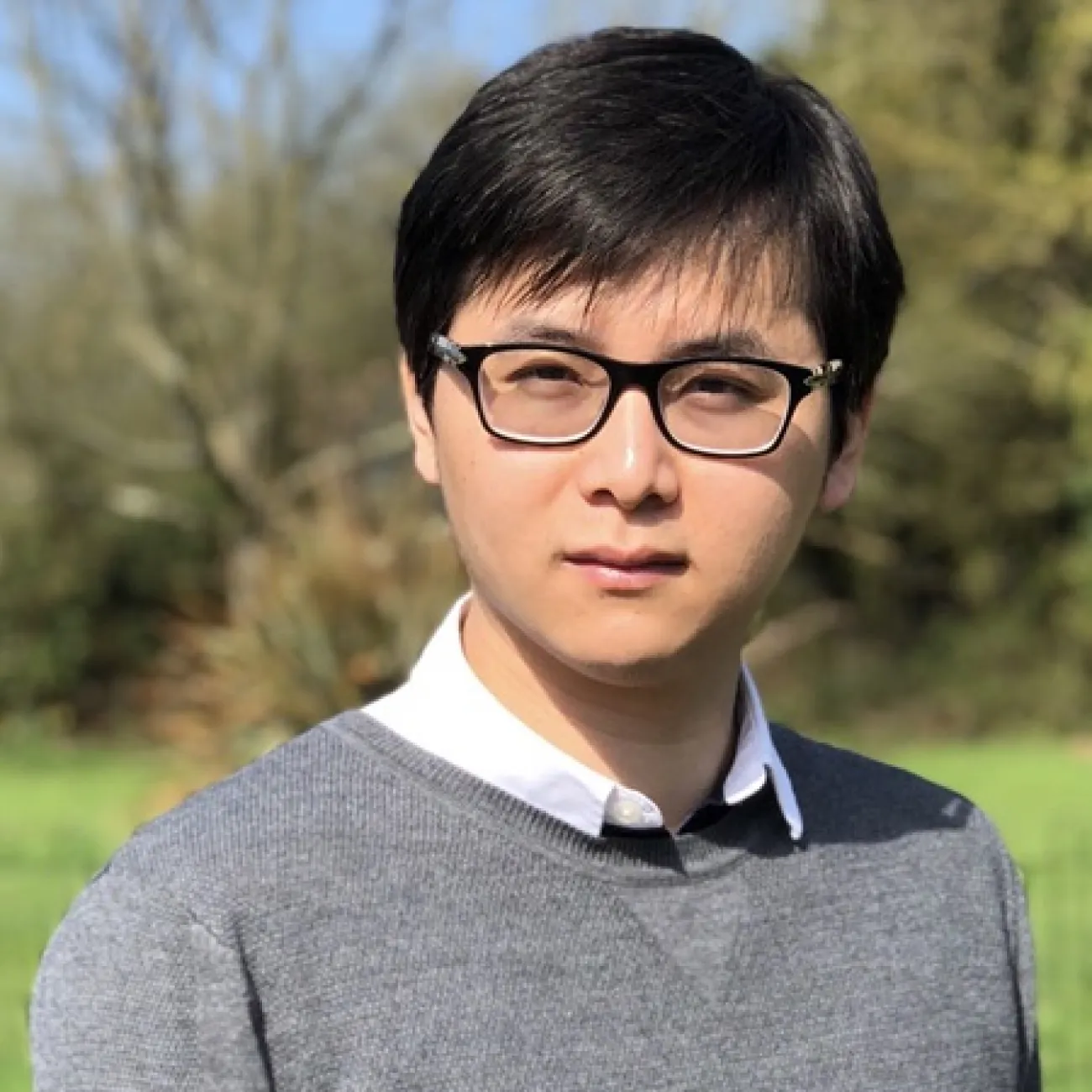
Profile photo 
Upload your profile photo in Subscribe (opens in a new tab). Your profile photo in Pure is not linked to your public staff profile. Choose a clear, recent headshot where you are easily recognisable. Your image should be at least 340 by 395 pixels. 

Name 
To change your name or prefix title contact Ask HR (opens in new tab)  If you want to update an academic title you'll need to provide evidence e.g. a PhD certificate. The way your name is displayed is automatic and cannot be changed. You can also update your post-nominal letters in Subscribe (opens in a new tab).

Job title 
Raise a request through ServiceNow (opens in a new tab) to change your job title (40 characters maximum) unless you're on the ERE career pathway. If you're on the ERE path you can not change your main job title, but you can request other minor updates through Ask HR (opens in new tab). If you have more than one post only your main job title will display here, but you can add further posts or roles in other sections of your profile.

Research interests (for researchers only) 
Add up to 5 research interests. The first 3 will appear in your staff profile next to your name. The full list will appear on your research page. Keep these brief and focus on the keywords people may use when searching for your work. Use a different line for each one.

In Pure (opens in a new tab), select ‘Edit profile’. Under the heading 'Curriculum and research description', select 'Add profile information'. In the dropdown menu, select 'Research interests: use separate lines'.

Contact details 
Add or update your email address, telephone number and postal address in Subscribe (opens in a new tab). Use your University email address for your primary email. 

You can link to your Google Scholar, LinkedIn and Twitter accounts through Pure (opens in a new tab). Select ‘Edit profile’.  In the 'Links' section, use the 'Add link' button. 

ORCID ID 
Create or connect your ORCID ID in Pure (opens in a new tab). Select ‘Edit profile’ and then 'Create or Connect your ORCID ID'.

Accepting PhD applicants (for researchers only) 
Choose to show whether you’re currently accepting PhD applicants or not in Pure (opens in a new tab). Select ‘Edit profile’. In the 'Portal details' section, select 'Yes' or 'No' to indicate your choice. 

About

Ruomeng Huang is an Associate Professor in Electronics and Computer Science at the University of Southampton, where he leads research within the Sustainable Electronic Technologies group. His expertise spans the design, fabrication and characterisation of semiconductor devices, with a research focus on emerging materials and device architectures for neuromorphic computing, memory technologies, and energy-efficient electronics. He has established an internationally recognised research programme covering memristive devices, transition metal dichalcogenides, functional oxides and carbides, and their integration into neuromorphic and sustainable electronic systems. He has also pioneered the use of AI-enabled approaches for semiconductor device design, modelling and optimisation, with demonstrated applications in thermoelectric and nanophotonic devices, enabling efficient device-level performance optimisation.

Ruomeng has a strong track record in securing competitive research funding. He currently serves as Deputy Director and Co-Investigator of the £10 million EPSRC Programme Grant EXPRESS, which integrates two-dimensional metal dichalcogenide semiconductors into nanoelectronic devices such as transistors and memristors. He is also UK Lead for the €4.5 million Marie Skłodowska-Curie Actions Doctoral Network MGICIAN, which focuses on the development of novel solid-state cooling technologies based on thermoelectrics. In addition, he has acted as Principal Investigator or Co-Investigator on multiple UKRI, Royal Society and EU-funded research projects.

He leads a research team of over 10 researchers, including postdoctoral researchers and PhD students. His research outputs include over 80 peer-reviewed journal publications and more than 40 presentations at national and international conferences, including numerous invited talks.

Ruomeng is a Fellow of the Institute of Physics, a Senior Member of IEEE, and a Fellow of the Higher Education Academy. He is a member of the EPSRC Peer Review College, serves on the editorial boards of Scientific Reports and Engineering Research Express, and is a committee member of the IOP Semiconductor Physics Group.

You can update this in Pure (opens in a new tab). Select ‘Edit profile’. Under the heading and then ‘Curriculum and research description’, select ‘Add profile information’. In the dropdown menu, select - ‘About’.

Write about yourself in the third person. Aim for 100 to 150 words covering the main points about who you are and what you currently do. Clear, simple language is best. You can include specialist or technical terms.

You’ll be able to add details about your research, publications, career and academic history to other sections of your staff profile.