-

Helping families have more trust in administrative data linkage
Discover how Southampton’s research is empowering families to trust the digital data shared about their lives.
-
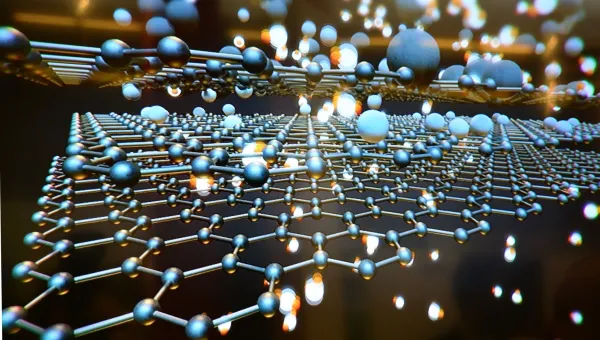
Disorder is Good – Taming disorder in self-assembled materials with topology
Instead of fighting disorder, we should identify structures that are ordered enough to perform the required function.
We have combined cutting edge experiments with breakthrough methods from topological data analysis to quantify emerging structure in apparently disordered nano-assemblies and classify their response to light. We aim to design a new generation of controllable nanosystems at a fraction of the cost of the current methods.
-
Music and AI combine for quirky performance
Can artificial intelligence (AI) write a love letter? Southampton researchers in Music, English and Computer Science have shown that, with some help from humans, it can!
-
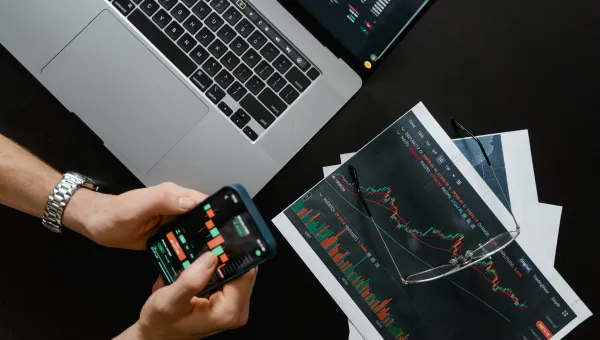
Central Bank Digital Currency (CBDC): Uncertainty and Attention Indices
Academics collaborate to create a series of news based cryptocurrency using a big data approach.
-
Can AI be used to undermine elections?
Online political disinformation and voter profiling spiked during recent elections in the UK and US. How can we now protect democracies from threats posed by AI?
-
Working out how nations can better take everybody into account
University statistical researchers, led by Professor Paul Smith, have helped nations better estimate their populations. This work to improve censuses has had a big economic and political impact.
-
Recovering women's contributions to archaeology, history, and heritage
A Southampton historian has been using his digital humanities expertise to help rediscover the less well-known who worked in archaeology, history and heritage of 19th and 20th century Britain.
-
Uncovering bias in the way we document the past
Professor James Baker researched the impact of curatorial labour on the legacy of museum collections. This inspired new perspectives on how to make our cultural heritage accessible to future generations.
-
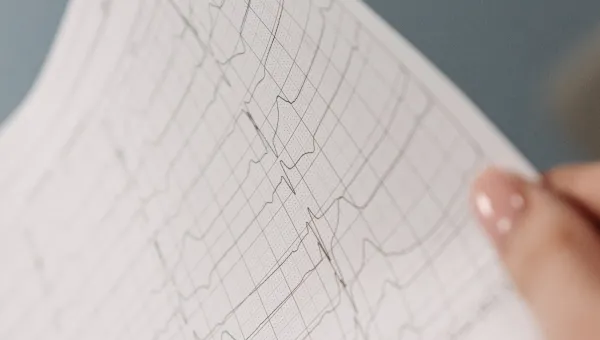
Discovering how to save cardiac patients' lives with deep learning
University mathematics expert Alain Zemkoho had worked on optimising decisions in areas such as transport. PhD supervision led to him and his team developing a way cardiologists can use hours, not seconds, of data provided by heart activity tests.
-
Fitting an entire library into the palm of your hand
Scientists at the Optoelectronics Research Centre have developed a digital data storage solution that can contain the complete history of human knowledge – and is able to survive for billions of years.
-
Working out if a computer can play jazz
A Southampton researcher was awarded an Alan Turing Institute fellowship to investigate whether AI can replicate the complexities of jazz improvisation.
-
Improving maternal and neonatal health in India
Global health experts at Southampton are working with government to improve survival rates for expectant mothers and newborns. Their findings are influencing policy.