Sara, an undergraduate marine biology with oceanography student, explains how her time as a researcher aboard the RRS Discovery has changed her perspective. She also shares how a semester studying abroad in Tasmania opened her eyes to new possibilities after graduation.
I have always loved the ocean. I grew up on the south coast of England, so the sea has always been a part of my life. And in a way, it was inevitable that I would be drawn to it for my future. In school, I quickly realised that we need to protect our oceans.
The ocean plays a crucial role in reducing the severity of climate change by absorbing approximately 30 to 40% of the carbon dioxide produced by humans, so if we protect and partner with the ocean to increase its ‘carbon capture’ ability, we will benefit our species and the planet.
The best of both worlds
I was undecided about the route I wanted to take for a degree. I thought choosing between marine biology and oceanography wouldn’t satisfy my curiosity. The course at Southampton combined both and gave me the perfect middle ground between the biological, chemical and physical aspects of the sea.
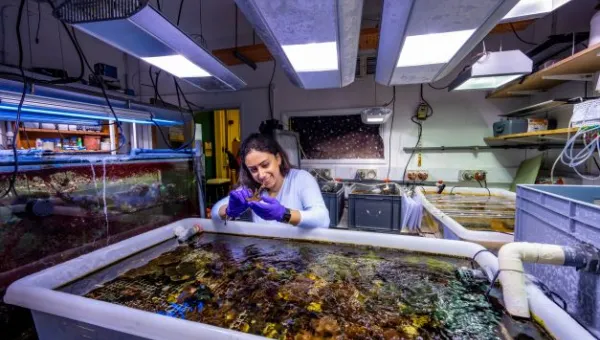
I was also attracted by the practical, hands-on aspects of the course. Almost from day one we were out on the ocean. All students have access to the University’s research vessel, the RV Callista. We regularly carry out conductivity, temperature and depth (CTD) measurements and collect water samples to monitor the chemical and biological activity.
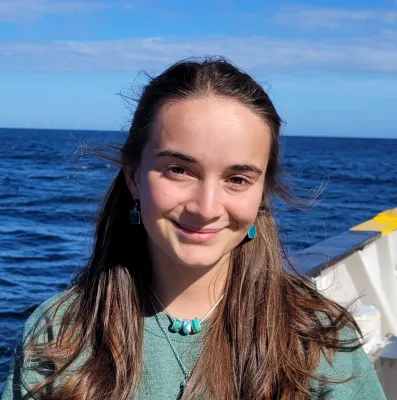
From speaking to friends studying similar courses at other universities, it is clear that they don’t get this level of hands-on oceanographic experience. I'm confident I will have the edge when I finish my degree.
The practical aspects increase throughout the course with research trips around the Solent in Southampton and off the coast of Plymouth. Now in my fourth year, I've had the amazing opportunity to go on a research cruise aboard the RRS Discovery, off the coast of Aberdeen as part of my dissertation work.
The ocean’s grass and trees
I worked with Professor Mark Moore looking at how a small wind farm off the coast of Scotland affects the population of phytoplankton in the water.
Phytoplankton are microscopic algae, and the base of all food chains in the ocean. They are equivalent to the grass and trees that we have on land. They convert sunlight into chemical energy through photosynthesis. By taking in carbon dioxide and releasing oxygen, they contribute 50% of the Earth’s oxygen production.
Without them, over time, we would lose all the larger charismatic species in the sea, so it is important for us to know the impact human activity, such as adding renewable energy infrastructure, has on these amazing organisms.
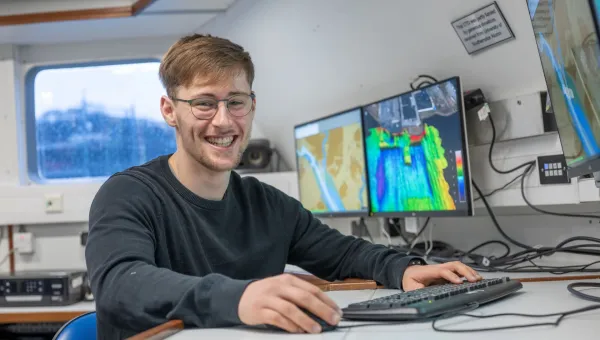
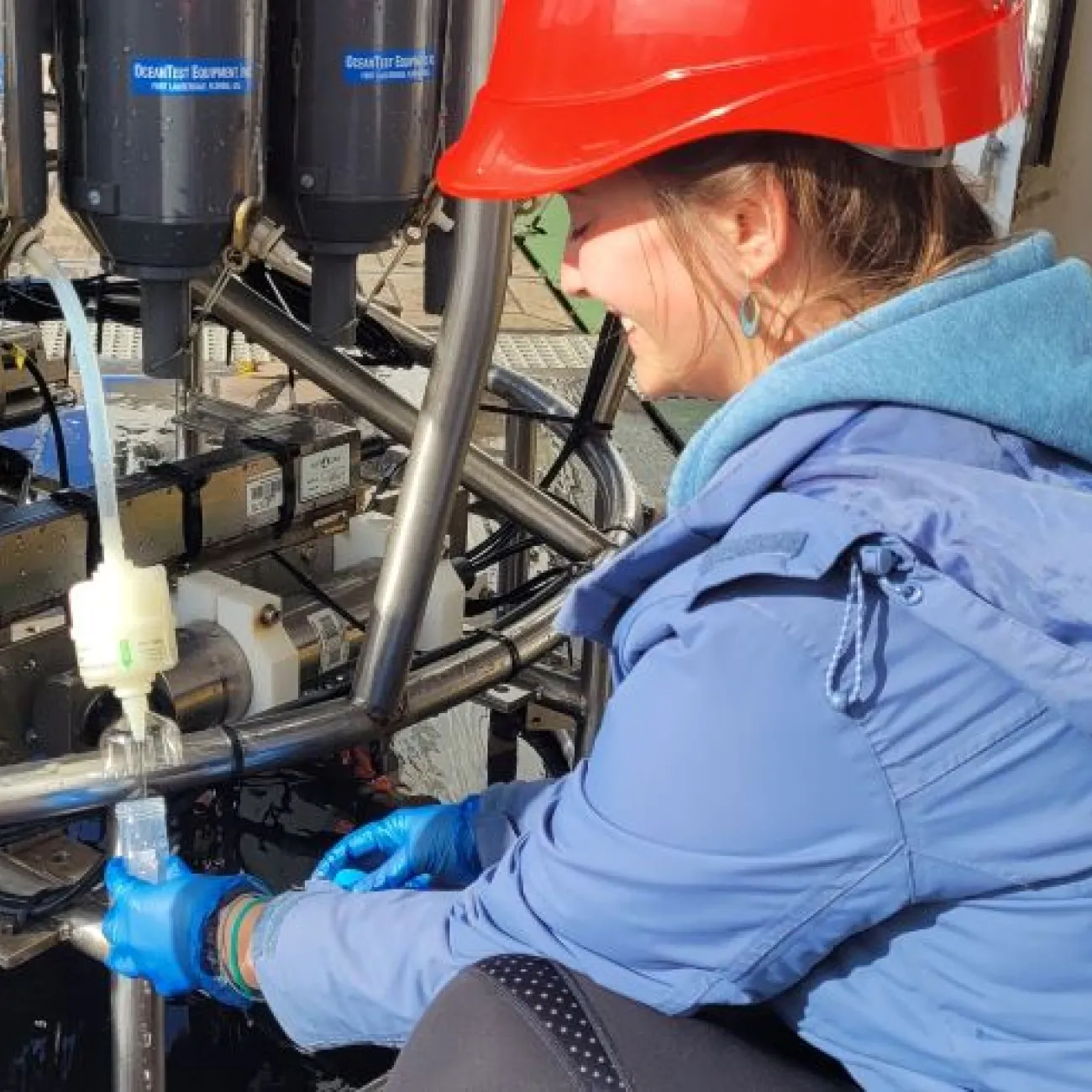
On board the RRS Discovery I was encouraged to carry out CTD and water sampling experiments like the ones I had done on the Callista, but on a much larger scale. I was relieved I had done it before, so I kind of knew what I was doing!
Renewable energy and healthy ocean
From the water samples we took, we analysed the levels of chlorophyll at different locations around the wind farm; an increased level of chlorophyll indicates more phytoplankton are present in the water.
We found that in the wakes around the turbines, there are increased nutrient concentrations due to increased mixing in the wakes. We think this might lead to greater growth of populations of phytoplankton in these regions.
The results from the research cruise will allow us to consider how larger wind farms might benefit phytoplankton production. This could have a positive impact for two reasons.
Firstly, as phytoplankton take in carbon dioxide, they can act as ‘carbon sinks’. More phytoplankton means more carbon dioxide taken out of the atmosphere, which is good for the environment.
Secondly, the more phytoplankton in the sea, the more food there is at the bottom of the chain for other organisms, which in turn could benefit fisheries and food security.
Not just research revelations, personal ones too
As an undergraduate student, stepping on the RRS Discovery was a big moment. It is a huge research ship, bigger than anything I had been on before. It was daunting, but exciting at the same time. There is no way ‘Sara before university’ would have ever imagined her final-year dissertation would be conducted on a massive research ship off the coast of Aberdeen.
On board, there were research scientists from all walks of life coming together for this project. There were also other undergraduate students, so I didn’t feel out of place.
And we got to do the important work too. We worked in shifts collecting samples and then analysing them. It felt like a close-knit team and I got to know everyone well by working alongside them and being able to talk to other researchers about their careers and experiences in our ‘down’ time between shifts.
During the whole of my course, my lecturers referred to themselves as ‘seagoing oceanographers’, and I got to be that too. It gave me a taste of what my career could be.
Before this experience, I hadn’t thought about doing a PhD. I thought I would get my master’s and then get a job in the marine biology or conservation field. But after doing real research and speaking to all the scientists on the ship, who have done research cruises all over the world, I would go for it if the right one came along.
Lasting personal connections
I feel like I have packed a lot of extra stuff into my degree to enable me to learn as much as I can about myself and what I want to do next.
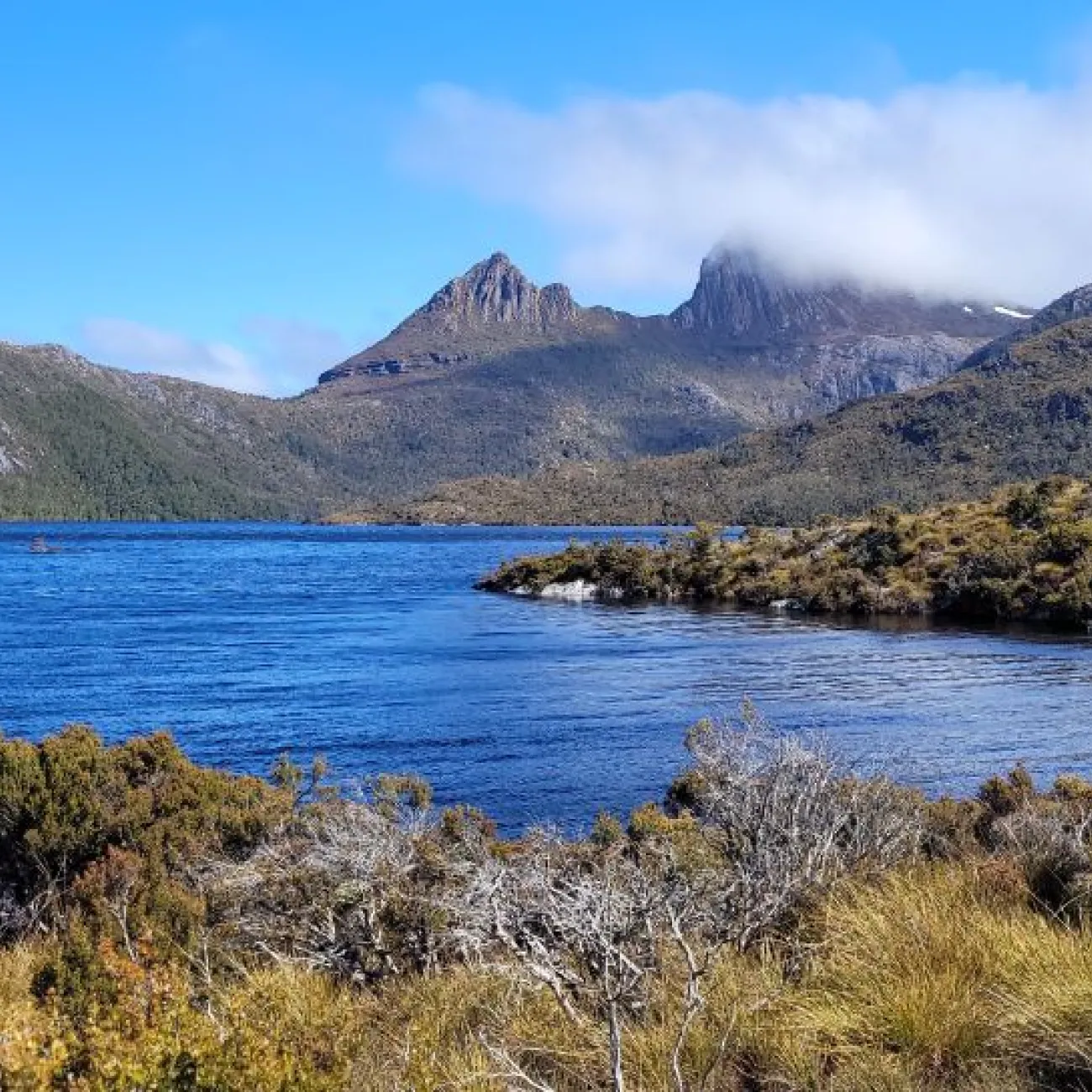
During my third year, I went to the University of Tasmania for a semester. It was an incredible experience, and I feel so lucky to have gone and experienced Tasmania, it was beautiful. A rich mix of mountains and beaches; a place for outdoor life.
During the summer, my friends and I, hired a car and went on a road trip around the island. That was the best five days. We felt like we saw everything from Cradle Mountain to waterfalls, to the pristine beaches in the Bay of Fires. But because Tasmania is a bit off the tourist route, it was peaceful – you really felt connected to nature.
One of my favourite moments was definitely being sat on the beach when humpback whales started to breach right in front of us, it was truly magical.
The science and studying in Tasmania was also an amazing opportunity. We got to handle real specimens from Antarctica. We also joined a wildlife tour and were lucky enough to see loads of marine life including fur seals, shy albatross, humpback whales and even a tuna jumping out the water!
I am still in touch with the friends I made in Tasmania. In fact, we have plans to meet in Europe this summer. It is exciting to think that these friends I have made are scattered across the world, all thinking of doing similar careers to me. So, one day I might be working with friends I met while at uni, but who knows where!