
About
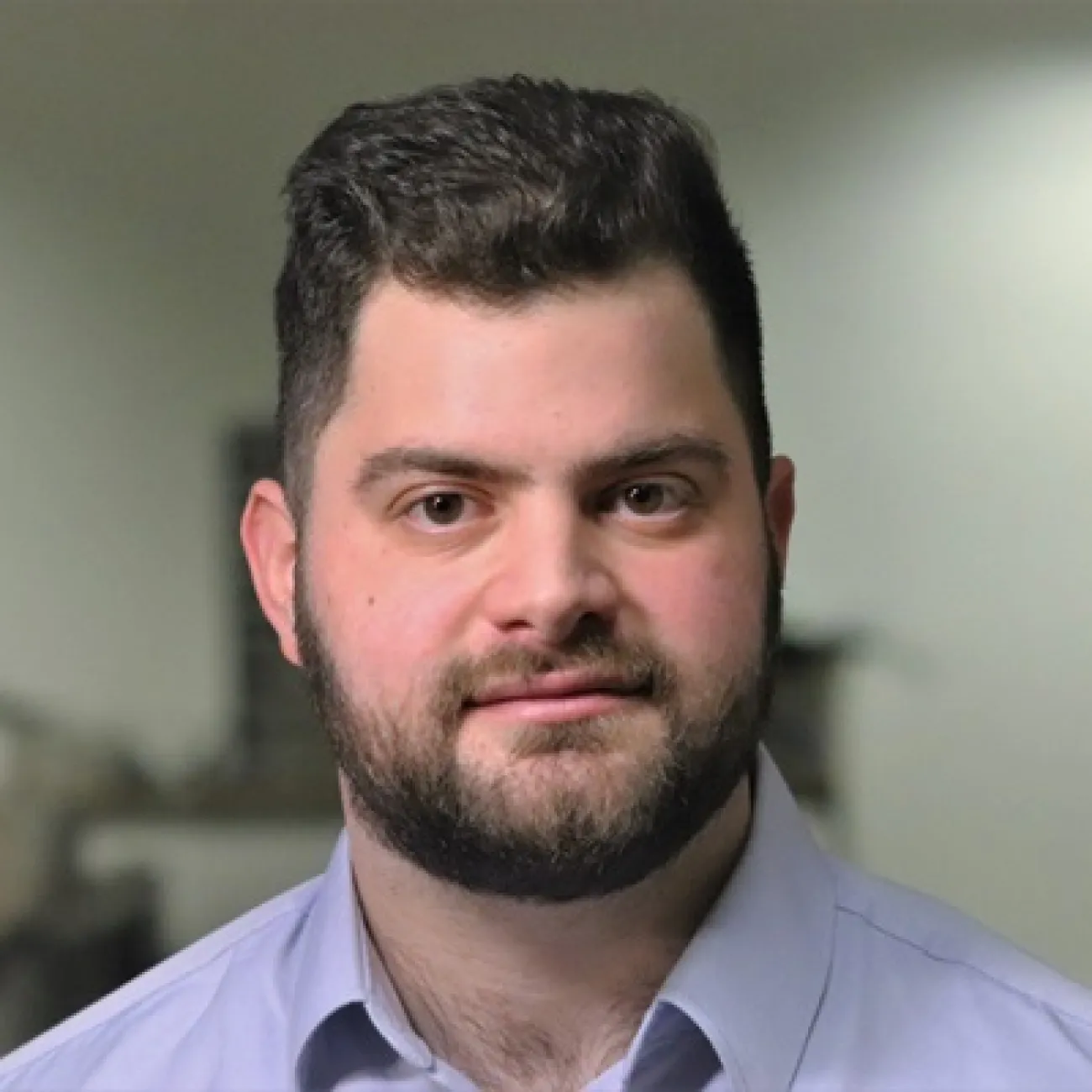
Dr Noori is a Lecturer (Assistant Professor) within the School of Electronics and Computer Science at the University of Southampton, UK. His research group develops deep learning tools for modelling semiconductor nanofabrication processes, working in collaboration with chip and fabrication equipment manufacturers. His research background also includes nanomaterials, integrated photonics and quantum devices. Dr Noori is a Chartered Physicist (CPhys), Chartered Engineer (CEng), a Senior Member of IEEE (SMIEEE), a Certified Practitioner in Project Management (PRINCE2), a Fellow of the Software Sustainability Institute, and a Fellow of the Higher Education Academy (AFHEA). He is an elected committee member of the IOP Semiconductor Physics group and the IOP Quantum Optics, Quantum Information, and Quantum Control group. Dr Noori has been a PI on £1.0m and Co-I on £2.5m on research projects, published in over 50 journal papers, 60 conferences, 2 patents and 2 book chapters. He has over 10 invited talks and was a committee member of several international conferences.
He previously worked as a Senior Research Fellow on multiple EPSRC programme grants, Advanced Devices by ElectroPlaTing (ADEPT), and Quantum Dots on Silicon (QUDOS) where he demonstrated the first electroplating of metal-chalcogenide phase change materials in memory crossbar arrays. He was also a Research Associate at Lancaster University, where he developed GaAs-based high-energy particle detectors. He was also a Visiting Researcher at the University of Puebla in Mexico, a Consultant for CORNERSTONE and a Carnegie Undergraduate Vocational Researcher at the Institute of Medical Science and Technology (IMSaT).
In 2017, He obtained his PhD in Integrated Photonics and Quantum Communications from Lancaster University after winning several prestigious conference awards. In 2013, He received a first-class (Honours) degree from the University of Dundee in Electronic Engineering and Physics, winning three Duff & Garland prizes and class medals for achieving top academic performance in years 1-3.
Research Funding:
- EPSRC Responsive Mode Grant - DEEPFAB: A Capability for Ultra Precise Fabrication of Photonics with Deep Learning (Lead/PI, £1.31m, 2026 - 2029)
- EPSRC New Investigator Award “Electrochemical Doping for 2D Material Transistors” (Lead/PI, £668k, 2026 – 2029)
- Cornerstone C-PIC Silicon Photonics Wallet “Fabrication Defect Modelling of Photonic Nanostructures” (Lead/PI, £36k, 2026 – 2027)
- EPSRC Impact Acceleration Account “A Capability to Predict defect in Semiconductor fabrication” (Lead/PI, £70k, 2026 – 2027)
- Royal Society Research Grants, “Electrochemical Doping of 2D Materials for Nanoelectronics” (RGS\R2\252341) (Lead/PI, £30k, 2026 – 2027)
- University of Edinburgh, APRIL Hub “Predicting Nanofabrication Outcomes with Deep Learning” (Co-Lead/Co-I, Lead: Ben Mills; £37k, 2026 – 2027)
- Innovate UK Early Stage Growth Catalyst “Predicting Defects in Semiconductor Manufacturing with Artificial Intelligence” (Project 10172698) (Lead/PI, £40k, 2025 – 2026)
- University of Edinburgh, APRIL Hub “Increasing Sample Preparation Throughput Via An AI-automated Tool” (Lead/PI, £16k, 2025-2026)
- EPSRC Core Equipment 2024 (Co-Lead/Co-I, Lead: Mark Spearing, £1.3m, 2024 – 2026)
- EPSRC Responsive Mode “Electrodeposited 2D Transition Metal Dichalcogenides on graphene: a novel route towards scalable flexible electronics” (Co-Lead/Co-I, Lead: Kees de Groot, £1.5m, 2022-2025)
- Software Sustainability Institute Fellowship - University of Edinburgh (Lead/PI, £3k) (2020 – 2022)
- Zepler Institute Stimulus Fund “Artificial Intelligence via the ElectroDeposition on Graphene Electrodes (AI-EDGE)” (Lead/PI, £10k, 2020-2021)
Current group members:
- Talha Khandokar (Research Fellow)
- Shamma Khan (Research Fellow)
- Shaokai Song (PhD Researcher)
- Hongwei Zhang (PhD Researcher)
- Ismaeil Alnaab (PhD Researcher)
- Shilpa Singh (PhD Researcher)
- Ashwin Bhatia (PhD Researcher)
- Yinan Du (PhD Researcher)
- Leon Mutter (PhD Researcher)
Group Alumni
- Jiapei Zhang (PhD Researcher)
There are several PhD opportunities available. If you are interested in joining the group, please contact Dr Noori.
Involvement in Research Committees and Learned Societies
- Organising committee member of the international conference IOP Photon 2026.
- Panel member of IOP Charterships Committee
- Committee Member - IOP Semiconductor Physics Group
- Committee Member - IOP Quantum Optics, Quantum Information, and Quantum Control (QQQ) group.
- Conference Committee Member - Micro and Nano Engineering 2024.
- Conference Committee Member - Graphene 2022
- Conference Technical Committee Member - IEEE Nano 2022
- Member of EPSRC Peer Review College
- Member of UKRI Talent Peer Review College
- Panellist of EPSRC ICT Panel
- Grant reviewer for ACS Petroleum Fund, Horizon Europe
- Reviewer for Nature, ACS, Wiley and IEEE group journals
- Committee Member - Research Concordat
- Chair of IOP Quantum Undergraduate Day
- School's Academic Conduct Officer
You can update this in Pure (opens in a new tab). Select ‘Edit profile’. Under the heading and then ‘Curriculum and research description’, select ‘Add profile information’. In the dropdown menu, select - ‘About’.
Write about yourself in the third person. Aim for 100 to 150 words covering the main points about who you are and what you currently do. Clear, simple language is best. You can include specialist or technical terms.
You’ll be able to add details about your research, publications, career and academic history to other sections of your staff profile.