Functional integration focuses on using flexible flat glass as platforms for sensing and energy storage.
The emphasis is on integrating functional capability into glass-based systems, rather than treating glass as a passive structural material. Research includes optical fibre-based sensing of strain, pressure, vibration, temperature, and chemical exposure, with particular focus on embedded sensing within composites and other engineered materials.
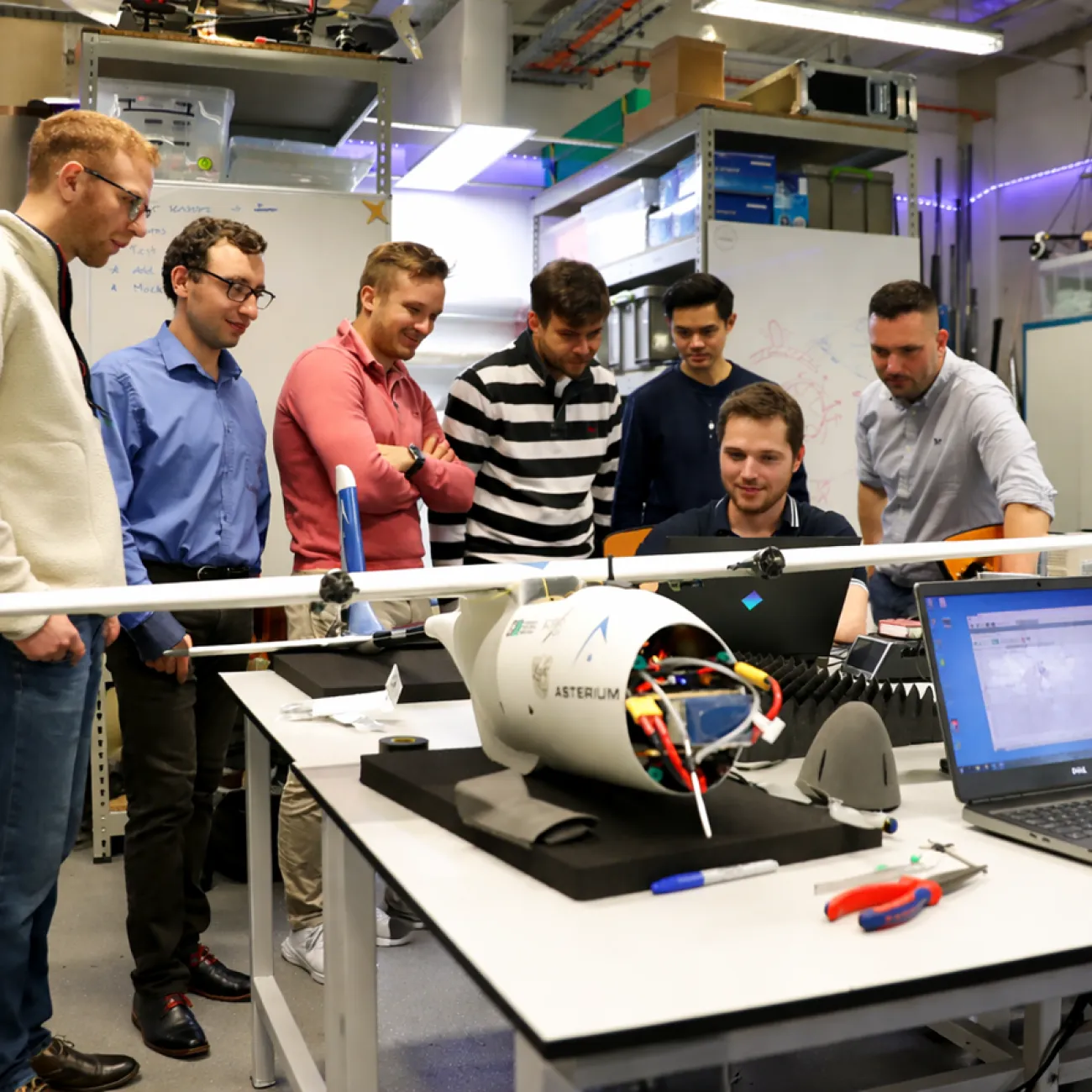
This includes demonstrator systems in uncrewed and autonomous platforms, where embedded sensing enables in situ condition monitoring under operational loading (University of Southampton testing drones with 'nervous systems' - BBC News). In parallel, the group develops glass architectures for energy storage, including glass based battery concepts where mechanical compliance, electrical behaviour, and ionic transport must all be considered.
Work in this area is driven by system level requirements, including integration, packaging, and validation under representative conditions. Functional performance is assessed alongside durability, ease of manufacture, and compatibility with real deployment environments.
This activity is supported by over £5 million of active Engineering and Physical Sciences Research Council (EPSRC) funded research and industrially sponsored programmes, reflecting both fundamental development and translation towards practical application.
Uncrewed aerial vehicle, with optical fibre sensor network and onboard specklemeter, based on flexible high aspect ratio flat fibre.