We offer a range of compulsory and optional modules. This allows you to design your degree to follow a general oceanography theme, or to specialise in areas including:
- Marine Biology and Ecology
- Physical Oceanography and Climate Dynamics
- Marine Biogeochemistry
- Marine Geology and Geophysics
You'll be able to confirm your module selection after you apply.
This course runs for a full 12-month year, not an academic year.
Semester 1 overview
Semester 1 runs from September to January. You will complete a compulsory introductory modules in marine science and a key-skills module designed to help develop your foundation knowledge before the second semester.
The introductory module covers themes related to the biological, chemical, physical and geological characteristics and processes of marine systems and how these components interact.
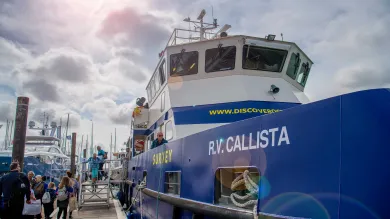
You’ll complete hands-on field work experience using our in-shore research vessels, while developing practical skills in sampling and interpreting data from a variety of coastal marine environments.
You’ll select 1 of these modules to develop your ability to handle scientific datasets:
- computational data analysis for geophysicists and ocean scientists
- data management and generalised linear modelling for biologists
You’ll also select 1 optional module based on your interests from a selection including:
- advanced exploration geophysics
- biogeochemical cycles in the earth system
- deep sea ecology
- marine conservation and policy
- shelf seas and shelf edge dynamics
Semester 2 overview
Semester 2 runs from February to June.
You’ll choose 3 additional modules based on your interests from options including:
- climate and climate change
- ecological modelling
- large scale ocean processes and climate
- marine microbial ecology and biotechnology
- marine reproduction
- sea level rise and coastal management
- seafloor exploration and surveying 2
After these modules, you’ll complete a 3-month independent research project over the summer, working alongside academics. These projects give you experience in world-class scientific research and are often aligned with international research programmes, giving you access to a global network of researchers tackling ocean-related issues.
Project results are often published as scientific papers. You’ll also develop your skills in project management, data analysis, scientific communication and critical thinking.
Module availability is subject to timetable constraints and staff availability.
Want more detail? See all the modules in the course.