
Project overview
The Programme on The Physics and Technology of Photonic Metadevices and Metasystems is constructed with Impact in Mind. It is united by the goal of finding new and radical solutions for today's society wherein photonics and advanced materials are now universally seen as enabling technologies of the 21st century. In recognition of this the United Nations has declared 2015 The International Year of Light. Today photons, quanta of light, are the primary information carriers, delivering video, internet and telephone calls through global information networks. Displays, laser surgery and manufacturing, metrology and many security applications all depend upon our ability to master light. Progress in improving the performance of all light-enabled devices depends on, and is ultimately limited, by the functionality of available photonic materials. At the core of this Programme is the radical new idea that the properties of media in which light propagates do not have to be static, as traditionally assumed, but may be changed at will at any point in space and/or moment in time. Indeed, optical properties on demand can be achieved using emerging paradigms of reconfigurable and tuneable metamaterials - functional matter structured on the sub-wavelength scale, and by engaging new ideas of phase-change and coherent control. We envisage that by engaging this plethora of new ideas we will be able to open a path to several technological step changes that may enable increased information flow, while reducing power consumption to the ultimate quantum limit and achieving new levels of miniaturisation for photonic devices. We see our Programme as a major step forward in the global process of deriving true commercial and societal impact from fundamental research on metamaterials: a field in which the EPSRC has made substantial prior and continuing investment. Indeed, innovative materials are crucial for rebalancing the UK economy as they are, and will continue to be, a major component of UK export. They are internationally recognised as a key performance enabler in several economically significant areas including electronics, telecoms and energy. We have assembled a team of researchers at Southampton and Heriot-Watt Universities offering a perfect complementarity of skills across the entire translation spectrum, from fundamental physics to device and system engineering, and a healthy balance between proven, established expertise and new research talent. We will develop our Programme in close collaboration with the UK and international research community, including strategic partners at the National Taiwan University and Singapore's Nanyang Technological University. To maximise impact we will work closely with Industrial Partners DSTL, BAE Systems plc, Ilika plc, and Oclaro Technology Ltd., all of whom will gain from exposure to early stage research and development in a new emerging technology, in return facilitating exploitation of results. In support of our programme, our Academic and Industrial Partners, and the host universities together commit in excess of 2 million pounds of their resources (cash and in kind).
Staff
Lead researchers
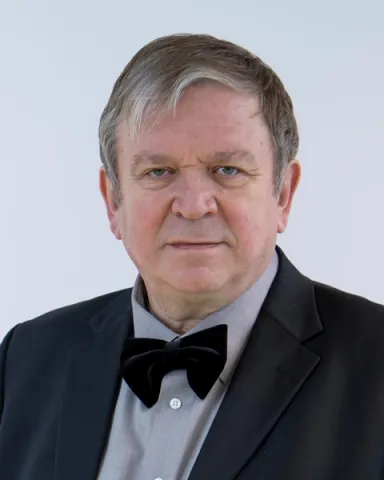
Other researchers
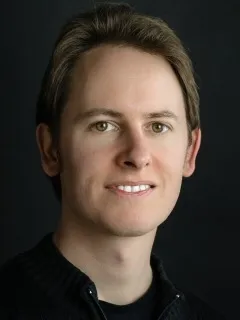
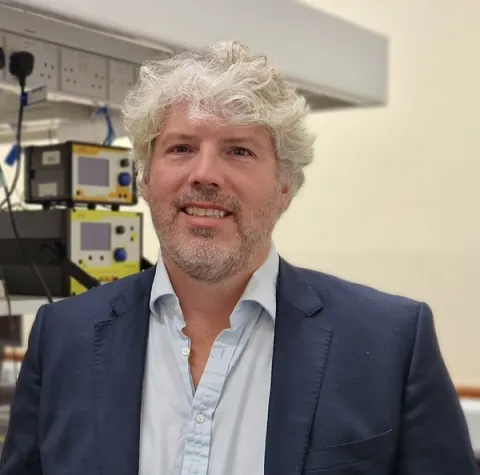
Collaborating research institutes, centres and groups
Research outputs
2018, Physical Review A, 98(2)
Type: article
Harish N.S. Krishnamoorthy, Behrad Gholipour, Nikolai Zheludev & Cesare Soci,
2018, Advanced Optical Materials
Type: article
Yusuke Nagasaki, Behrad Gholipour, Jun-Yu Ou, Masanori Tsuruta, Eric Plum, Kevin F. MacDonald, Junichi Takahara & Nikolai Zheludev,
2018, Applied Physics Letters, 113
DOI: 10.1063/1.5025400
Type: article
2018, Nano Letters, 18(7), 4285-4292
Type: article
Jonathan Gorecki, Vasileios Apostolopoulos, Jun-Yu Ou, Sakellaris Mailis & Nikitas Papasimakis,
2018, ACS Nano, 12(6), 5940-5945
Type: article
Girish Agarwal, Roland E. Allen, Iva Bezděková, Robert W. Boyd, Goong Chen, Ronald Hanson, Dean L. Hawthorne, Philip Hemmer, Moochan B. Kim, Olga Kocharovskaya, David M. Lee, Sebastian K. Lidström, Suzy Lidström, Harald Losert, Helmut Maier, John W. Neuberger, Miles J. Padgett, Mark Raizen, Surjeet Rajendran, Ernst Rasel, Wolfgang P. Schleich, Marlan O. Scully, Gavriil Shchedrin, Gennady Shvets, Alexei Sokolov, Anatoly Svidzinsky, Ronald L. Walsworth, Rainer Weiss, Frank Wilczek, Alan E. Willner, Eli Yablonovich & Nikolay Zheludev,
2018, Journal of Modern Optics, 65(11), 1261-1308
Type: article
Kai Sun, Christoph A. Riedel, Alessandro Urbani, Mirko Simeoni, Sandro Mengali, Maksim Zalkovskij, Brian Bilenberg, C.H. De Groot & Otto L. Muskens,
2018, ACS Photonics, 5(6), 2280-2286
Type: article