Spoken in the heart of Europe and beyond, German is a key language for culture, business and diplomacy. Learn German at Southampton, while exploring German history, linguistics, literature and politics.
On our German courses, you’ll develop fluency in spoken and written German with support from our expert language tutors. You'll study topics including race, ethnicity and multiculturalism, migration and globalisation, religious writing, linguistics and the wider German-speaking world. As part of your German degree, you’ll spend a residential year abroad where you can either study at a partner university, work as a teaching assistant in a school, or work in industry in countries like Germany, Austria and Switzerland. Learn German at Southampton and become a confident, multilingual and culturally aware professional. Former students of our audio-visual translation and public service interpreting modules have progressed into careers interpreting for the European Union and major television channels, while many of our linguistics graduates now work in data science, analytics, and speech and language therapy. German students have also continued to master's degrees in language and cultures, and applied linguistics.
Study German alongside other languages, linguistics, business management, English literature or history
German courses
We offer a range of German degrees. You can study German as a single language or alongside French, Spanish, Portuguese or Mandarin. We also offer modules in Arabic, Italian, Japanese and Russian, and you can combine German with subjects such as linguistics, business management, English and history.
If you're new to the language, you can study German from beginner level on our BA Language, Culture and Communication degree, or alongside another post-A level language as part of a two- or three-language degree. For beginner language learners, our department subsidises a language course in a target country at the end of year 1.
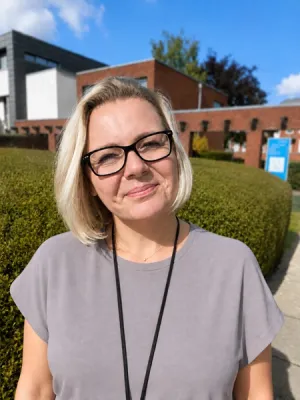
In the Rhineland – the region along the Rhine – it’s perfectly acceptable to cut off someone’s tie during Rosenmontag, (Carnival)! Learning German means exploring not just grammar and vocabulary, but also the quirky, joyful culture behind the language. In my classes, I love sharing the stories behind such traditions to show how language and culture are deeply intertwined.
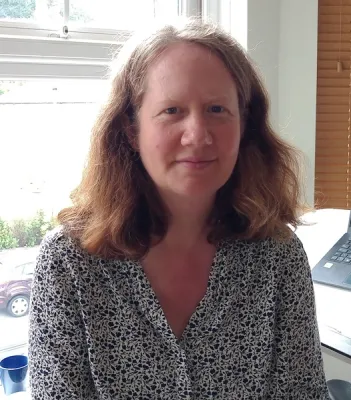
I am fascinated by the effects language has on all of our lives: How do we use it to form identities, build institutions, and coordinate action. In my modules, we explore how changing political identities in Germany, Austria and Switzerland shape language and are shaped by past and present ways of talking.
Skills from my linguistic studies degree opened up a career in coding
Elizabeth Gardiner talks about her career change from translation to coding using versatile skills gained from her studies at University of Southampton.