About
Pain is a healthy normal response to injury, but it often turns into a persistent problem. Pain is one of the leading reasons people seek healthcare. It affects millions of people worldwide and accounts for a substantial proportion of GP and specialist appointments. Persistent pain contributes significantly to lost productivity and time off work. In the UK, it is estimated that over 15 million people live with persistent pain.
It is difficult to live well with unpredictable bouts of pain, and many people experience low mood and anxiety. It affects our ability to:
- think clearly,
- make decisions,
- learn and remember, and
- carry out normal day to day activities, such as shopping or work.
Persistent pain is an interaction between body and mind. Because of this, it is best studied through interdisciplinary approaches. At the University of Southampton, we study pain through close partnership with individuals who live with it, and those caring for others living with pain. We identify priorities for patients, communities and clinicians that will allow us to improve wellbeing even when pain cannot be reduced or eliminated.
Led by:
- Tamar Pincus - Dean of Faculty of Life Sciences and Professor of Psychology
- Hollie Birkinshaw - NIHR SPCR Research Fellow, Faculty of Medicine, Primary Care Research Centre, and School of Psychology, Faculty of Environment and Life Sciences
- Adam Geraghty - Professor of Psychology and Behavioural Medicine, Faculty of Medicine, Primary Care Research Centre
The Institute for Life Sciences has launched a regional conversation in the research and practice of pain and pain management. We bring together people living with pain, researchers and clinicians from all disciplines across the region who are interested in investigating pain in adults and children.
Our research into pain includes:
De-Stress Pain
A programme of work to address and treat pain-related distress. Pain makes an impact on all areas of life, affecting mood and well-being. It can make us feel as though we are not the same person we were before pain, which can be distressing.
Watch Tamar Pincus discuss chronic pain, acceptance, and commitment.
Our research in this programme includes:
- qualitative interviews with people experiencing long-term pain and GPs, and a quantitative survey to explore differences between pain-related distress and depression.
- development of a new intervention to reduce pain-related distress in chronic musculoskeletal pain (funded by Arthritis UK).
- exploratory qualitative and quantitative work to explore pain-related distress in short-term pain (funded by the University of Southampton School for Primary Care Research).
- a randomised feasibility study of the new activating intervention for living well with chronic pain (funded by NIHR)
Engaging with Black communities in Southampton: A co-creation understanding of living well with pain
This current study is funded by Arthritis UK and delivered in collaboration with Keele University, Southampton residents, and the NHS. It focuses on listening to Black people’s experiences of musculoskeletal pain and understanding why many face barriers to care.
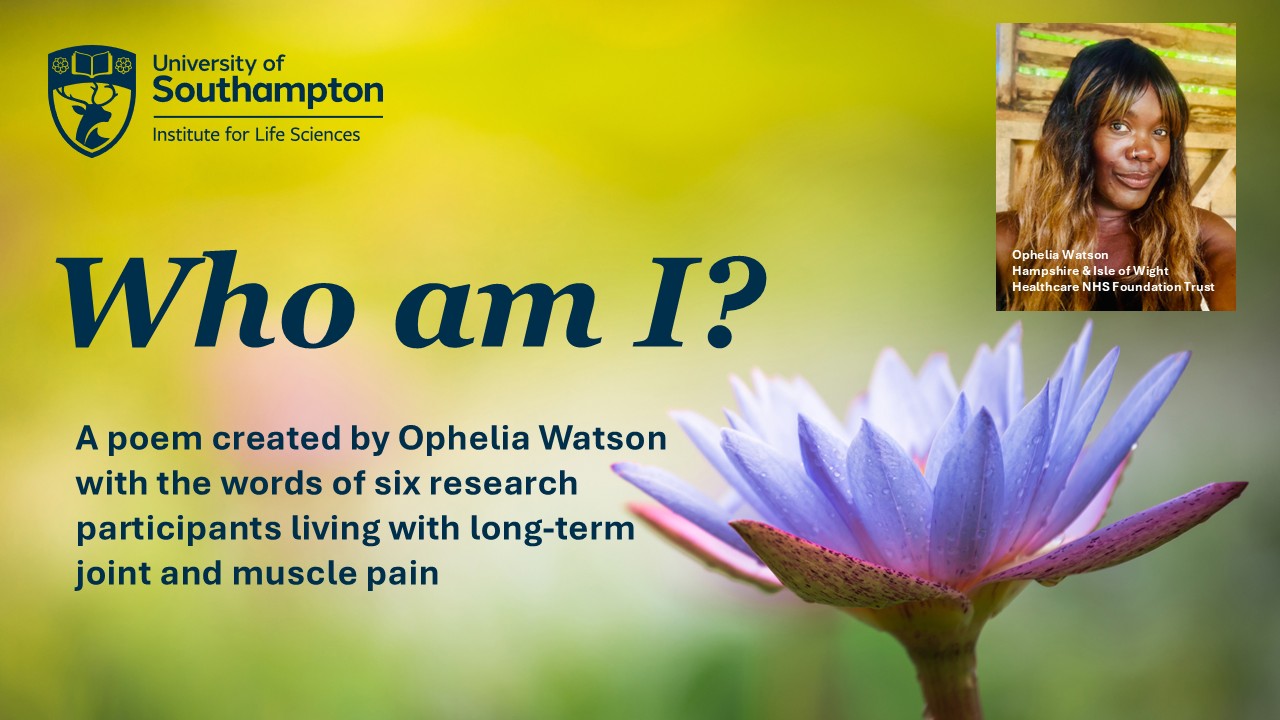
Listen to a poem, created by Ophelia Watson (Hampshire and Isle of Wight Healthcare NHS Foundation Trust) from the words of Southampton research participants describing their experiences of living with pain.
Exploring lived experiences and views on antidepressant treatment in chronic pain: A qualitative study (ELEVATE)
Antidepressants are a common option for chronic pain management and recommended in clinical guidelines. Although originally developed to treat depression, they can also affect the chemicals in the body that transmit pain signals. However, there is very little research exploring people’s experiences of using antidepressants for pain management specifically. This study, funded by the Faculty of Medicine's Primary Care Research Centre, unites researchers, clinicians, and people with lived experience from the University of Southampton and Keele University, to interview people with chronic pain to understand their experiences of using antidepressants as a pain management option.
Interpersonal mechanisms
This project is part of the Consortium to Research Individual, Interpersonal and Social Influences in Pain (CRIISP), investigating how psychological, social and environmental factors interact with biology to shape the development, persistence and impact of chronic pain. We explore how communications between clinicians and patients, especially validating and invalidating consultations, impact patients and their pain.
People, projects and publications
People
-

Professor Adam Geraghty
ProfessorSelf-management of pain and other chronic symptoms/conditions
Mental health
Accepting applications from PhD studentsEmail: A.W.Geraghty@soton.ac.ukTel: +44 23 8059 1770 -

Professor Christina Liossi
Professor of Paediatric PsychologyUnderstanding adjustment to chronic illness from both the patient and family perspectiv
Email: C.Liossi@soton.ac.ukTel: +44 23 8059 4645 -

Professor Hazel Everitt
Professor of Primary Care ResearchSupporting Self-management
Healthcare communication
Email: H.A.Everitt@soton.ac.ukTel: +44 23 8059 1788 -
Doctor Hollie Birkinshaw
Research FellowEmail: H.Birkinshaw@soton.ac.uk -

Doctor Jo Williams
Research Fellow in PsychologyEmail: J.E.Williams@soton.ac.uk -

Professor Kath Woods-Townsend
ProfessorAdolescent Health
Scientific Literacy
Health Literacy
Accepting applications from PhD studentsEmail: K.Woods-Townsend@soton.ac.ukTel: +44 23 8059 0628 -

Professor Lisa Roberts
Clinical Professor in Musculoskeletal Health- Communication
- Improving patient experience
- Promoting health and in
Email: L.C.Roberts@soton.ac.ukTel: +44 2381208644 -

Professor Lucy Green
Professor of Public Engagement & Dev PhysiologyFetal physiology and nutrition
Accepting applications from PhD studentsEmail: L.R.Green@soton.ac.ukTel: +44 23 8059 9307 -

Doctor Rinita Dam
Research Fellow in PsychologyEmail: R.Dam@soton.ac.uk