

From lab to impact
Southampton’s rail infrastructure research is internationally leading. Professor David Richards explores why the real test of innovation happens in the field, not the lab. (15 seconds)
A culture of collaboration
At Southampton our research culture sets us apart. This is a place where ideas are sparked in the corridor, where there’s a real joy of problem solving and getting the right people together to arrive at the best solution. The journey can be long, and just as rewarding as the solution at the destination.
“I am at heart a problem solver,” says William Powrie, Professor of Geotechnical Engineering. “I like to see how things work, and I always felt that doing engineering was the right thing for me.
Dig deeper to understand what’s underground
“A turning point in my early career was when I switched my research from conventional structures to soil mechanics. On a walk along a canal towpath, we passed under an old brick bridge spanning the canal, and I noticed that the side wall of the bridge was gradually slipping down the cutting slope. And I thought, the mechanics of that is an interesting challenge, and clearly there's a lot that we don't know,” says William.
"My field, geotechnical engineering, is to do with structures made in, on, or of the ground. In the railway context, these include slopes, cuttings, embankments, tunnels, retaining walls and foundations, including of the track itself. To understand how these behave over time, we need to understand the mechanics of soils and soil-like materials."
William and David Richards, Professor of Ground Engineering met early in their careers, at Queen Mary and Westfield College, London, when William was a young lecturer and David had joined the university as a civil engineering student.
“William introduced me to soil mechanics, and he did it brilliantly,” says David. “I went on to complete my PhD with William and then a research post with him on low-level radioactive waste containment systems.”
William was offered a Chair of Geotechnical Engineering at Southampton, and at the same time, David applied for a junior lectureship in the department. And the rest is history: over 30 years later, William and David are both research leaders in their fields at Southampton.
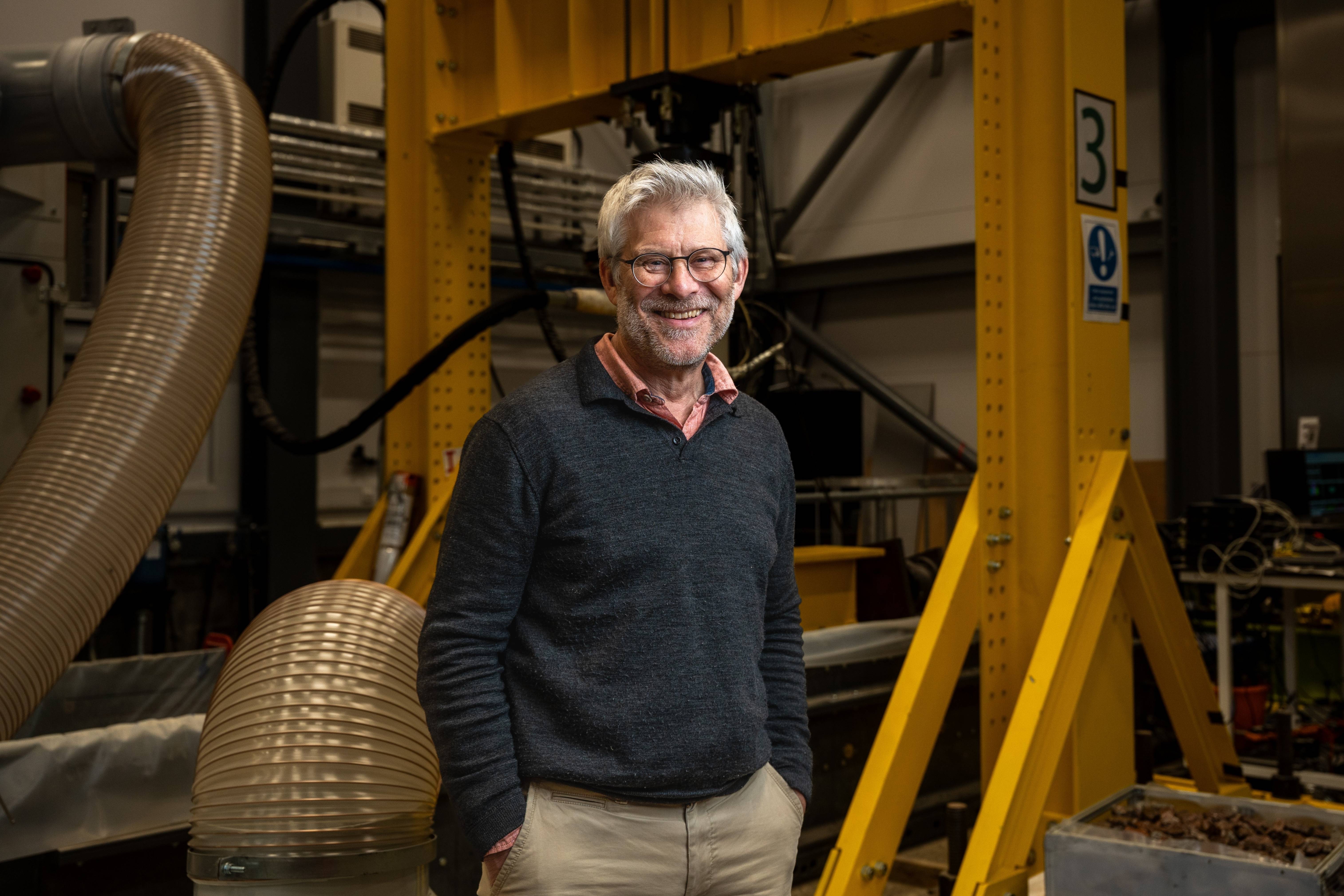
Fast-track to royal recognition
This year, William and David's work to improve the sustainability and resilience of the UK’s rail system was awarded a Queen Elizabeth Prize for Education – the highest national institutional honour.
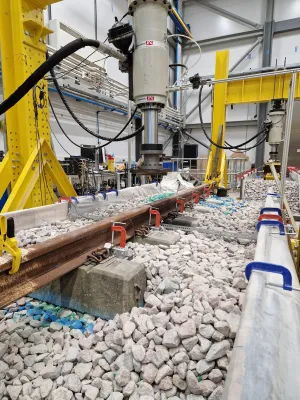
“Electric trains are twice as efficient as electric road vehicles, at twice the speed. But they are expensive to run and maintain,” says William. “So the work that we have done here is about building, operating and maintaining railways more effectively and at a reduced cost, with a particular emphasis on electrification, track maintenance, and the repair and refurbishment of old embankments, to avoid having to dig them out and start again, which is hugely expensive.”
“The area I find especially interesting, and where we’ve had a particular impact, is on the design of overhead line electrification structures and particularly their foundations - all part of decarbonising of the railway network through electrification,” says David.
Their work, spanning over two decades, has led to hundreds of millions of pounds of public money being saved and enabled the restart of the UK’s rail electrification programme, which was previously stopped because of costs being too high.

Our students really benefit from being educated in an environment where knowledge is created. And when you stand back and think about that and what has come out of Southampton and its impact, it’s amazing.
Not just passing on new knowledge, but creating it
“Our students really benefit from being educated in an environment where knowledge is created. And when you stand back and think about that and what has come out of Southampton and its impact, it’s amazing,” says David. “A very early example is the structural modelling and design development for what became the twin-panelled sail-shaped roof of the Sydney Opera House.”
David runs the first-year Constructionarium, a week-long residential activity in Norfolk, where students build recognisable iconic structures in a highly regulated construction environment.
“The students construct large model structures such as the Gherkin and Millau bridge over the course of a week, applying industry construction management processes and health and safety frameworks,” says David.
“These are significant construction projects, and the students have to hit the ground running on the first day. By the time they're on the coach coming home, exhausted, I think they've changed and grown a little bit from the whole experience.
“It gives them a clear view of the challenges they’ll be encountering as practicing engineers. They're beginning to think about their structures, the materials, the embodied carbon, all of those things come together at the Constructionarium. We're the only university currently that does that with first years.”
The joy of saying yes
William and David’s career journeys have both been shaped by their willingness to try new things and say yes to opportunities.
William reflects: “I’ve been lucky to have a very varied career, partly because I've never thought: ‘I only do one thing’. If someone comes with an opportunity or a problem, my mindset is ‘Oh, yes, this would be interesting. I'll give it a go.’ And having that curiosity, wondering what's around the next corner, has kept my career very interesting.
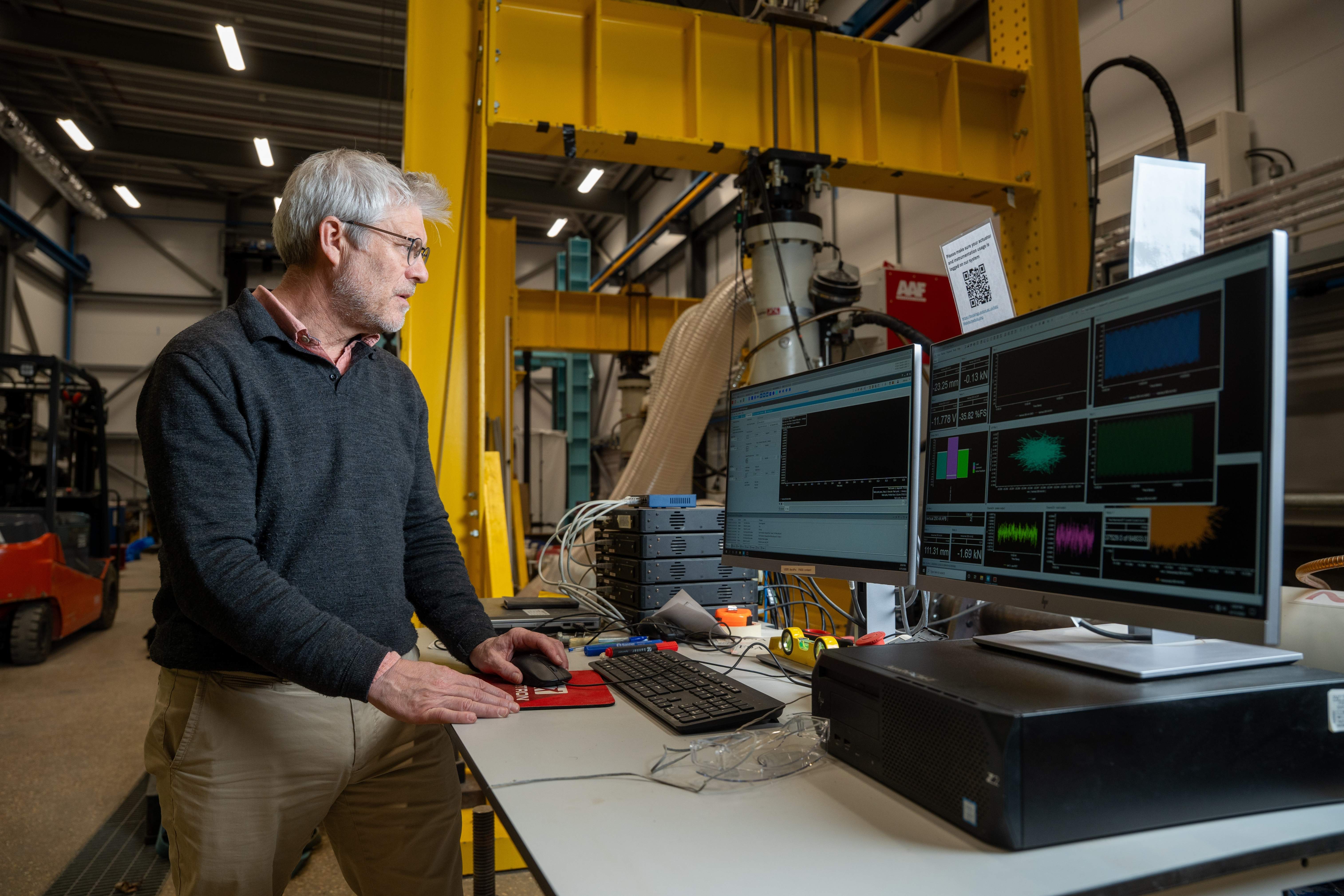
“If we’re presented with a soil/structure interaction problem, we tackle it in small chunks until we’ve got a handle on it and will often develop a field trial as this captures all the complexity of variable ground and construction processes. With the right instrumentation, the right care, the right planning and management, this approach can give you the answer to quite tricky site-based problems. And I think we do that very well at Southampton,” says David.
“Our approach has always been to come up with solutions that address the fundamental problem rather than just paint over the symptoms,” adds William. “It’s a real joy to solve a problem in a way that uses fundamental scientific understanding, works and has lasting effect.”
Explore related pages
Read more of our people's stories
From sci-fi to reality: a visionary tale
Imagination, creativity, determination and collaboration. We are using light to visualise the next breakthrough in disease detection and change lives.
Clothes that work harder – beyond the fashion statement
We see beyond fashion to e-textile garments that could give us back our independence after an injury or illness.
Getting cold to find out how we’ll cope with hot
We go out of the lab to inhospitable places to find the answers, so policymakers can plan and mitigate climate change.


