

It's all about people
With people at the centre of every solution, Professor Kai Yang talks about the benefits of bringing experts together for developing electronic textiles to solve complex healthcare challenges. (15 seconds)
Function and comfort
Wearable tech are devices or products that you can put on your body to help you perform a function. In their simplest form, these are things like watches or glasses.
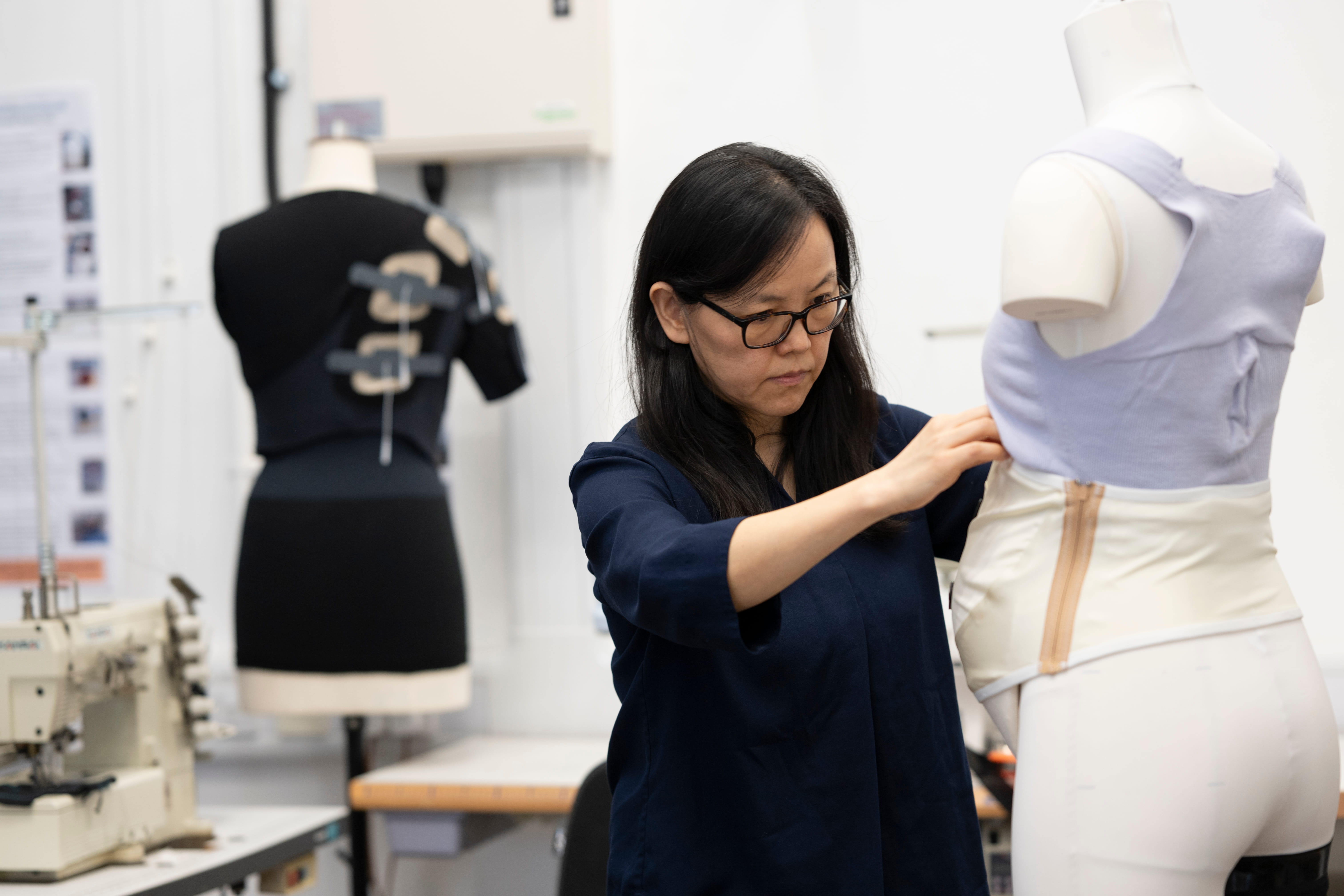
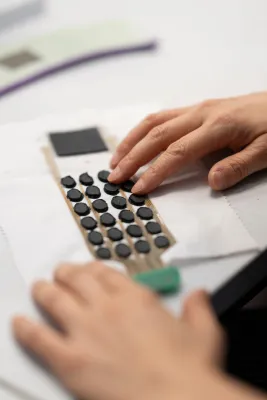
But our work focuses on electronic textiles as medical devices – clothing with electronic components embedded, which allows the wearer to monitor a health condition, such as tracking their heart rate or temperature, or to help them regain movement after an injury.
E-textiles need to be functional and comfortable, but they also should look good.
People don’t want to be labelled as disabled, they want to be seen as a person, and the stigma associated with traditional medical devices could be overcome by using a functional textile that also looks like a normal clothing item.
Therefore, a big focus of our research goes into co-design with end users for comfort, ease of use, and aesthetic of the e-textiles.
Independence and a sense of self
Recently we have been focusing on e-textiles for stroke survivors and people with osteoarthritis.
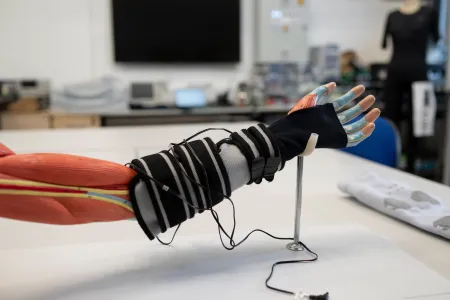
In the UK there's 1.3 million stroke survivors and more than half experience reduced movement. The electronic glove we invented enables movement in the paralysed hands of stroke survivors, supporting their rehabilitation.
With all of our e-textile inventions, our aim is to empower people to be able to manage their own conditions and live more independently at home. They don’t want to have to rely on a family member or clinician to help them; they want their sense of self back and to feel like they did before their injury or condition.
Providing relief from pain
In the UK, 5.4 million people live with knee osteoarthritis – a painful condition that causes pain, stiffness and reduced mobility. The recommendation from doctors is to exercise more and reduce your weight, which will result in less pain. But when you are in constant pain, you can’t exercise.
Our knee sleeve project, funded by the Medical Research Council, focuses on developing an electrotherapy device for pain relief, muscle strengthening, and monitoring the function of the knee joint.
The tech in our knee sleeve works in a similar way to a TENS machine that relieves pain. It sends mild electrical pulses to the joint to ease the pain, providing relief while the sleeve is worn so the user can exercise.
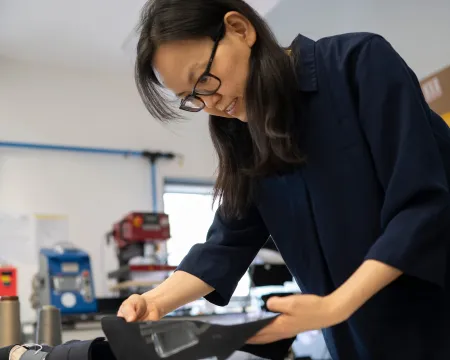
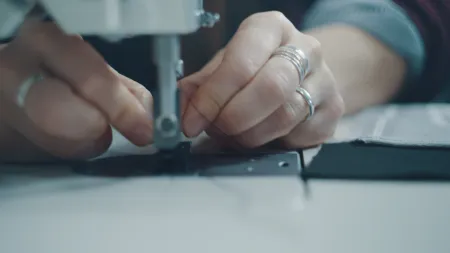
We have the perfect mix of expertise, design and manufacturing capabilities, collaborators and freedom to push the boundaries of the technology, co-design a device with the user and develop a prototype into the product. Working together, we are making a difference.
What gets me up in the morning
With all our e-textiles, it is so important to co-design them with the person who will be using them. And to get feedback directly from the end user about a prototype is really rewarding.
It’s the human aspect of my work that is so important. Talking to people, identifying a problem that my technology could fix and then bringing a team together to work with them to change their lives in a positive way is so fulfilling.
That’s what gets me up in the morning and returning to my work – testing, trying, failing, changing something and trying again. I keep doing it because the end game is helping transform someone's life.
From concept to clinic
Combining textiles with the physical act of building something has been important to me since I was a child.
My parents ran a furniture business, and my dad was very talented at making items to his customers' specifications, so I have always been interested in how entrepreneurship can be used to make things for people, or to make their lives easier.
And of course, the commercialisation aspect of e-textiles is so important.
As these are essentially medical devices, we need to make sure they are safe, biocompatible, won’t cause harm and are made in a sustainable way. We need to test against medical standards, and get the devices certified for patient use.
We also need to consider the manufacturing process – can our devices be produced at scale in a cost-effective way.
The perfect mix
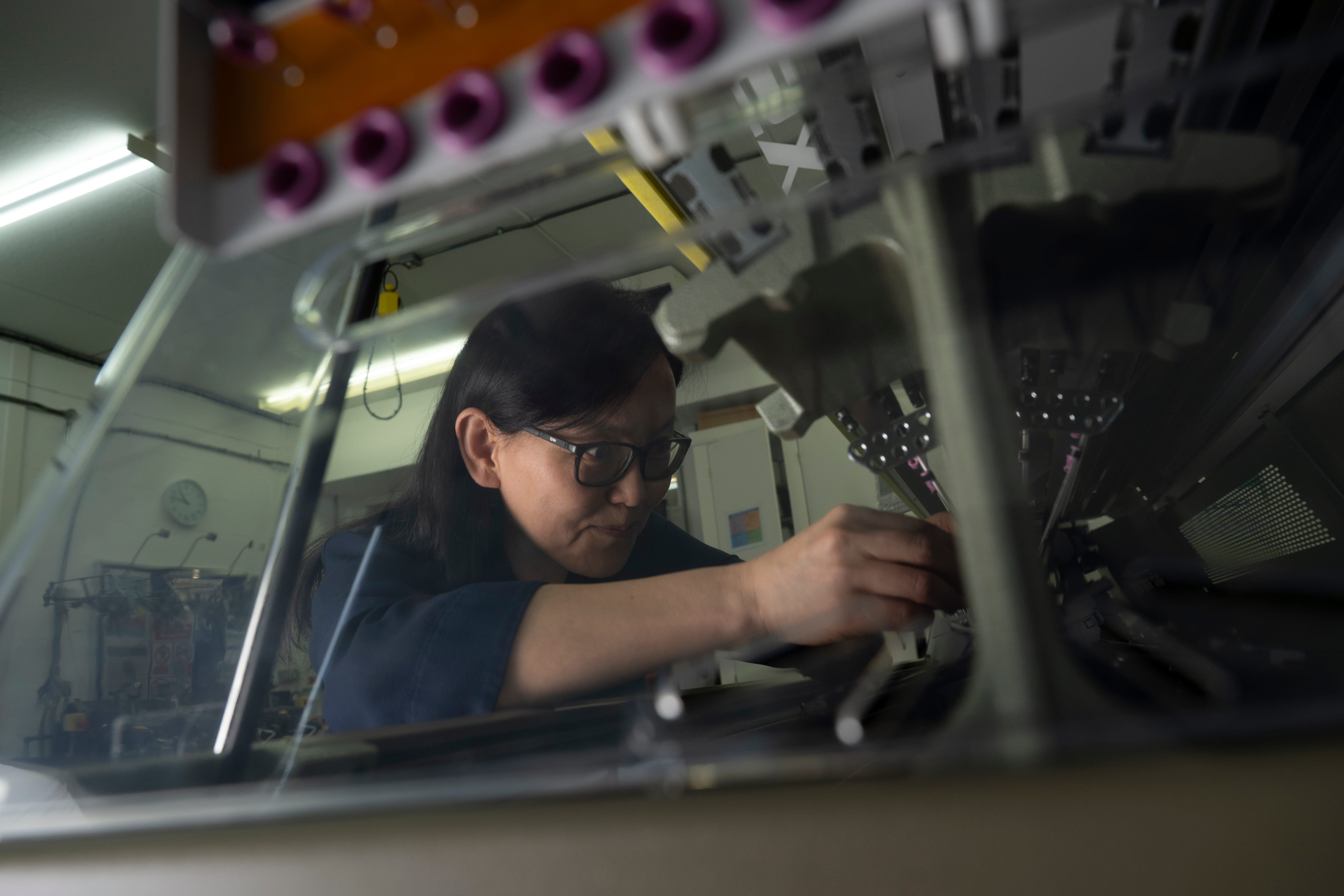
Originally, when I joined the University, I spent 11 years working in Electronics and Computer Science (ECS), collaborating with electronic engineers and developing my research skills. I still maintain a close collaboration with colleagues in ECS, as well as colleagues in Medicine and Health Sciences.
I joined Winchester School of Art (WSA) in 2020, where I established the WSA E-textile Innovation Lab, focusing on the design and development of wearable devices for healthcare applications.
We have the perfect mix of expertise, design and manufacturing capabilities, collaborators and freedom to push the boundaries of the technology, co-design a device with the user and develop a prototype into the product. Working together, we are making a difference.
Related courses
Kai teaches on a range of undergraduate, postgraduate taught and research courses:
BA Sustainable Luxury Textiles MA Design Innovation and Technology MSc Design Innovation and Technology MSc E-textiles and Wearable Technologies MA Textile Design
Read more of our people's stories
Getting cold to find out how we’ll cope with hot
We go out of the lab to inhospitable places to find the answers, so policymakers can plan and mitigate climate change.
In the face of adversity, some things don’t change
When Becca’s world turned upside down after meningitis and sepsis, her determination to become a doctor remained constant.
From digital divide to a healthy balance sheet
A fascination with puzzles, the ethos that small changes create a ripple effect and the need for truly accessible digital finance.


