

Child page cards
-

Industry collaboration
Find out more about how we apply our research expertise to real-world challenges, and the many ways you can be involved. -
About us
Read more about our research and aims. -
Our people
Learn about our people including their research interests, areas of expertise and their contact details. -
Our facilities
The Southampton Space Institute brings together a wide-range of facilities and capabilities. -
News
Keep up-to-date with our latest research impacts, funding success stories, and annoucements. -
Events
Information on upcoming dates including networking events, lectures, and conferences.




Mapping tomorrow’s population distribution
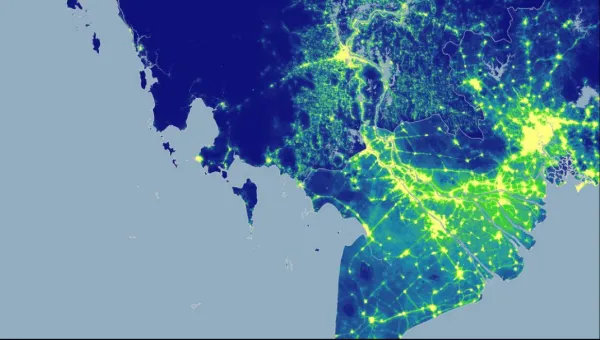
Research group WorldPop, based at Southampton, is developing maps which can be used to predict the impact of climate change on the distribution of Earth’s population by the end of the century. The maps will provide detailed pictures of humanity by 2100, including predicted population sizes, ages and genders.
-
Insights from Mars transforming healthcare technology
Laser and light-based techniques lie behind both the search for life on Mars and accelerated drug discovery on Earth.
-
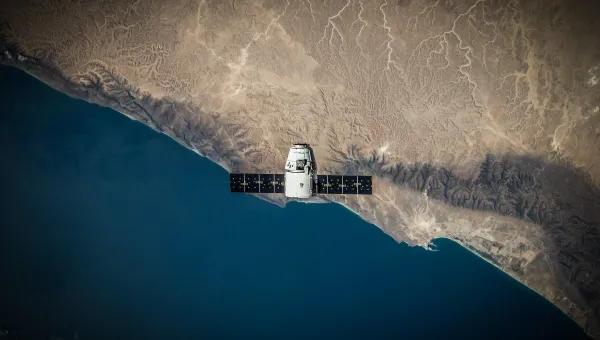
Building greener communities with satellite technology
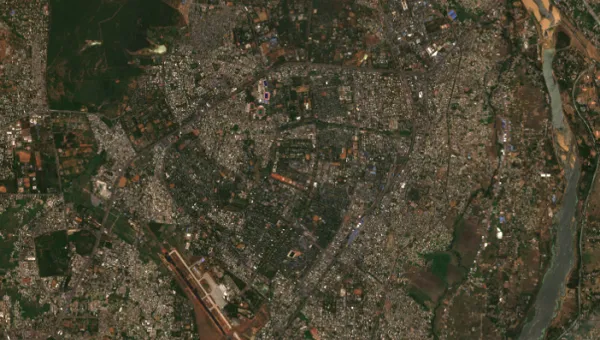
Scientists at Southampton are using satellite data to assess the carbon production of plants, monitor the Earth’s health, and help create greener, healthier global communities.
-
Protecting against rising sea levels
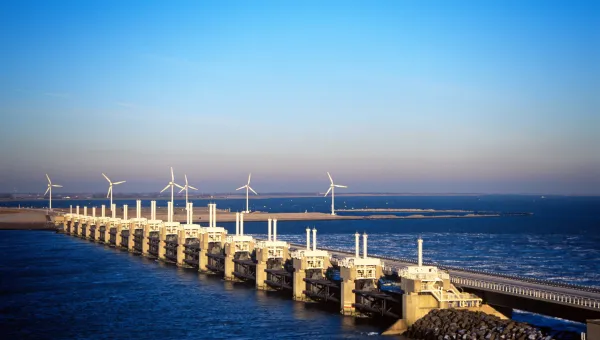
Research led by Professor Ivan Haigh on storm surges, sea level rise and climate change is ensuring flood barriers are maintained and future-proofed to protect 30 million people.
-
Eliminating cloud shadow impact on Earth observation imagery
Project will improve quality of airborne data used in forestry, agriculture and environmental monitoring.
-
Putting quantum computing in the palm of your hand
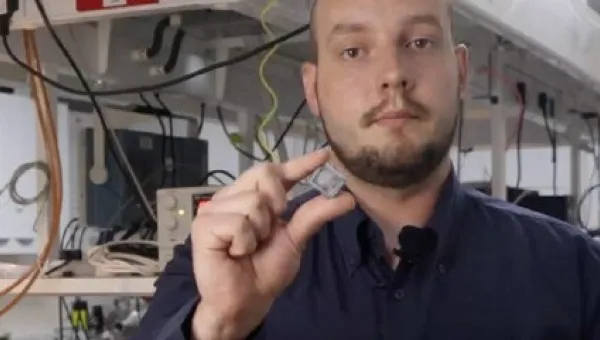
Physicists from the University of Southampton have secured investment for their ground-breaking, miniature quantum device.
-
Enhancing astronaut health and helping physiotherapists consult during COVID
Health researchers share their insights to support both astronauts in space and people on Earth.
-
Measuring the impact of the aurora borealis on climate change
A Southampton researcher is developing new techniques to measure the temperature of the upper atmosphere and model the impact of the aurora on climate systems.
-
Expanding the use of satellite data to provide real-world benefits
The University is leading research into remote sensing to improve food security, population mapping and disaster response.
-
Bringing next-generation technology to the whole world
A Southampton expert's work will help bring wireless communications to some of the most inaccessible places on Earth.
-
Optimising power transfer for renewable energy
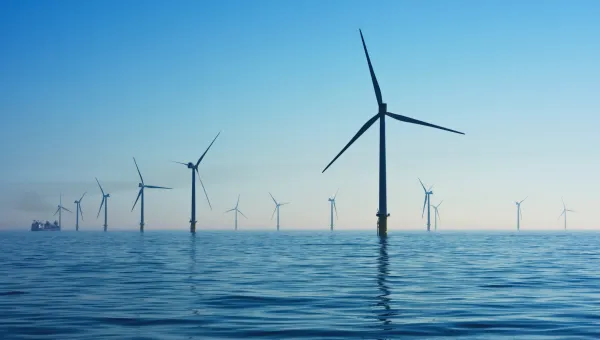
Our researchers are running a series of projects to optimise the design of marine high voltage cables, used in offshore windfarms, to maximise power transfer and save money.
-
Population mapping saves lives
A University of Southampton research group is using new ways of mapping and counting populations to help developing countries. WorldPop's datasets have helped to eradicate polio in Nigeria and assist earthquake victims in Nepal.




Related research institutes, centres and groups
-

WorldPop
We develop and implement open, robust and peer-reviewed geospatial methods. These are used for mapping population distributions, demographics and dynamics, with a principle focus on low and middle income countries. -
Southampton Geospatial
The Southampton Geospatial team has the tools and expertise to collect, combine and interpret datasets about locations. -

Sustainability and Resilience Institute (SRI)
We bring together colleagues from across the University, and work with experts from around the world to answer one of the most pressing questions of our time: “How will we choose to manage our planet for ourselves and future generations?” -
Zepler Cleanrooms
The Zepler Cleanrooms Complex is a state-of-science multidisciplinary Centre which includes a variety of facilities and laboratories for materials and device research in electronics, photonics and nanotechnology, with both planar wafer and optical fibre capabilities supporting both Research and Enterprise. -
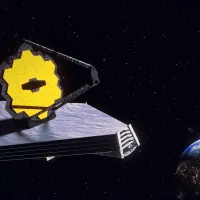
Astronautics Group
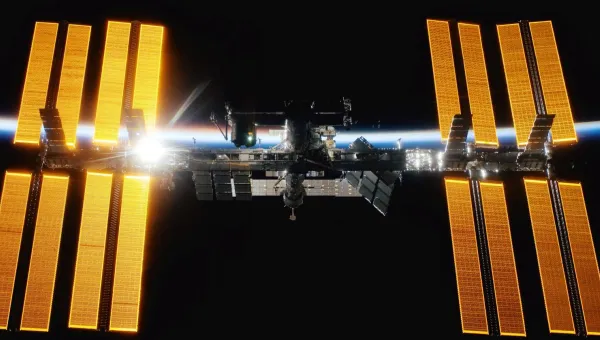
Our published research activities have made a substantial contribution to advancing the field; and hardware developed by members has successfully flown on various space missions, including on the International Space Station. -
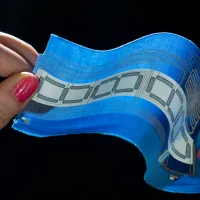
Smart Electronic Materials and Systems
Our interests range from nano-scale biological sensors to complete sensor systems. -

Quantum, Light and Matter Group
Our research group examines the connections between physics, chemistry and engineering.
Connect with us
Contact us
Please contact our Business Engagement Manager, Frances Clarke, for more information.