

About
Nature-based Solutions (NbS) are actions to protect, sustainably manage, and restore natural or modified ecosystems to address societal, economic and environmental challenges. Increasingly, NbS feature in adaptation policies and national and international pledges on climate action, sustainable development, biodiversity management, environmental protection and coastal resilience.
Our network links a diverse community of researchers and experts with ocean or blue economy stakeholders: communities; policymakers; the public sector; regulators; non-governmental organisations; engineering consultancies; energy developers.
As a collective, we aim to improve understanding and generate the evidence base for nature-based solutions. NbS's are important in adaptation and mitigation policies that address climate emergencies and loss of biodiversity.
We want to inform adaptive nature-based solutions for ecosystem restoration and management. The aim is to alleviate coastal and marine hazards such as coastal flooding and erosion, habitat degradation and biodiversity loss and changing ocean biochemistry. This will provide healthy ecosystems for climate mitigation, carbon and nutrient management and sustainable food provision.
We want to inform engineering and management practices to enhance community resilience and embed nature-inclusivity in engineering technologies for scalable energy harvesting and renewable energy generation. This will inform the next generation of engineering designs, to be environmentally friendly and have minimal impact on marine and ocean environments.
To find out more about the Nature-based Ocean Solutions Special Interest Group and what we do, get in touch with group champion Hachem Kassem (Hachem.Kassem@soton.ac.uk) and Vicky Dominguez Almela (V.Dominguez-Almela@soton.ac.uk).
Join the SMMI Community to sign up to this group and our other special interest groups.
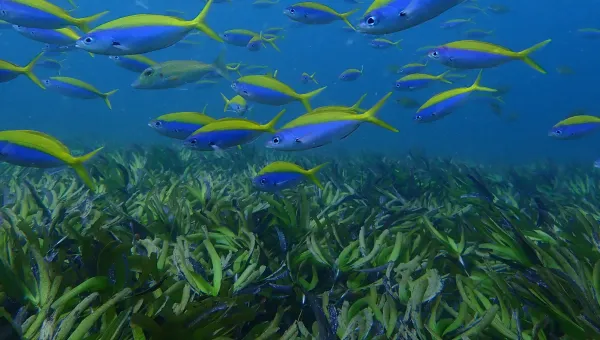
Protecting marine biodiversity
Mapping seagrass in the Western Indian Ocean to boost conservation efforts
People, projects and publications
People
-
Professor Jo Nield
ProfessorDune Processes
Salt pan dynamics
Dust emissive surfaces
Accepting applications from PhD studentsEmail: J.Nield@soton.ac.ukTel: +44 23 8059 4749 -

Emeritus Professor Joachim Schloer
German-Jewish history in modern times
Email: J.Schloer@soton.ac.ukTel: +44 23 8059 2232 -

Doctor Joan Tumblety
Associate ProfessorFrench cultural history
History of natural health
Email: J.Tumblety@soton.ac.ukTel: +44 23 8059 5425 -
Professor Joerg Fliege
Professor of Operational ResearchNonlinear Optimization
Discrete Optimization
Operational Research
Accepting applications from PhD studentsEmail: J.Fliege@soton.ac.ukTel: +44 23 8059 8453 -
Professor Joerg Wiedenmann
Professor of Biological OceanographyCoral Reef Biology and Ecology
Coral Bleaching
Accepting applications from PhD studentsEmail: jw1w07@soton.ac.ukTel: +44 23 8059 6497 -
Doctor Johanna Hjalmarsson
Associate ProfessorMarine insurance
Insurance
Carriage of goods by sea
Accepting applications from PhD studentsEmail: J.Hjalmarsson@soton.ac.ukTel: +44 23 8059 2664 -
Mr John Gillett
Principal Teaching FellowCountdowns: the role of duration and duration-awareness in the experience of t
Email: J.R.Gillett@soton.ac.ukTel: +44 23 8059 7002 -
Professor John Holloway
Associate Vice-President (Interdisciplinary Research)Human genetics
Epigenetics
Respiratory Disease
Allergy
Accepting applications from PhD studentsEmail: J.W.Holloway@soton.ac.ukTel: +44 2380598098 -
Emeritus Professor John Langley
The application and use of of separation science and mass spectrometry for chemis
Email: G.J.Langley@soton.ac.uk -
Professor John Marshall
ProfessorEmail: jeam@soton.ac.ukTel: +44 23 8059 2015
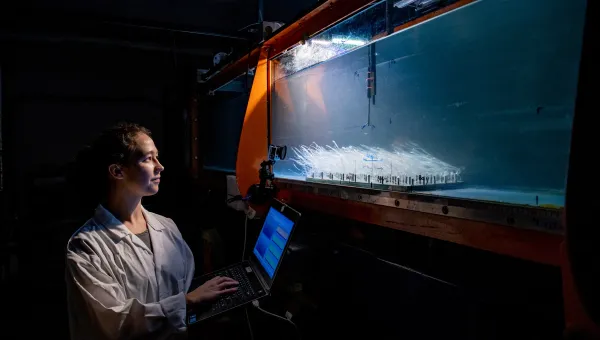
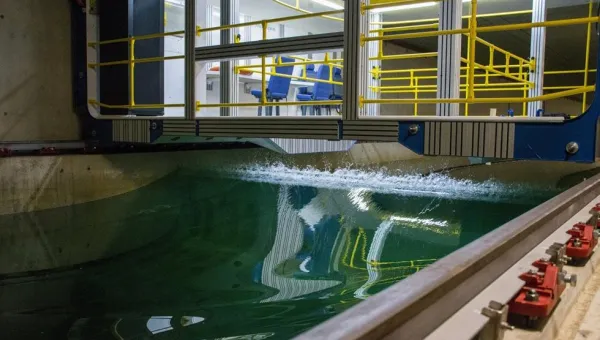
Boldrewood towing tank
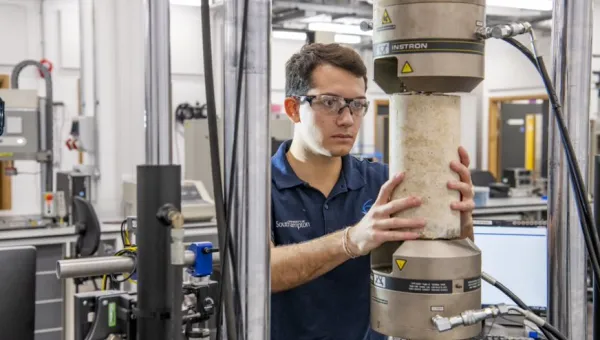
National Infrastructure Laboratory
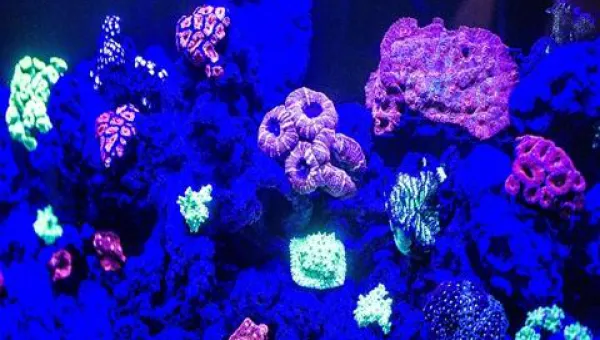
Related research institutes, centres and groups
-
Southampton Marine and Maritime Institute
We work with partner organisations to tackle global marine and maritime challenges, from developing green technologies to influencing government policy. -
Sustainability and Resilience Institute (SRI)
We bring together colleagues from across the University, and work with experts from around the world to answer one of the most pressing questions of our time: “How will we choose to manage our planet for ourselves and future generations?” -
Geology and Geophysics
We research a wide range of societally impactful areas of geology and geophysics for a sustainable future. The latest facilities and technology development support our activities. -
Marine Biology and Ecology
We focus on understanding the effects of environmental change and human activities on marine ecosystems and biodiversity from the coast to the deep-sea. -
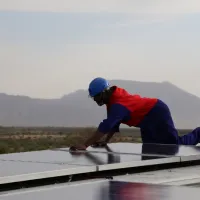
Energy and Climate Change Group
The research group seeks engineering solutions for reliable, affordable and sustainable energy stemming from renewable resources.