
About
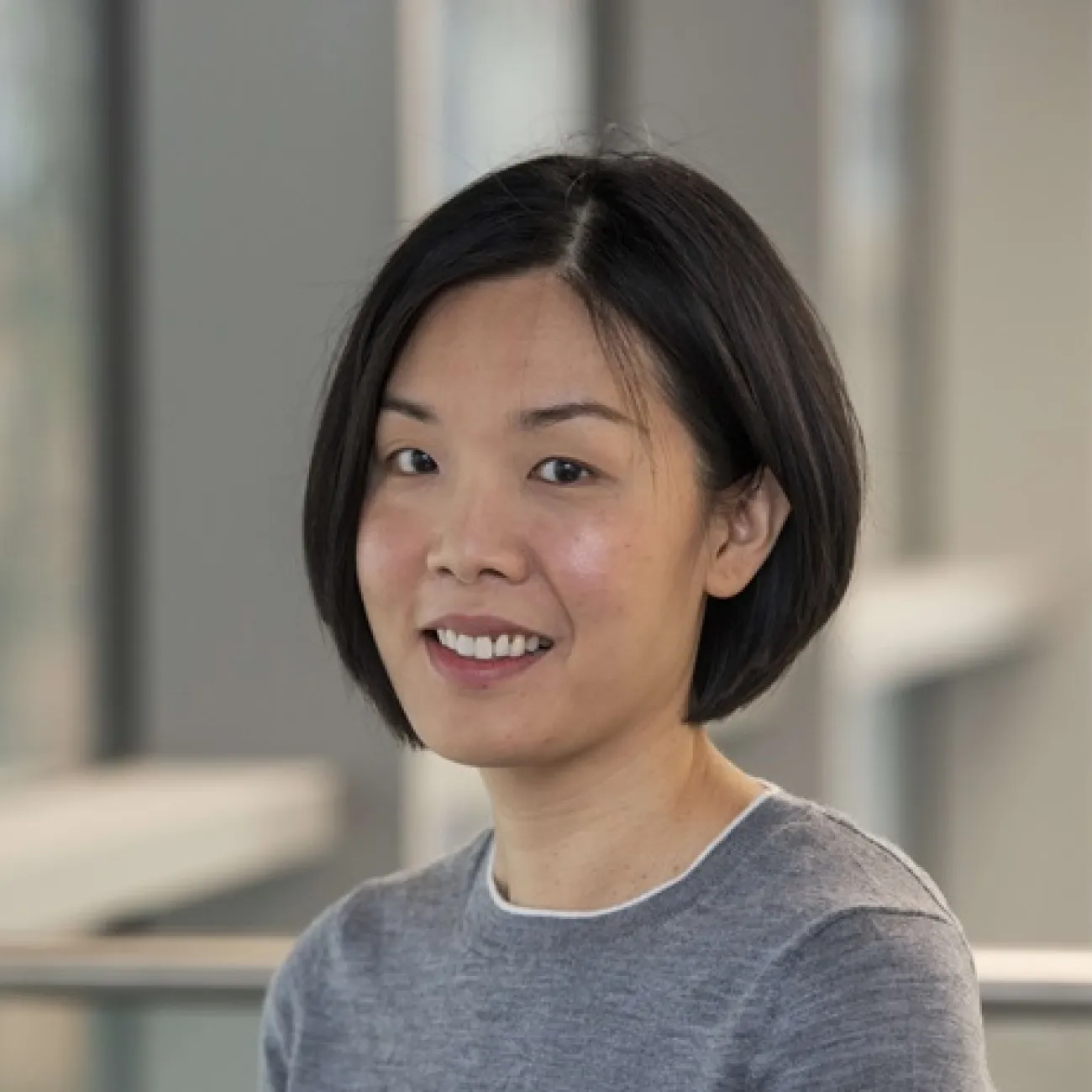
Sean Lim is Professor of Haematology and Translational Immunology.
She is a clinician scientist who combines clinical practice with laboratory research to advance cancer immunotherapy & improve patient care.
Research
Research groups
Research interests
- Identification of new targets for antibody therapy in lymphoma
- Development of novel immunotherapy approaches for cancer
- Understanding the determinants of an effective immune response in patients with lymphoma
Research projects
Active projects
Completed projects
Publications
External roles and responsibilities
Biography
Sean completed her medical degree at the University of Bristol in 2001 before training in general medicine (MRCP) and subsequently specialising in haematology, obtaining FRCPath in 2012. During this time, she was awarded a highly competitive Clinical Research Training Fellowship by the Medical Research Council which enabled her to simultaneously complete a PhD in Cancer Immunology at Southampton in 2011. Her work was awarded the Royal College of Pathologists’ Specialty Research Medal (2012) and UK CLL Forum’s Catovsky Prize (2011).
With the support of two further Fellowship awards (Cancer Research UK Clinician Scientist & Cancer Research UK Advanced Clinician Scientist Fellowships), Sean spent two years as a visiting postdoctoral research fellow in Professor Ron Levy’s laboratory at Stanford University, USA, before returning to Southampton to lead her own research group in 2015. Her work was awarded the British Association for Cancer Research (BACR) Roger Griffin Prize for Cancer Drug Discovery.
More recently, the Southampton Antibody and Vaccine Group (AVG), which Sean co-leads with Aymen Al-Shamkhani, Ali Roghanian, Stephen Beers, Juliet Gray, Mark Cragg and Yury Bogdanov, was awarded the British Society for Immunology Outstanding Team Award (2025). This was awarded in recognition of AVG as an exceptional team whose collaborative approach made a significant impact on immunology research.
Research Interests
Sean Lim's primary research interest is understanding and developing new immunotherapeutic approaches for cancer. Whilst her clinical expertise lies in lymphoma, a haematological malignancy, her laboratory work also involves other tumour types.
Monoclonal antibody therapy
Her main research programme focuses on understanding the effects of immunostimulatory monoclonal antibodies in cancer, particularly how they might be combined with direct, tumour-targeting antibodies to induce durable anti-tumour responses. Her work (Turaj et al Cancer Cell 2017) showed that T cells, when activated by an immunostimulatory antibody against CD27, a TNFR superfamily member, led to bystander activation and infiltration of myeloid cells into the tumour microenvironment. These myeloid cells had enhanced tumour-killing capacity when a second tumour-targeting antibody was given in combination.
These preclinical observations were translated into an early phase clinical trial (RiVa) for individuals with relapsed B-cell lymphoma (Buermann, Stanton, Rose-Zerilli et al, Clincal Cancer Research 2025). Her laboratory has also characterised how CD27 monoclonal antibodies can be engineered for improved agonism (Heckel et al, Communications Biology 2022). Using single-cell technology, her lab is now focusing on understanding how other immunomodulatory antibodies can be used to manipulate adaptive and innate immunity to induce durable anti-cancer responses (Lim et al, Clinical Cancer Research 2024, Cleary et al Cancer Immunol Research 2025, Martensson et al Cancer Research 2026).
COVID-19 research
Dr Lim's research direction is also strongly driven by clinical need. The COVID-19 pandemic prompted her to investigate whether COVID-19 vaccination protects immunocompromised individuals, particularly those with lymphoma. She was the Chief Investigator of a UK multicentre prospective observational study evaluating COVID-19 vaccine immune responses in individuals with B-cell malignancies (PROSECO) (Lim et al Lancet Haematology 2021; Lim et al Nature Cancer 2022; Wijaya et al Lancet 2023) and co-led other multicentre national studies investigating COVID-19 vaccination and immune responses (OCTAVE/DUO - Barnes et al Nature Medicine 2023, Goodyear et al Lancet Rheumatology 2024; MELODY - Pearce et al Lancet Rheumatology 2023, Mumford et al Lancet 2025; STRAVINSKY). These studies guided UK Government policies on COVID-19 vaccination.
Current work
There are multiple, diverse on-going project in the lab, reflecting her interest in discovery research as well as clinical translation. These include:
- The discovery of novel therapeutic antibodies for mature T-cell malignancies (with Professor Mark Cragg, Cancer Sciences),
- Development of novel DNA oligonucleotides for cancer therapy (with Dr Eugen Stulz, Chemistry),
- Optimisation of novel anti-cancer immunotherapies by using a data-driven approach to control immune cell states (with Professor Owen Rackham, School of Biological Sciences),
- Understanding the immune mechanisms underpinning successful immunotherapy responses (with Professor Mark Cragg, Cancer Sciences).
Prizes
- BACR Roger Griffin Prize for Cancer Drug Discovery (2018)
- Royal College of Pathologists Specialty Research Medal (2012)
- UK CLL Forum Catovsky Prize (2011)